
The Fiddler and The Floating Kingdom
Pacific Overtures, Fiddler on the Roof, and the art of cultural exposition
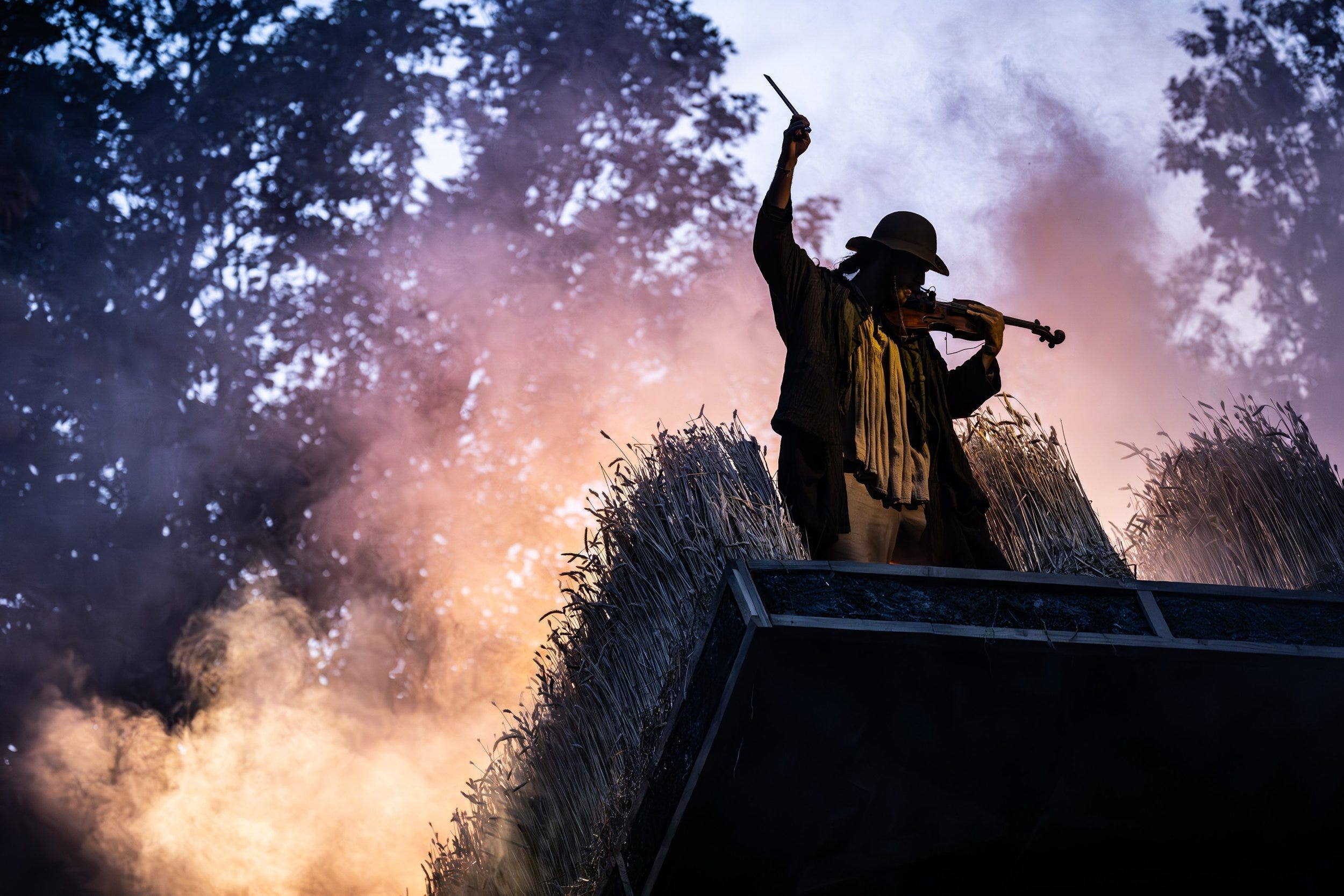
“In the middle of the world we float,” sings the Reciter, early in Pacific Overtures. “How do we keep our balance?” asks Tevye, as Fiddler on the Roof begins.
Here are two cultures suspended between earth and sky, each with a fundamentally different relationship to stability and change. One culture floats with serene confidence in its isolation; the other holds to tradition like a fiddler to his precarious perch. As they introduce their respective worlds, these opening numbers establish entirely different philosophies of cultural survival.
✍️ Please support our work by upgrading to a premium subscription:
Thank you for reading! A premium subscription offers full access to The Sondheim Hub: an exclusive essay, crossword, extended interview & more each week, plus our complete, paywall-free archive of 200+ essays, features & interviews. 📚
Fiddler on the Roof and Pacific Overtures approach cultural exposition in radically different ways. “Tradition” operates as explicit instruction, with Tevye directly addressing the audience to explain his world, then organizing his community into a living demonstration. Each social group poses a rhetorical question about its own role: the papas ask “Who day and night must scramble for a living?”, the mamas “Who must know the way to make a proper home?”, the sons and daughters following suit, before providing their own categorical answers.
Meanwhile, Tevye introduces specific characters by name and function: “Yente, the matchmaker... Nahum, the beggar... our beloved Rabbi.” Even here, the Rabbi’s blessing for the Tsar—“May God bless and keep the Tsar… far away from us!”—exemplifies the mixture of wit, resilience, and wariness that defines Anatevka’s worldview. This is cultural education through lecture and demonstration, complete with a master of ceremonies who stops the action to explain what we’re seeing.
Tevye is both within the world of the shtetl and slightly apart from it—father and philosopher, participant and commentator. His dual role allows him to acknowledge the fragility of tradition even as he affirms its value. “Why did this tradition get started?… I don’t know,” he admits, confessing uncertainty in the very act of asserting authority. By narrating his own world to us, he becomes a kind of cultural mediator, translating his community’s customs into terms any audience member can understand, while also shoring up his own belief in the face of change.
“The Advantages of Floating in the Middle of the Sea,” the opening number of Pacific Overtures, presents its cultural activities without interpretation or justification. We hear “Here we paint screens... plant rice... arrange the flowers... view the moon,” but no one explains why these activities matter or how they relate to one another. Meaning emerges through accumulation and repetition rather than through explicit commentary.