
The Witch Withdraws: Absence as Curse in Into the Woods and Wicked
Why withdrawal, not wickedness, is the real catastrophe.
Welcome to your first November Supplement! Read on for:
An exclusive essay on the witches of Into the Woods and Wicked
A crossword themed entirely around Follies’ Sally
More from our conversation with Talia Simone Robinson, star of the Broadway Merrily We Roll Along soon to be in cinemas worldwide
Our survey of This Week in Sondheim
If you’re currently a free subscriber and would like to support our work & access all our weekly Sondheim Supplements, click here to explore our various subscription options:
The Witch Withdraws: Absence as Curse in Into the Woods and Wicked
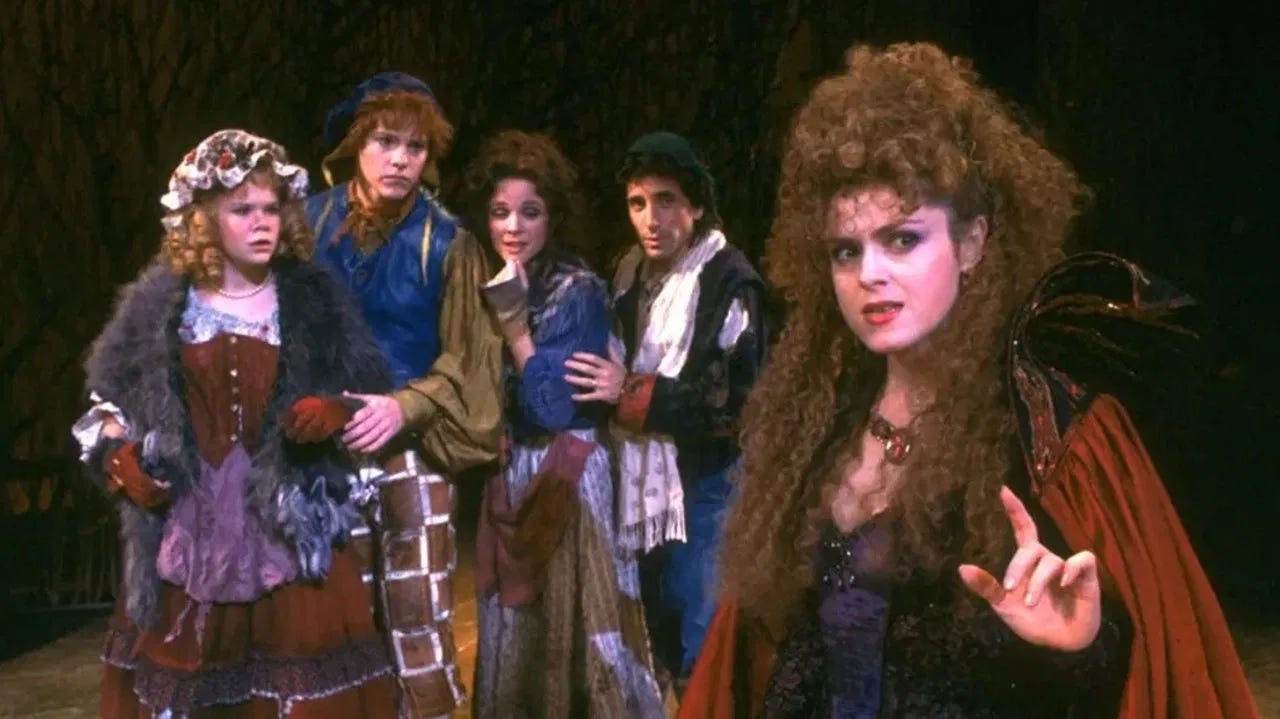
Last week, we looked at how “Last Midnight” and “No Good Deed” function as moral reckonings—moments when the witches of Into the Woods and Wicked stop absorbing blame and start speaking uncomfortable truths about the communities that scapegoat them. We established that both witches are right in their accusations: right about hypocrisy, right about performative niceness, right about how societies create the very monsters they claim to fear.
But we rarely ask what happens after the verdict.
In fairy tales, witches curse: beasts, sleep, poison, dreadful bargains. We expect flamboyant harm. The “curses” of “Last Midnight” and “No Good Deed” are instead acts of withdrawal. The Witch exits: “I’m leaving you alone.” Elphaba steps back, vowing inaction: “No good deed will I attempt to do again.” Both simply stop. And both absences—both withdrawals of care, of labor, of truth-telling—devastate their communities more profoundly than any hex ever could.
It helps to name the kind of work they withhold. In the feminist ethics-of-care tradition (Carol Gilligan; Joan Tronto), care is not sentiment but maintenance—tedious, sustaining, often invisible labor. That’s the work these witches have been doing all along: tending the moral garden, insisting on reality, attempting to protect the vulnerable. Their “curse” resembles a strike. As theorist Silvia Federici might put it, the unpaid, feminized labor finally withholds itself. And when maintenance stops, systems show how completely they depended on it.
Next:
– How the witch becomes both scapegoat and caretaker
– Why her shift from voice to exit dooms the community
– How the politics of refusal reframes both songsThis essay continues for paid subscribers. Free readers, unlock the full Supplement here: