
The Birch Trees Stand Like Ghosts
Boris Aronson, René Magritte, and the shifting forest of A Little Night Music
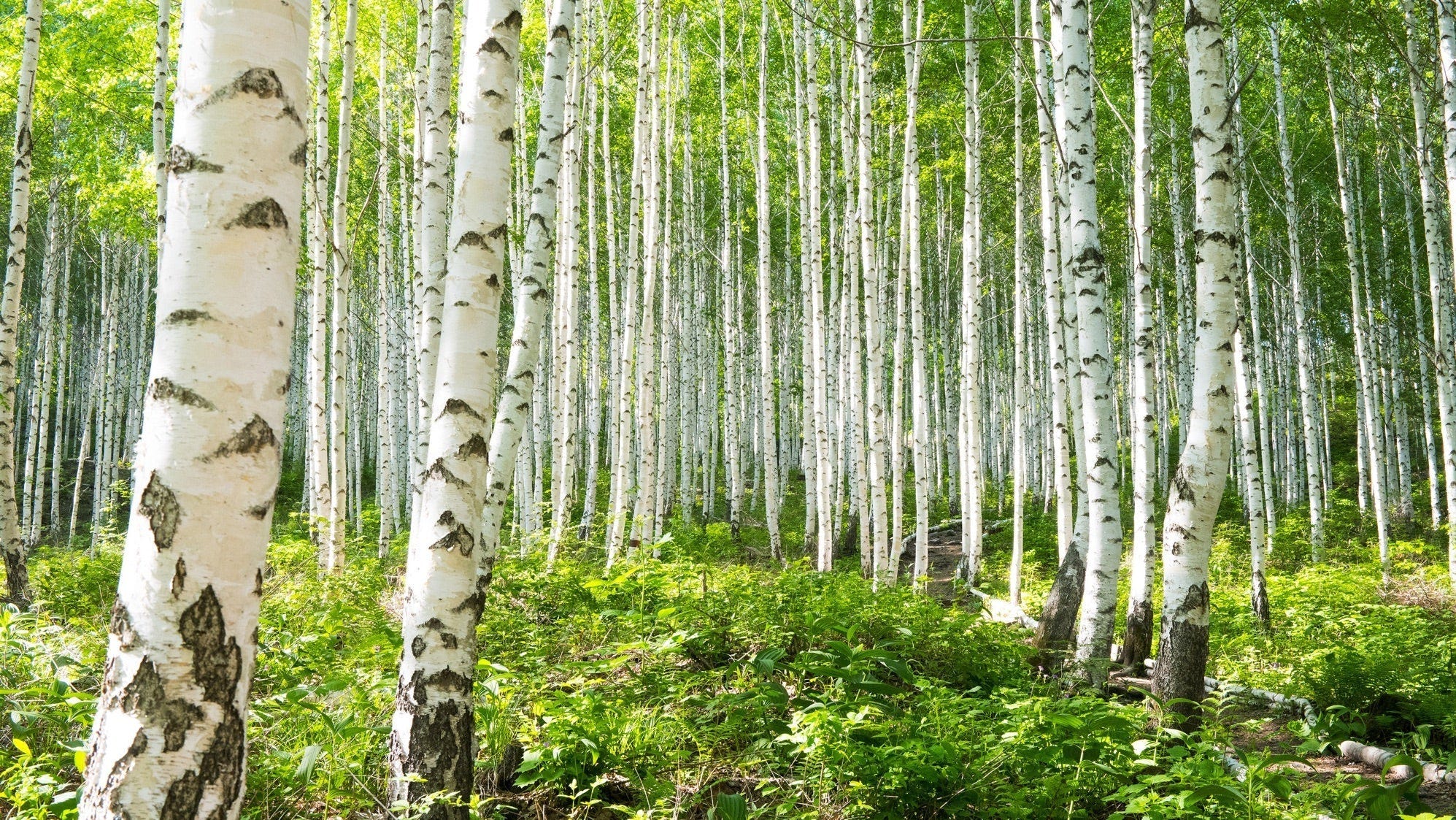
In Dave Malloy’s 2024 musical Three Houses, there is an intoxicating and beautiful song called “Birch Trees.” Here is how it begins:
my grandmother’s house
stands beyond a grove of thin white birch trees
you can peel the bark;
it rolls up like a cigar
you can press it to your lips
whistle a birch bird song
Susan, singing, describes these birches as something tangible: their bark can be peeled, rolled, touched to the lips. But as the song draws to its close, she describes the trees quite differently:
and the birch trees stand like ghosts
oh the birch trees stand like ghosts
Birch trees do seem particularly capable of such transformations. Their pale trunks are somehow both solid and spectral; gathered together, they seem already to be passing into memory. And more than half a century before Three Houses, Boris Aronson found in these trees the governing image for the original Broadway production of A Little Night Music.
✍️ This is a preview of this week’s member-only essay. To support our work and for full access to The Sondheim Hub, consider upgrading to a paid subscription. You’ll enjoy access to our complete, paywall-free library of more than 300 essays, features & interviews. Paid subscriptions make our work possible! 📚
The trees had a personal source. Aronson drew upon a vivid memory of white birch groves, believing that birches would give the production the lyrical quality it required. Painted onto sliding panels stretching to the height of the proscenium, Aronson’s trees could glide across the stage as one scene dissolved into another — a fluid and theatrical world through which the characters of A Little Night Music could move.
For the visual logic of that shifting forest, Aronson turned to René Magritte’s 1965 painting The Blank Signature. Magritte’s painting depicts a woman on horseback passing through a forest — or it seems to. Look more closely…