
Studying Seurat
A guide to the real Georges Seurat
In Sunday in the Park with George, we meet a fictionalized version of Georges Seurat—intense, obsessive, married to his art at the expense of all else. “I am not hiding behind my canvas. I am living in it,” he says. But how might we best get a sense of the living, breathing Seurat? And how might knowledge of the real man inform our understanding of the character we’ve come to know so well?
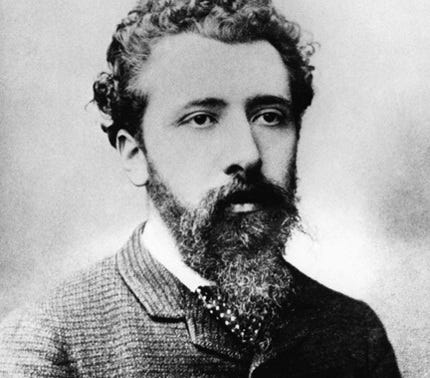
Born in Paris in 1859 to a comfortable middle-class family, Georges Seurat showed artistic promise from an early age. Unlike the struggling artists of the popular imagination, he did not face extreme financial hardship—his father, a customs official, had accumulated enough wealth to offer some financial stability. While not entirely free from economic concerns, this relative security allowed Seurat a degree of independence in pursuing his artistic vision. It enabled him to work in relative isolation, developing his theories and techniques without the immediate pressures of commercial success.
“I want to make modern people, in their essential traits, move about as they do on those friezes, and place them on canvases organized by harmonies,” Seurat once declared. This seemingly simple statement encapsulates much of what made him unique—the desire to combine classical composition with thoroughly modern subjects, all unified by his revolutionary approach to color and light.
His contemporary, the critic Félix Fénéon, who coined the term “Neo-Impressionism” to describe Seurat’s technique, wrote of first encountering A Sunday Afternoon on the Island of La Grande Jatte: “The eye experiences a feeling of illumination... The atmosphere is transparent and singularly vibrant.” This vibrance, of course, was no accident.
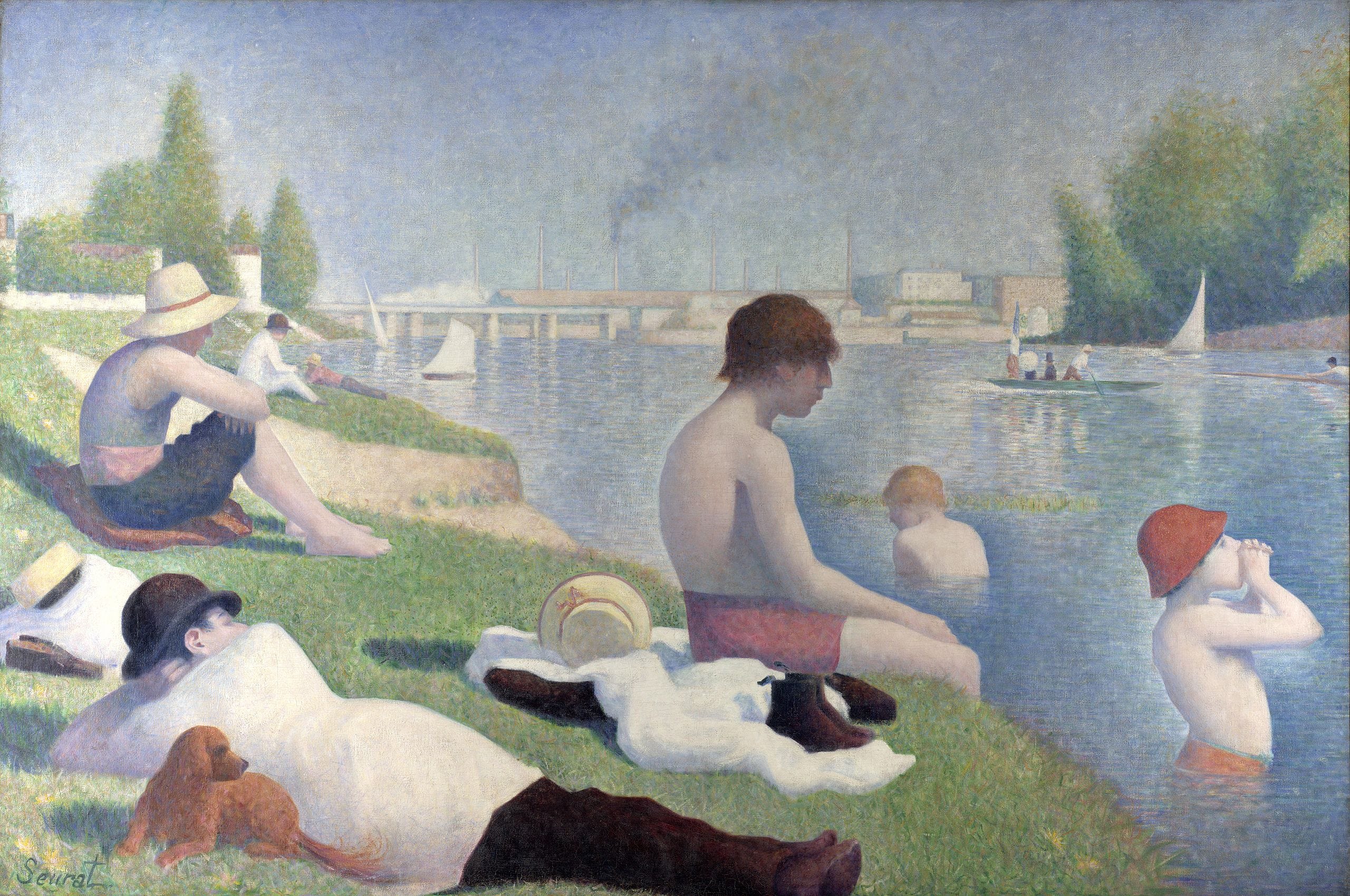
Seurat’s groundbreaking approach to color and light didn’t emerge fully formed. Before La Grande Jatte, he had been experimenting with these ideas in works like Bathers at Asnières (1884). The painter Charles Angrand recalled visiting Seurat’s studio during this period: “He showed me studies for the Bathers – small panels covered with tiny, regular strokes, crosshatched in every direction. Already one could see his tendency toward systematic division of tone.” The art critic Gustave Kahn would later write that these early experiments revealed “a mind perpetually in search of new methods of expression.”
Seurat’s personality remains somewhat elusive in historical records, but those who knew him consistently describe a man of extraordinary focus and intellectual rigor. Paul Signac, his closest artistic collaborator, described him as “methodical, serious, reserved, severe.” Charles Angrand noted that he was “very correct, very quiet, but obstinate – a resigned revolutionary.”