
Still The Princess, Still The Prize
Sondheim Supplement #40
Happy Friday, everyone! Here’s your weekend Supplement. Today, a closer look at “In Buddy’s Eyes,” more from Merrily MD Joel Fram, and a crossword in which every answer begins with the letter K…
If you’re currently a free subscriber and would like to support our work & access all our weekly Sondheim Supplements, click here to explore our various subscription options:
Still The Princess, Still The Prize
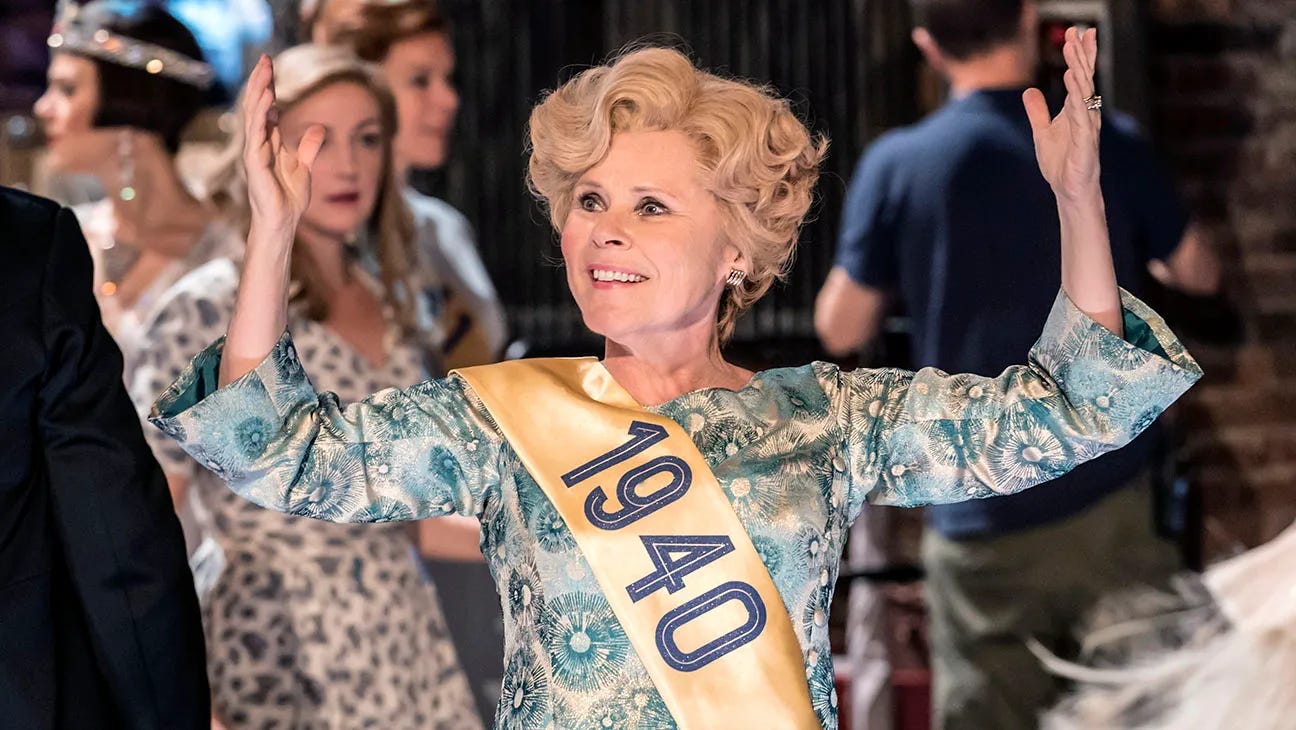
Last month, we looked at Ophelia’s flowers as a vocabulary of collapse. Today, let’s return to Follies and take as our starting point a single lyric: one word, repeated twice, that distills the essence of Sally Durant Plummer’s tragedy. In “In Buddy’s Eyes,” she insists: “I’m still the princess, still the prize.” That repetition of still encodes volumes. The word reassures her, but it also betrays her. She is still the princess, still the prize—because she cannot imagine being anything else.
At first hearing, “In Buddy’s Eyes” can sound like a tender love song, Sally’s affectionate tribute to the man who has stood by her for decades. But its placement in Follies tells us otherwise. She is not serenading Buddy; she is justifying herself to Ben, the man she believes should have been hers. The entire song is a performance, offered up as proof of happiness: a tableau of domestic serenity painted for the benefit of an old flame.
The text itself keeps slipping. “Every morning—don’t faint— / I tend the flowers. Can you believe it?” And when her voice falters mid-line, swept away by memory of her younger self, the performance fractures. It is precisely in those cracks that the song’s true subject emerges: not Buddy, but Sally’s fragile illusion of self.
“I’m still the princess, still the prize.” On the surface, it is triumphant. Sally retains her value; she has endured. But the need to insist on still suggests otherwise. It implies she might easily not be those things—that time has passed, that the crown has slipped. Why say it twice? Because once is not enough. Repetition, in speech or in song, so often betrays doubt. The more Sally insists, the less we believe her.
But why does Sally need to insist at all? Why does her entire sense of self depend on being the princess, the prize—on being seen and chosen and valued? To understand this, we must look beyond Sally to the cultural architecture that built her, to the theoretical frameworks that explain why still is not merely Sally’s word. That’s where we’ll turn next.