
Inside the Role: Johanna
Today’s feature is the first in a new series, Inside the Role — offering an in-depth look at a single character, told through the voices of performers who have lived the role on stage. We’ll publish entries in this series periodically, as part of our wider offering.
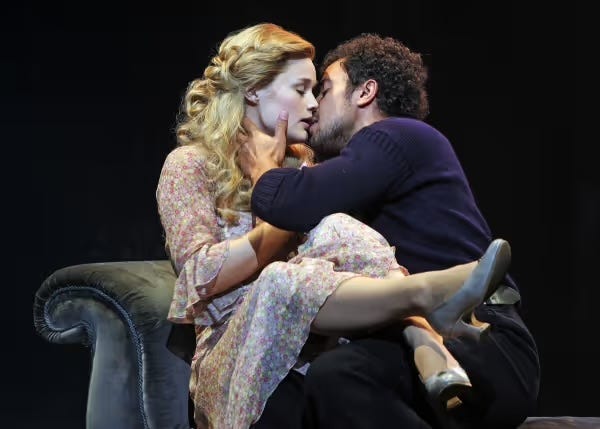
For a character so often described in passing, Johanna proves remarkably difficult to describe well. From a distance, she can seem simple: the pretty soprano, the girl at the window, the captive ingénue whose music floats above the grime and blood of Sweeney Todd. Johanna is, perhaps, as easy to flatten as to embody.
But what looks on paper like innocence can, in performance, become anxiety, curiosity, damage, wit, survival instinct, longing, volatility, or defiance. Today, in conversation with 10 performers who’ve played Johanna, we’ll trace the inner life of a character who proves far stranger, darker, and more resilient from the inside than her reputation might suggest.

First impressions and assumptions
Lucy May Barker, who played Johanna in the 2012 West End revival opposite Michael Ball and Imelda Staunton, remembers arriving with assumptions the rehearsal room quickly challenged. “I saw that surface sweetness of Johanna,” she says, “and in rehearsals I tried to play that — and they would stop me. ‘Stop it, you don’t need to do that. You can give the grit of her.’”
Looking back, Barker is candid about how young she was then: “I too saw her as quite sweet and innocent — and she is all of those things — but I don’t think I saw the true depth of her at the time. Maybe that was the point.”
The progression from sweetness to grit recurred across these conversations. At the University of Cincinnati College-Conservatory of Music this year, Maya Sharma found herself revising an initial impression she now calls “so misguided.” Her Johanna had seemed “a typical princess-type ingénue — this innocent and passive sort of myth-like thing, because people only talk about her as this idealization.” Once rehearsal began, that reading started to fall apart, and the work became something more precise: analyzing Johanna “as a full person, not as a projection of a person.”
Miriana Pavia, in London, describes something similar: at first, Johanna looked like “the damsel in distress, the princess.” But rehearsal made another Johanna visible: “really quite a strong character,” who “goes through hell and back” and, Pavia notes, possesses “really good survival skills.”
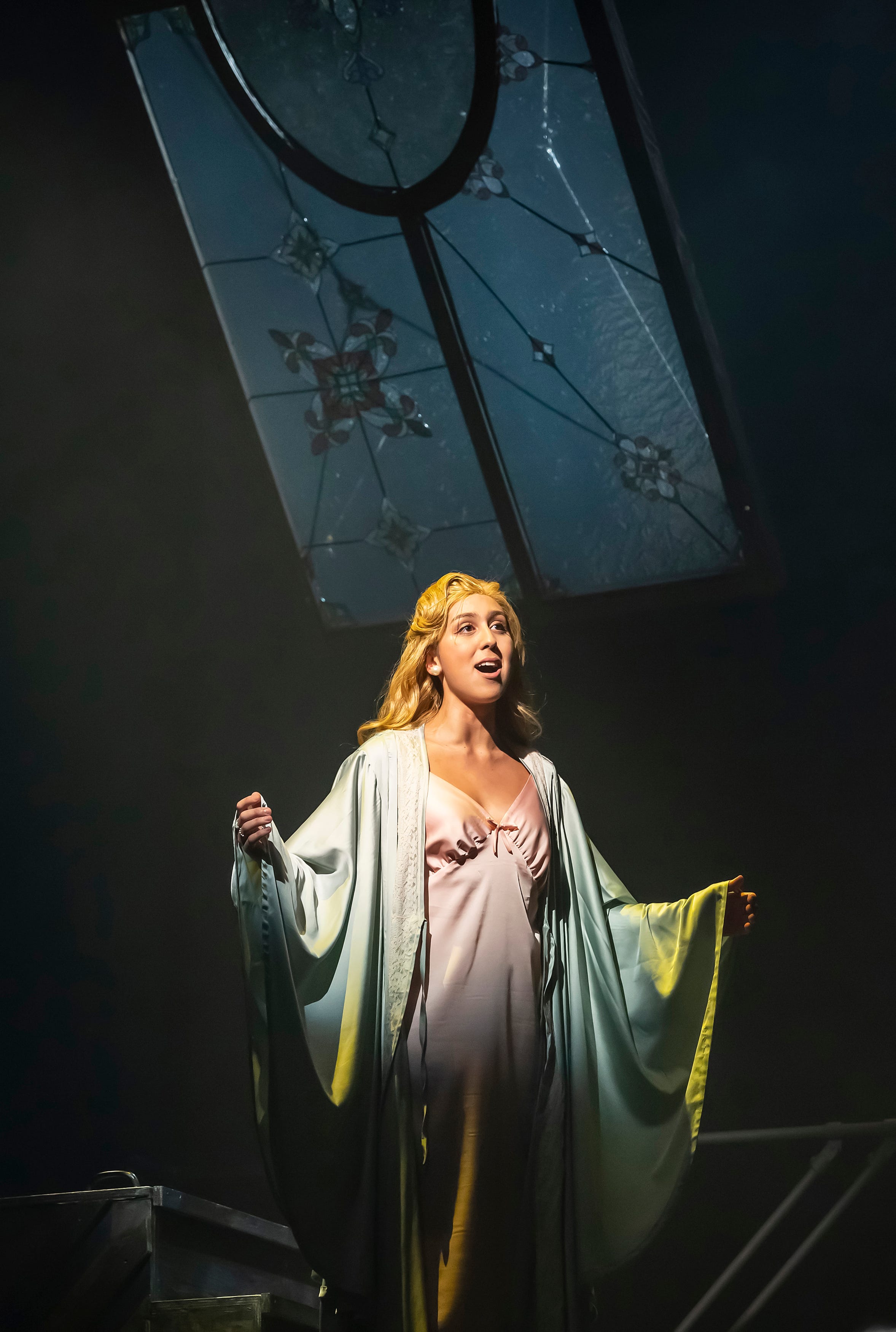
For Michelle van de Ven, who played the role professionally in the Netherlands across more than 150 performances, the trap was partly musical. Because “Green Finch” is “a very pretty song, and it’s about birds,” she says, “at first you don’t feel the anxiety, the feeling of being so captured.” Only in rehearsal did that prettier image give way to something darker and less stable.
Having often played the kind of lyrical soprano role people are quick to dismiss, Matilda Collard was alert to the assumptions gathered around Johanna before she played her in Bristol earlier this year. “So many people just write her off as the pretty role, the lyrical soprano role that has no depth. If you actually, even for a second, think about her story, it is so nuanced.” Isabella Dippel, who played Johanna in Wisconsin last fall, places her in a wider lineage of young heroines too easily patronized, even by theatre people: “I’ve been Juliet. I’ve been Cosette. There’s a lot of depth there if you just look at the text for more than three seconds. Johanna is definitely another case of that.”
Even when performers began by stressing Johanna’s innocence, the word rarely survived unqualified. Anya Bryant first saw her as “this beacon of naivety and hope,” someone with a “gilded-cage quality” — but is careful to say that innocence did not mean blindness. “She was aware of the fact that she couldn’t leave, which is why she was yearning so much.”
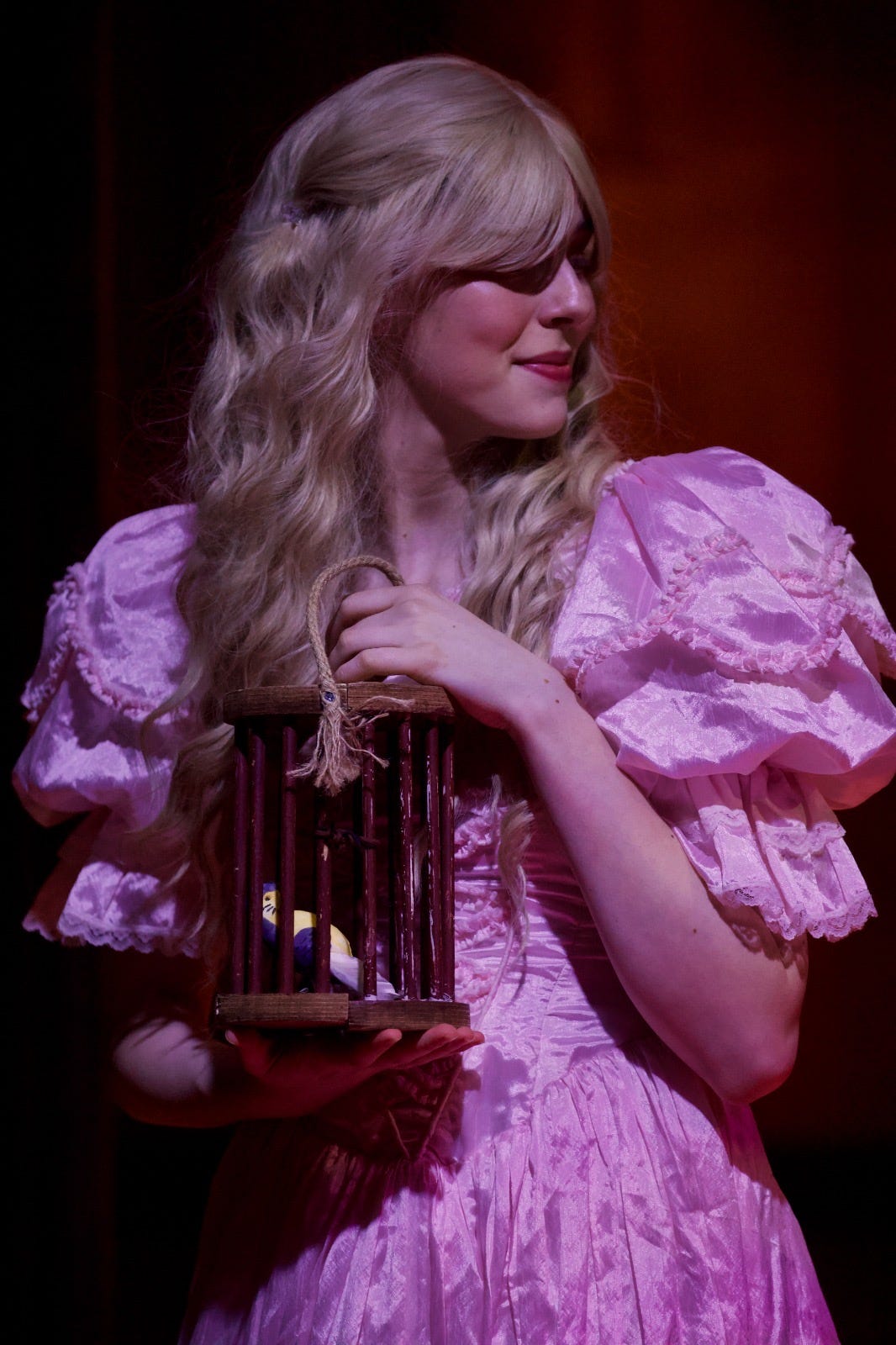
And Lilly Foo-Black was drawn to the gap between Johanna’s composed surface and the disturbance underneath: “she seems so pristine, so put together, and then you delve into the music. She’s got all these thoughts going everywhere but with no real output.”
The girl at the window
Detached from the rest of the show, “Green Finch and Linnet Bird” can seem to confirm the cliché: the beautiful captive soprano in a beautiful captive aria, all wistfulness and suspended longing. Several of our Johannas spoke about having to resist precisely that.
Collard puts the problem bluntly. “‘Green Finch’ is so often sung as an ‘I Want’ song — and it is, in that she’s dreaming about freedom — but sometimes people lose the absolute devastation of it, because they sing it in a Disney princess way.” The dreaminess had to be there, certainly, but so did something harder. “The audience needs to understand that she’s absolutely trapped, and so alone. The loneliness of it needs to come through.”
Sharma’s route into the song lay in its grammar. “She’s not passively singing. She’s not making statements. Every single one of her thoughts is a question.” In rehearsal with director Vincent DeGeorge, she kept returning to the idea that Johanna’s purity was not innate but manufactured: “It is curated by the Judge and her environment. Her knowledge, her identity, everything about her is a product of her environment.” That raised an urgent question: what, then, belonged to Johanna herself? The answer she arrived at was “her need for connection, her curiosity, and this fire that lives in her that keeps her going.”
Sharma was also struck by what the song’s imagery encodes. The caged songbird, familiar from literary tradition, models a particular idea of femininity: value lies in beauty and in producing a pleasing sound, while freedom, autonomy, and interior life are restricted. “She’s not just dreaming about being free — she’s studying the birds. She’s trying to understand how something so trapped can still survive, let alone sing.” And then there is the darker paradox the song contains: that the caged birds are blinded, which is why they sing at all hours. They sing because they cannot distinguish night from day. “Because she is not blind,” Sharma says, “that’s exactly why she can’t sing.”
For Erin Rose Doyle, the song became a study in volatility and interruption. Her Johanna had not suddenly broken in the asylum — she had already been broken by confinement, years before the story begins. That shaped everything vocally. “She has these intrusive thoughts, and then all of a sudden it’s, ‘Just kidding!’ And then an intrusive thought comes back.” The instability was, for Doyle, also specifically adolescent: “She’s 16. She’s becoming a woman, and I wanted it to show in my voice.”
✍️ If you’re enjoying this feature, consider supporting The Sondheim Hub and unlock our full archive & weekly member-only content for a few dollars a month:
an exclusive subscriber-only essay each week
a weekly Sondheim crossword and more from each interview
full access to our archive of 250+ essays, features, and interviews
(every free post is paywalled after 1 month)
A small percentage of readers currently support the Hub with a premium subscription. If you’re able to help sustain this work, please consider joining them! 📚
Anya Bryant thought vocally in terms of a journey, too: the bright, clean sound of “Green Finch” gradually becoming “less childlike and more grounded” as Johanna begins to understand the darkness beyond her window. Dippel built something similar into the body, playing Johanna with “a little bit of a nervous tremor,” treating the trill as a failed effort to steady herself: “She’s trying to get ahold of herself, trying to just sing normally, and then the hand starts shaking.” Foo-Black, too, heard disturbance in those ornamental figures. The trills and repetitions felt to her like “a glamorized mental breakdown” — not decorative detail, but a mind in the act of “driving herself crazy.”
Zoë Meier Juhlin, also playing Johanna at CCM this year, was struck by how much the music is already carrying before the performer does anything at all. “Even in ‘Green Finch,’” she says, “there’s a hint of depression and melancholy. There’s something much deeper and more nuanced, because she’s gone through things that a normal 16- or 17-year-old wouldn’t have.”
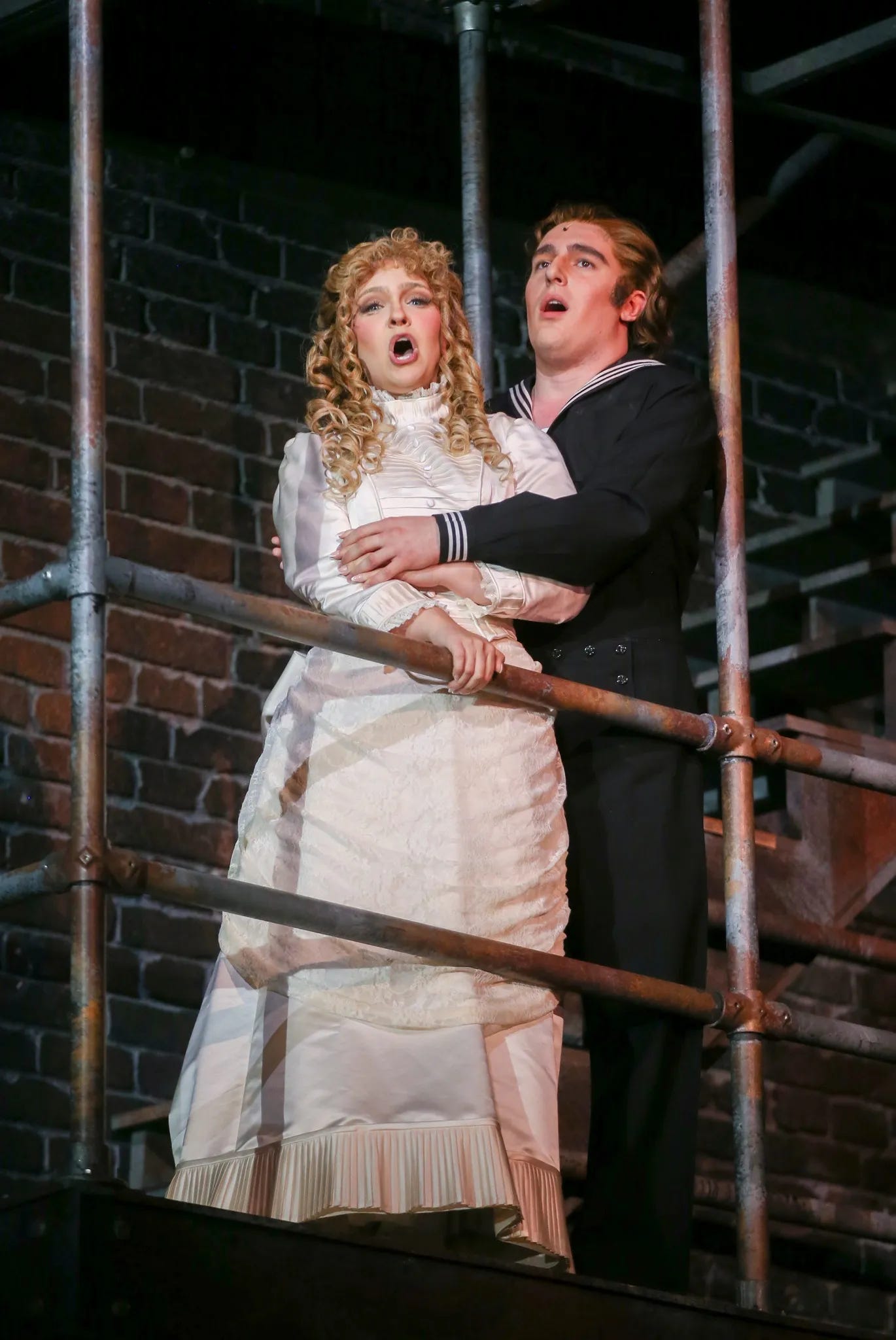
Van de Ven felt that the anxiety was there all along but fully revealed itself elsewhere. “It was ‘Kiss Me,’” she says simply. “It was the anxiety of it, the quickness of the song — that, for me, captured the character.”
The voice as character
Several performers went further, describing the vocal score not merely as a vehicle for character but as character itself — a map of Johanna’s interior that a singer has to read as carefully as any stage direction.
Collard spoke in close technical terms about a single phrase in “Green Finch” she found especially revealing. She made a gradual progression: “‘Dreaming’ — very light in head voice, very minimal vibrato, almost suspended. Then I brought in a little more. And then ‘screaming’ — a very fast vibrato, really big, sort of unhinged.” The escalation, she felt, was a window into what Johanna is working to contain: “one of those small moments of being able to see what is inside her.”
Van de Ven observed that much of the role’s difficulty comes from where it sits in the voice — specifically the passaggio, that technically vulnerable place where registers shift. Her solution varied by song: in “Green Finch” she kept the sound smaller and more contained; in “Kiss Me,” she was able to open up more.
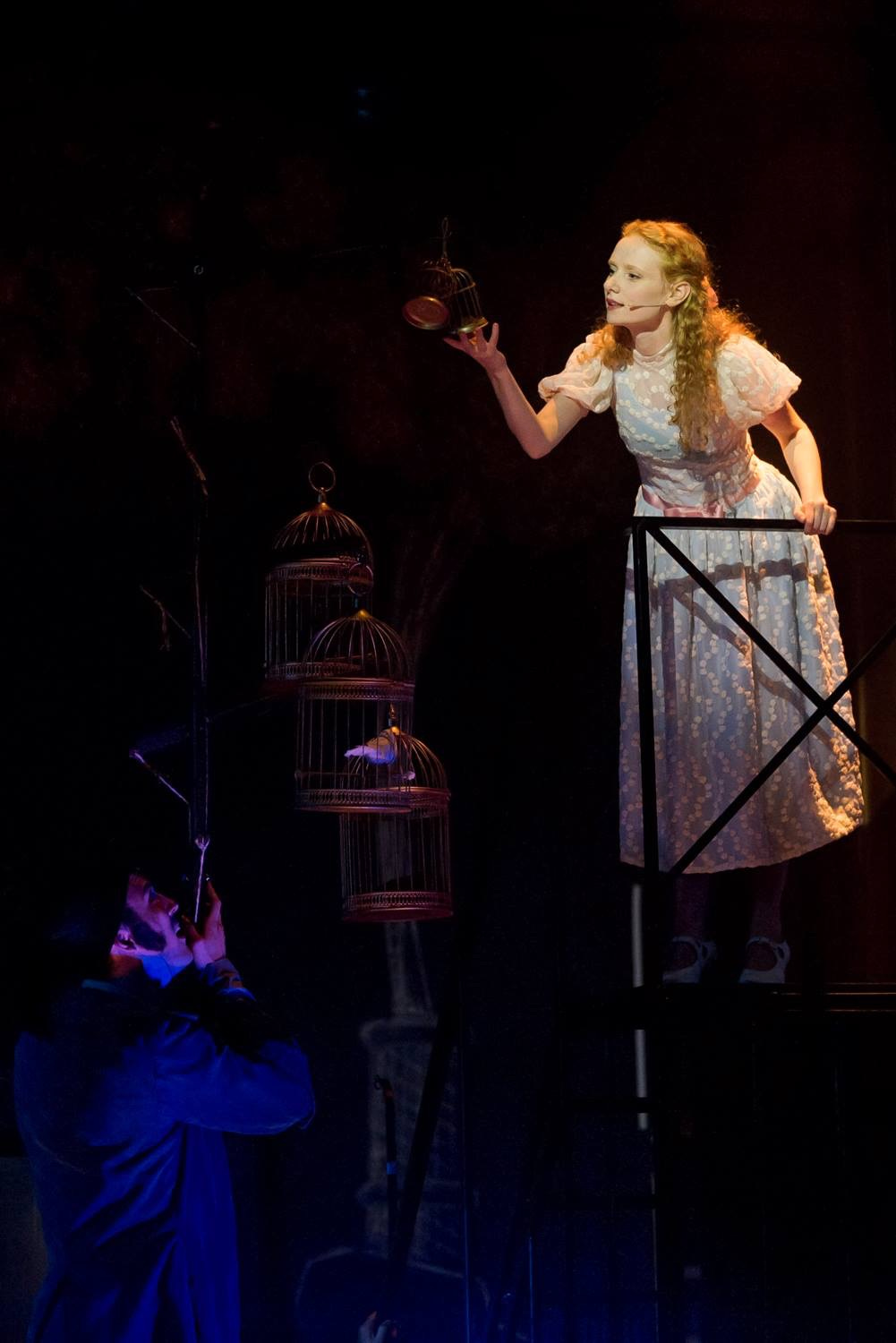
Meier Juhlin, coming to the role as an opera singer, found it a genuine crossover challenge. Johanna, she argued, needs both classical security for the soaring upper writing and theatrical flexibility for the middle voice — “where she lives a lot of the time, especially in ‘Green Finch.’” She was particularly drawn to the dramatic demands of the Act 2 sequence, where Johanna moves from the fragmented, speech-driven anxiety of the “Kiss Me” reprise into the exposed soprano lines of the “Searching” passage — all within a matter of minutes. That sudden shift in vocal technique, she felt, makes Johanna’s emotional dislocation physically audible.
Anthony, escape, and the question of love
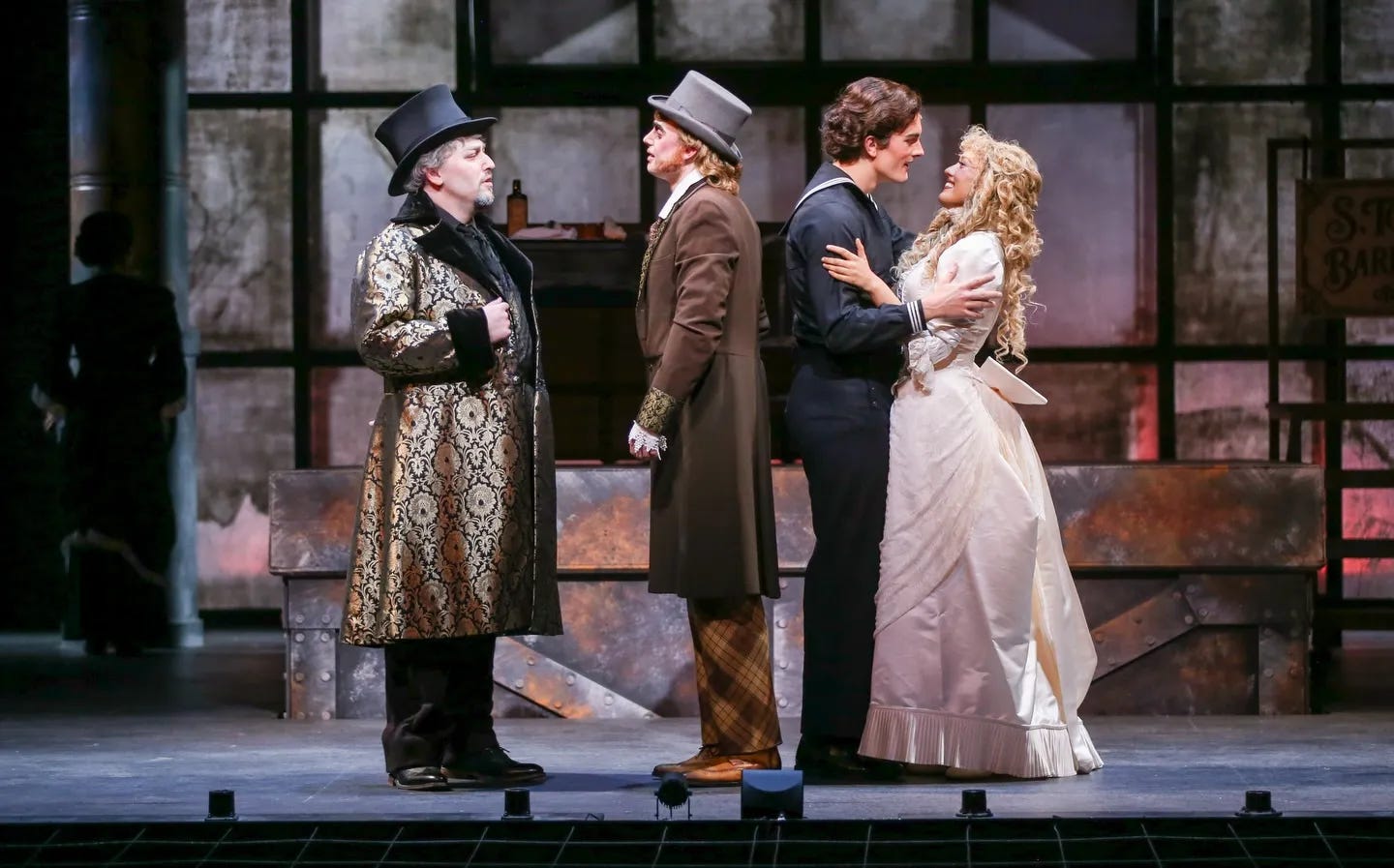
The tension between surface and inner life runs through Johanna’s relationship with Anthony, too. None of these performers seemed interested in treating him as uncomplicated romantic fulfilment — not because they denied the emotional truth of the connection, but because “real” and “simple” turned out to mean very different things.
Pavia puts it most directly. “Was he really the love of her life, or was he her first way out?” Anthony’s appeal is inseparable from what he represents: a route beyond confinement. “A part of her is experiencing, for the first time, a boy her age giving her that attention,” she says. But another part is thinking clearly: “He might want to marry me, so this is a really good way out.”
Sharma arrived at a similarly layered formulation. “He’s infatuated with her, and she knows she can’t escape alone. He says, ‘I’ll steal you,’ but she’s dropping the key. He says, ‘I’ll save you,’ but she’s the one that shoots Fogg.” That asymmetry, for her, was not a reason to doubt the relationship’s emotional reality — it was the relationship’s emotional reality. “It’s not just a love story — it’s a collision between projection and strategy. Anthony sees a fantasy; Johanna sees a possibility for escape. And that’s layered in with whatever infatuation they feel for each other.”
Collard agreed that the romance, whatever it becomes, begins in necessity. “He is her only way out. He is her vehicle to escape. That’s what’s exciting. That’s where the infatuation and the love come from.” Van de Ven heard both things at once: genuine attraction and pragmatic calculation running alongside each other, inseparable. Meier Juhlin found herself drawn instead to what Anthony carries atmospherically — something that has nothing to do with romance in a conventional sense. “His name is Anthony Hope for a reason,” she says. “There’s this intention and hopefulness about him that draws her in.” For a young woman raised in controlled ignorance, that quality of hopeful forward motion may matter more than anything else.
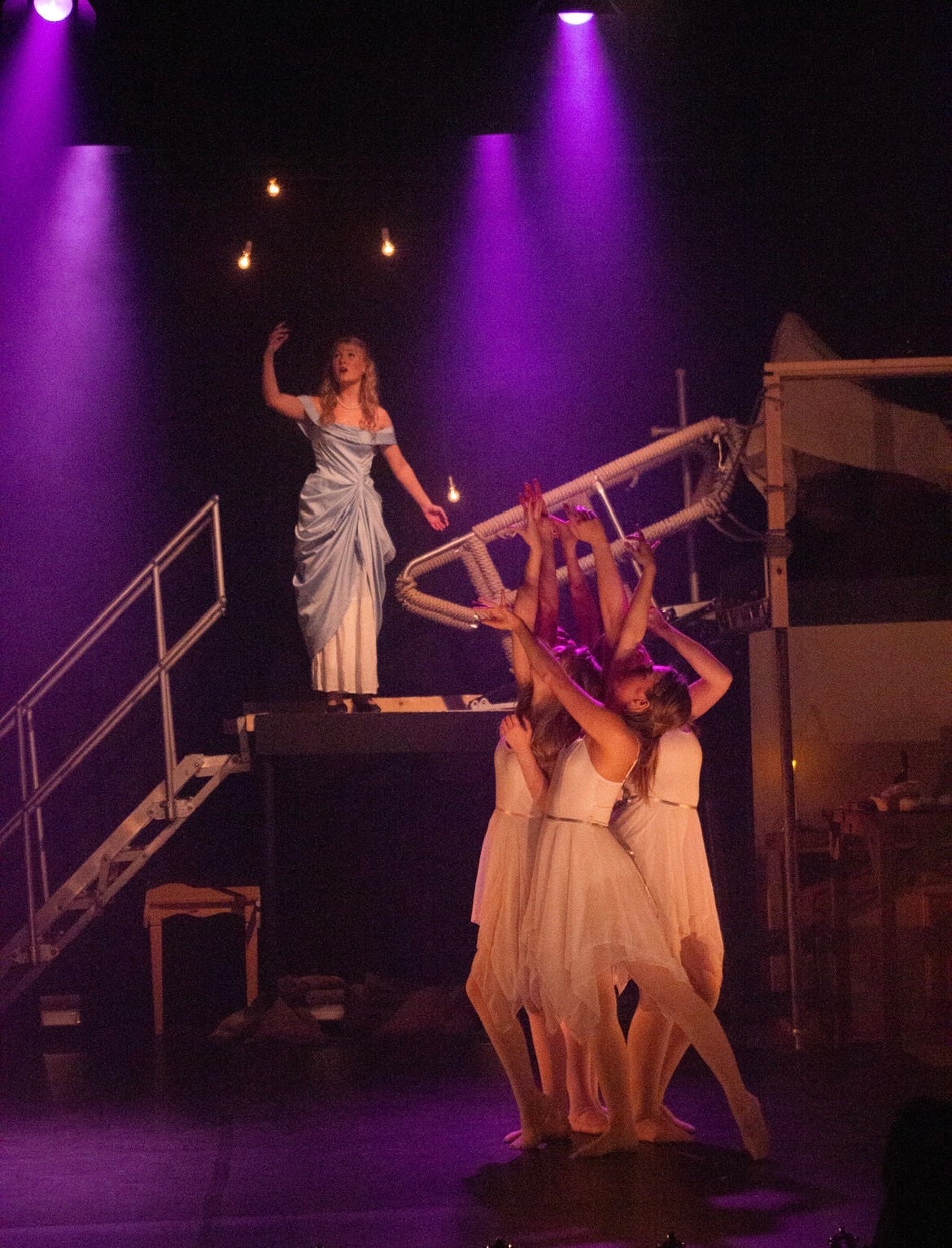
Bryant, meanwhile, noticed how differently each of the men in the show regards Johanna — and what that multiplicity does to her sense of self. To the Judge, she is an object of possession; to Anthony, an idealization; to Sweeney, a child. “She might not know who she is,” she says. “And each person looks at her differently.”
Doyle found yet another dimension in the dynamic, choosing to withhold information from her own performance in a way that mirrored Johanna’s experience. The actor playing Judge Turpin had detailed discussions with the director about the backstory — discussions Doyle was deliberately kept out of. “Not only was Johanna kept in the dark, but I was kept in the dark,” she says. “Which added another layer.”
“Kiss Me” itself is hardly a simple outpouring. Nearly everyone described it as technically formidable and psychologically compressed. Pavia found it the most challenging song she has ever had to sing; what helped, she says, was the pulse underneath it — “our MD said it’s the heartbeat.” The trick was to let that heartbeat drive the scene without allowing technical anxiety to crowd out dramatic urgency.
The asylum, Fogg, and agency
Again and again, our Johannas identified Fogg’s Asylum sequence as the place where the myth of her passivity finally collapses. Pavia remembered the realization precisely: “The point where I really went, ‘Oh, she’s actually so much stronger than him,’ is the scene in the asylum, when she’s the one who shoots. He tries, but she’s the one who goes through with it.”
For Sharma, Fogg’s Asylum is the next apparatus of control in a long sequence of them: another institution trying to define, contain, and erase Johanna. And, she says, “she refuses that erasure.” Doyle, meanwhile, found in the asylum not the origin of Johanna’s instability but its first point of recognition. Surrounded by people whose minds work the way hers does, she is — for the first time — met rather than managed. “It’s like the birds are singing back to her.”
Foo-Black thought about it in terms of the show’s broader architecture: Mrs Lovett pulling strings behind the scenes, Johanna’s apparent serenity concealing disturbance, the gap everywhere between surface and interior. “Johanna as a character seems so pristine, so put together,” she says, “and then you delve into the music and it’s all over the place.” The asylum is where that gap closes, where exterior and interior finally align — violently, irreversibly, but honestly.
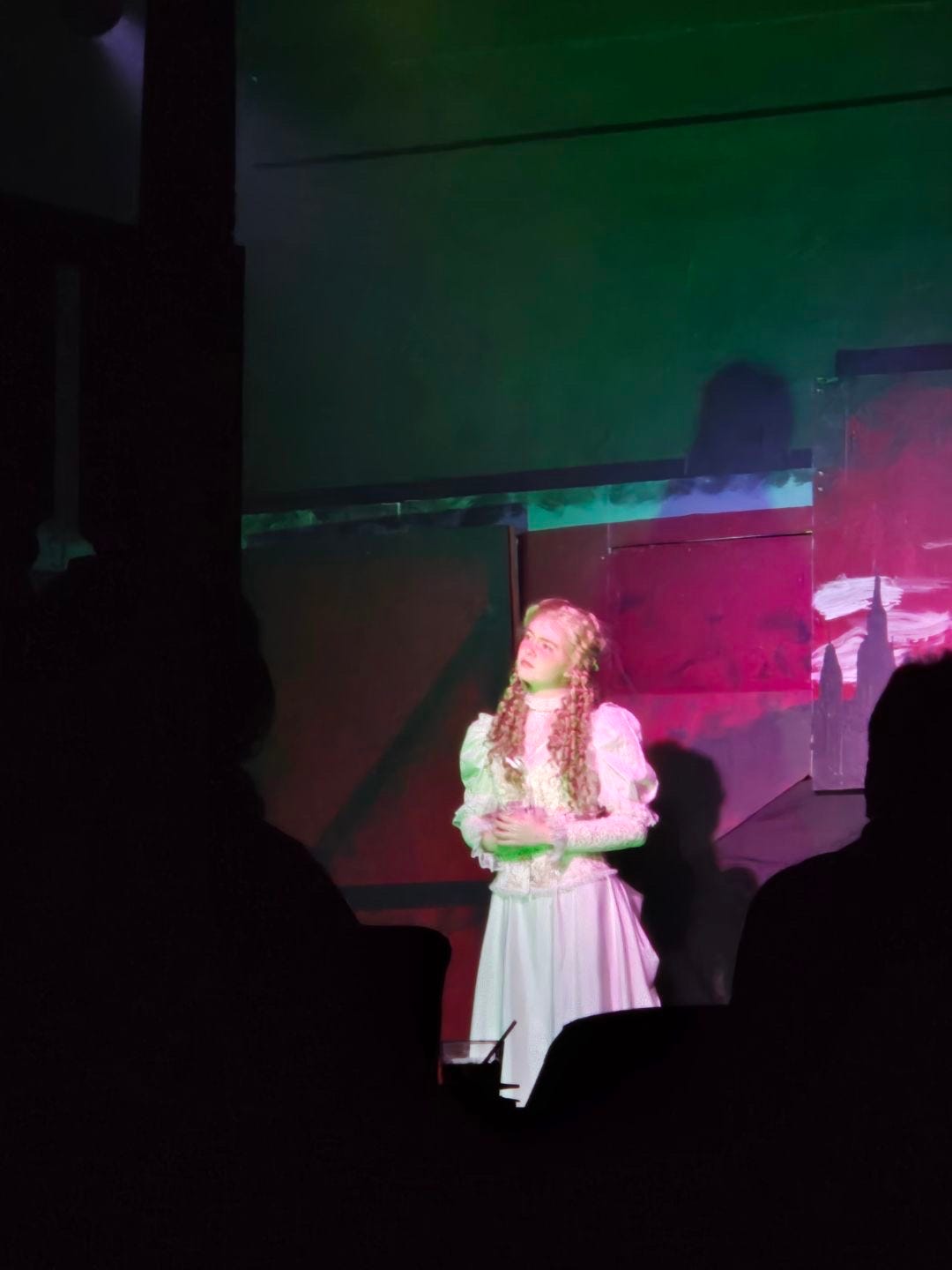
Dippel’s experience of the final sequence preserved, above all, the texture of Johanna’s thinking. The half-recognized lullaby. The shadow of the Beggar Woman, who in their production would sleep beneath Johanna’s window during “Green Finch,” listening to her daughter sing. The moment alone in the barbershop — that breath, that look around, that careful handling of the razor. “It was the first time in her entire life that she had a moment to herself,” Dippel says. And then the return: the “Kiss Me” fragment, the kiss, the switch. Not collapse, but reorientation. She was the one pulling Anthony back onto the stage. After the kiss, she says, it was clear: they needed to go.
What these performers return to, in different vocabularies, is the difficulty of preserving complexity in a role the culture keeps trying to simplify. The challenge of Johanna is to sing beautifully without smoothing away fear; to play innocence without emptiness; to let lyricism coexist with anxiety, curiosity, damage, and will.
Johanna may look, at first glance, like one of Sondheim’s more archetypal figures. From the inside, she appears to be something else entirely: a role that keeps asking to be rescued from its own reputation.
With immense thanks to Lucy May Barker, Anya Bryant, Matilda Collard, Isabella Dippel, Erin Rose Doyle, Lilly Foo-Black, Zoë Meiher Juhlin, Miriana Pavia, Maya Sharma, and Michelle van de Ven, for their time, generosity, and insight.
✍️ Please support our work by upgrading to a premium subscription:
The Sondheim Hub exists solely thanks to the generous support of our readers. Please consider supporting our work for a few dollars each month. A premium subscription gives you full access to The Sondheim Hub: an exclusive essay, crossword, extended interview & more each week, plus our complete, paywall-free library of 250+ essays, features & interviews. 📚
Fascinating look at Johanna :)