
Follies, Ophelia, and the Language of Flowers
Sondheim Supplement #35
“Anyway, you’re thirty-five. Who wants to celebrate being that old?” Wise words from Joanne in Company. But this is our 35th Sondheim Supplement! And we are celebrating with:
An exclusive essay looking at Ophelia and the language of flowers in Follies.
A Bobby-themed crossword (appropriately enough)
More from our conversation with Dean Drieberg, co-artistic director of Australia’s first and only Sondheim repertory company
A look back at our interview with Richard Schoch, author of How Sondheim Can Change Your Life
If you’re currently a free subscriber and would like to support our work & access all our weekly Sondheim Supplements, click here to explore our various subscription options:
Follies, Ophelia, and the Language of Flowers
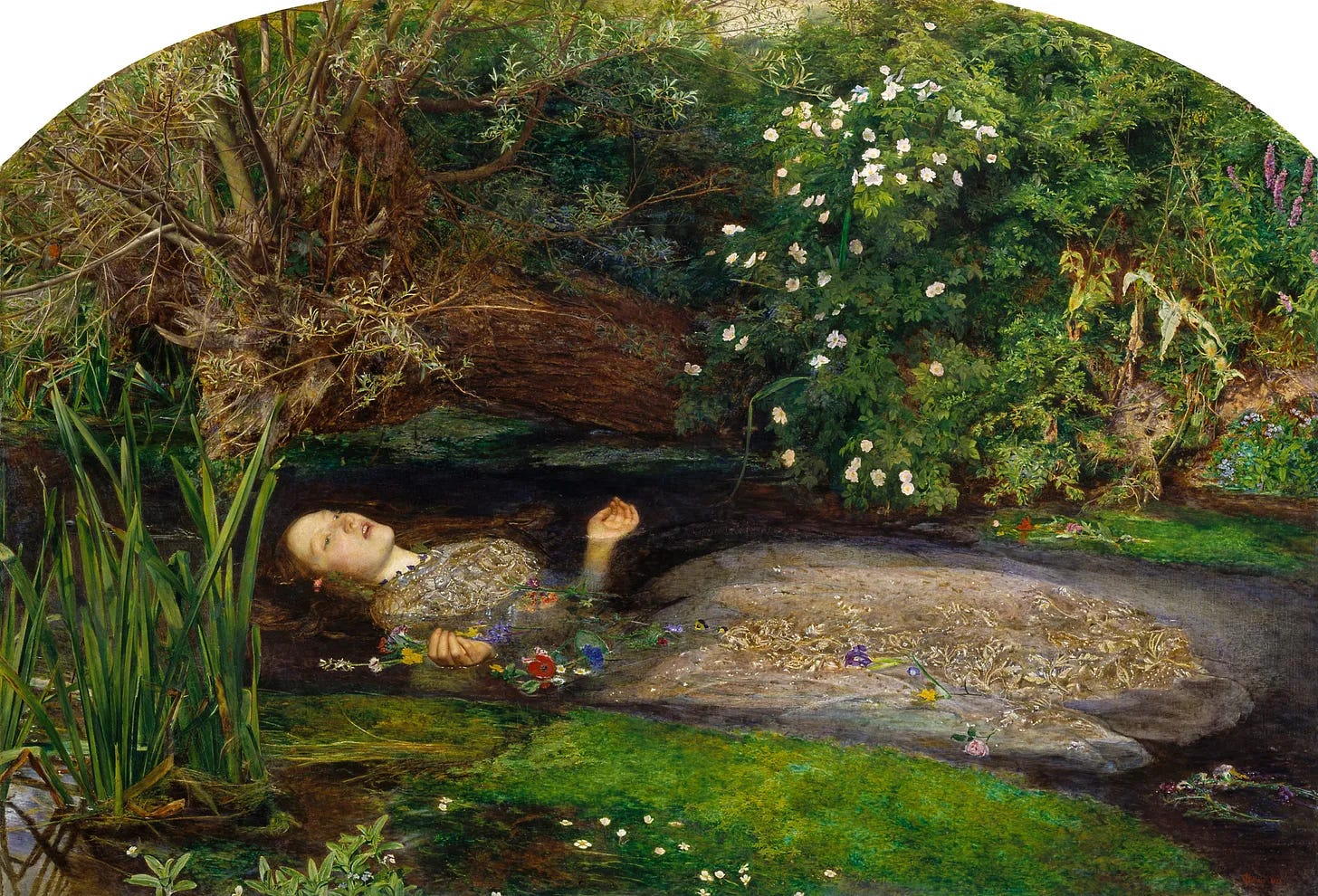
Last week, we looked at the showgirls of Follies through the lens of Ophelia, inspired by the theatrical archetypes Taylor Swift has lately been conjuring with. Today, I’d like to take a closer look at one thread in particular: the language of flowers.
For Shakespeare’s audience, Ophelia’s flower-distribution in Hamlet would have carried layers of symbolic meaning. Rosemary for remembrance, pansies for thoughts, rue for repentance, fennel for flattery—each bloom a fragment of coded speech. In her breakdown, Ophelia communicates through symbols rather than argument, gestures rather than logic. Flowers become her final vocabulary: public and private, performative and deeply personal. And when Gertrude later reports Ophelia’s death, the image doubles down: garlands caught on branches, “crow-flowers, nettles, daisies,” nature itself conspiring to turn beauty into elegy. Flowers speak when speech fails.
Sally Durant Plummer has no garland to scatter, but she does have her refrain: “I think about you.” Like Ophelia’s blossoms, the phrase fragments her obsession into countless pieces, pressed into every corner of her daily life. What was once love is ritualized into memory until it crowds out reality.