
First Li(n)es: The Art of the Feint
Plus, a New Year crossword & more from our conversation with Ethan Heard
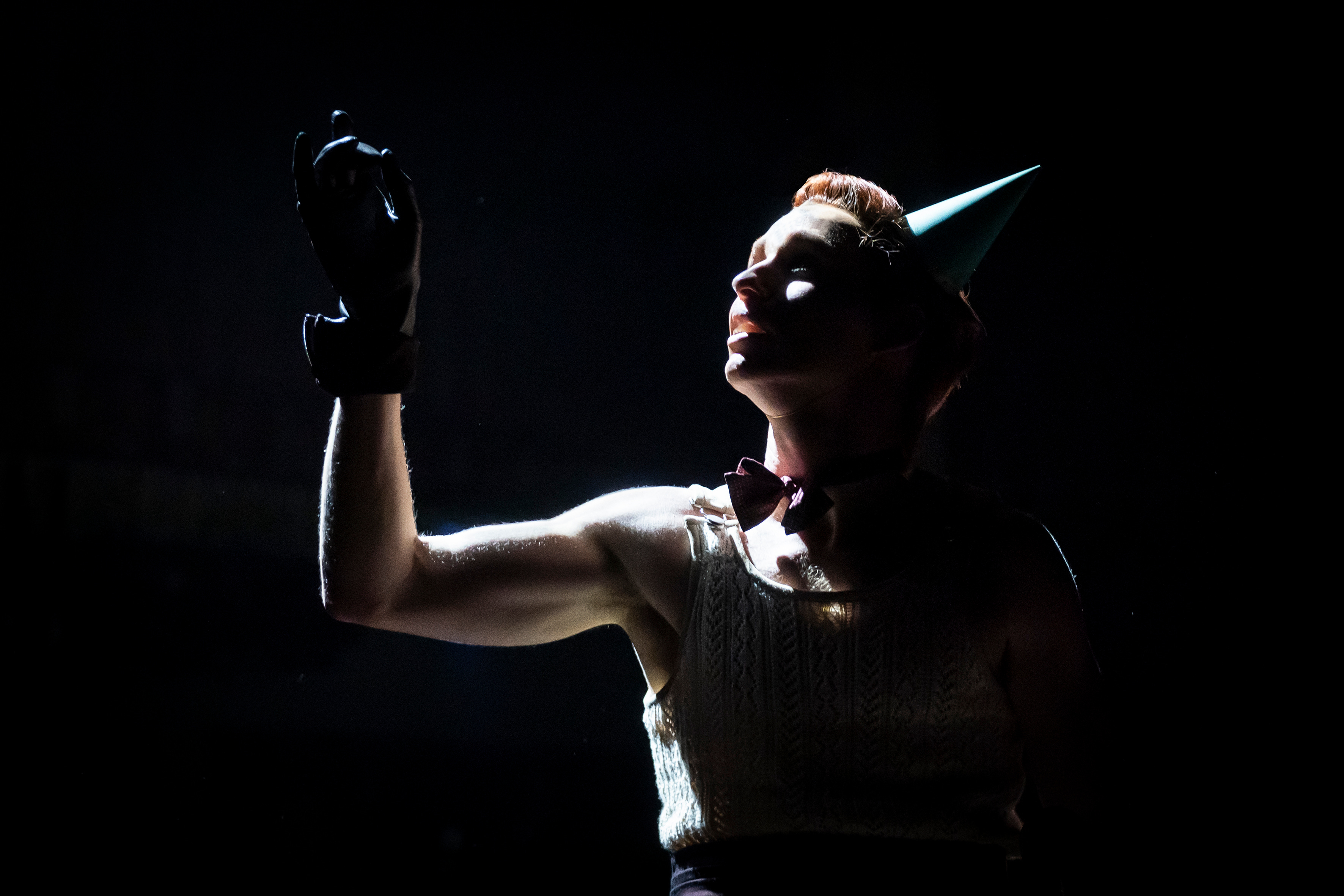
A first line, as we explored in Sunday’s essay, is a kind of promise: a hand extended, a threshold moment. In musical theatre, that promise is rarely made in words alone. It arrives braided—sound, image, note, line—sometimes held taut, sometimes held slack.
But not every promise is made in good faith. Or rather: not every promise is made in the way we expect.
A feint is a move that invites a specific response so the responder is exposed. In boxing, you throw a jab to raise your opponent’s guard; in fencing, you lunge left to open the right side. In musical theatre, the mechanism is subtler but no less deliberate: an opening feint creates an expectation—of tone, of moral stance—and then uses our trust in that expectation against us. Not as failure of craft, but as craft itself.
This kind of opening mechanism isn’t confined to Sondheim; it’s a recurring theatrical tactic, and a powerful one. Let’s take a closer look:
If you’re currently a free subscriber, consider upgrading to a premium subscription for full access to The Sondheim Hub: an exclusive essay, crossword, extended interview & more each week, plus our complete, paywall-free archive of 200+ essays, features & interviews.
The Tonal Feint
A tonal feint is an opening that actively manufactures a specific mood—charm, safety, brightness—and then relies on our willingness to trust that mood as the show’s true register. This kind of opening writes a check the show will later cash in a different currency.
Consider Kander and Ebb’s Cabaret. The Emcee’s multilingual welcome promises refuge: “Leave your troubles outside,” he urges. The outside world may be disappointing, but “here life is beautiful.” He’s offering two things at once: sanctuary and abdication. And because the Kit Kat Klub is staged as a world-within-a-world, that pleasure-as-relief can feel, in the moment, almost ethical: you’re not fleeing the real world so much as entering an art-form that knows the real world is cruel.
That, of course, is the trap. Cabaret’s subsequent force depends on the fact that we accepted the premise: that there exists a clean boundary between inside and outside, between entertainment and responsibility. By the time the boundary collapses, the opening’s warmth has curdled into something like accusation. The feint was never isn’t this fun? It was: isn’t it convenient that this is fun?
A very different tonal feint—older, broader, almost mythic in its reach—begins Oklahoma! with pastoral radiance. Curly’s “Oh, What a Beautiful Mornin’” establishes a setting that is, on its face, wholesome, singing, sunlit. We drink in that bright golden haze, that improbably tall corn.