A Conversation with Liz Callaway
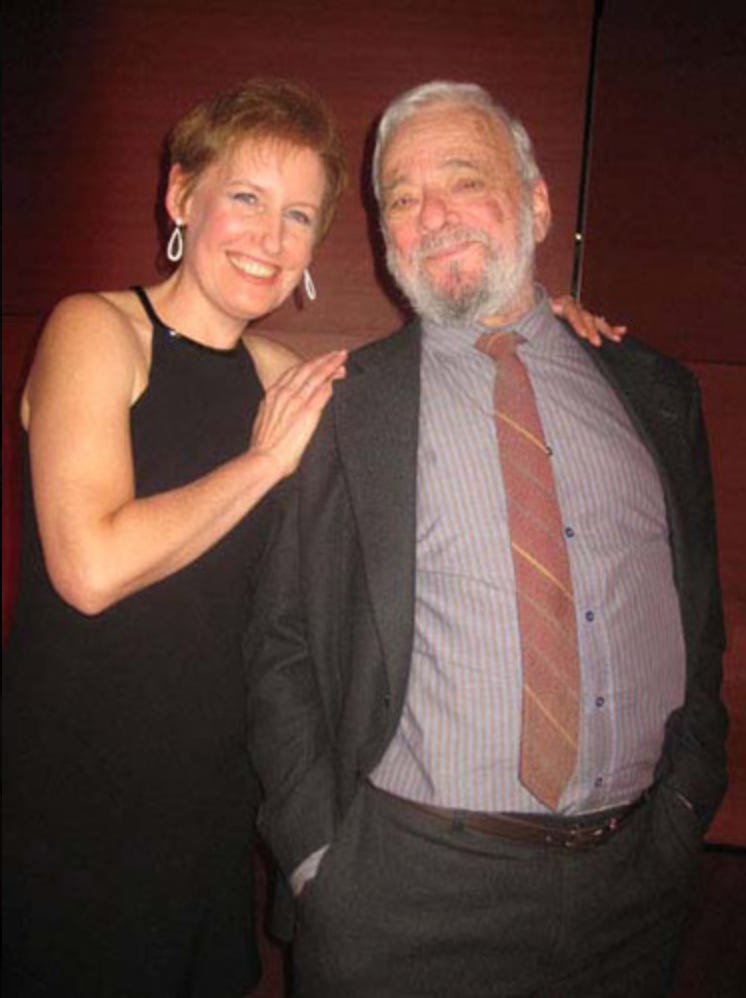
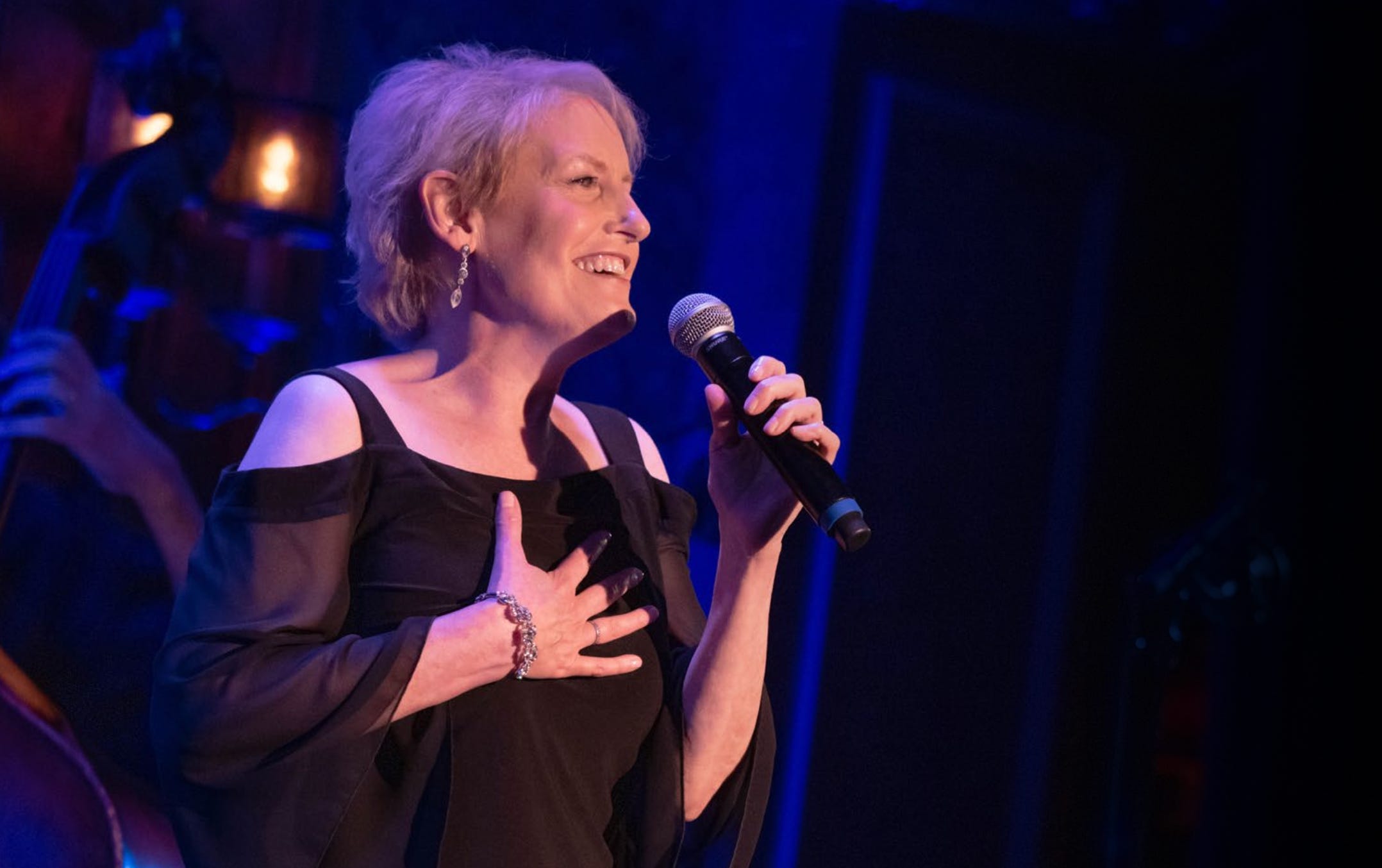
It’s a huge privilege to welcome Tony and Grammy nominee and Emmy Award-winning actress, singer and recording artist Liz Callaway to The Sondheim Hub this week. Liz made her Broadway debut in the original production of Merrily We Roll Along, played Young Sally in the legendary 1985 Follies in Concert at Lincoln Center, and has appeared as Dot in Sunday in the Park with George and in the European premiere of Sondheim on Sondheim. Liz sang the Academy Award-nominated song “Journey to the Past” in the animated feature Anastasia and is also the singing voice of Princess Jasmine in Disney’s Aladdin and the King of Thieves and The Return of Jafar. Liz also has a wonderful Substack newsletter, Between Flights, which I know you will love (if you haven’t already subscribed!). Our conversation begins below:
There are a million places we could begin, but I’d love to take you back to 1994. You and Jim Walton appear alongside Sondheim as he’s interviewed on Inside the Actors Studio. One of the songs you sing is “Move On”—and you look directly at Sondheim as you sing those famous final lines, “Anything you do, let it come from you…” and so on. Can you even begin to put into words how that felt at the time, and how you reflect on it now?
In the moment, I was so terrified doing that. Jim and I had basically one rehearsal. And to have Steve sitting five feet from us, as we’re performing… I was so nervous. But to be able to sing those words to him—“Give us more to see”—was extraordinary in the moment, but it’s even more extraordinary now.
In fact, after he passed, I saw that someone had posted that clip on Instagram, and I wrote to them, “Can you please send me this clip? I want to share this moment.” I sent it to Jim, too. We were all so devastated when he passed away. We in that original Merrily cast have all remained so close over the years. Jim wrote to me last year, and we reflected on that time again: “Can you believe we had this moment with him?”
I feel that life is a series of moments, and we have to celebrate them. But you don’t always realize in the moment how important it will be. It was at the end of an incredibly stressful two-hour show. They edited it down, but it was a two-hour program. Jim Lipton wanted me to open with “Liaisons,” and I was in my early thirties… I saw Steve before we started and I said, “Just so you know, I’m going to open the program with “Liaisons”—and it wasn’t my idea!” And needless to say, that was cut. But the fact that you can watch the whole program, and especially that moment, is remarkable. It was remarkable.
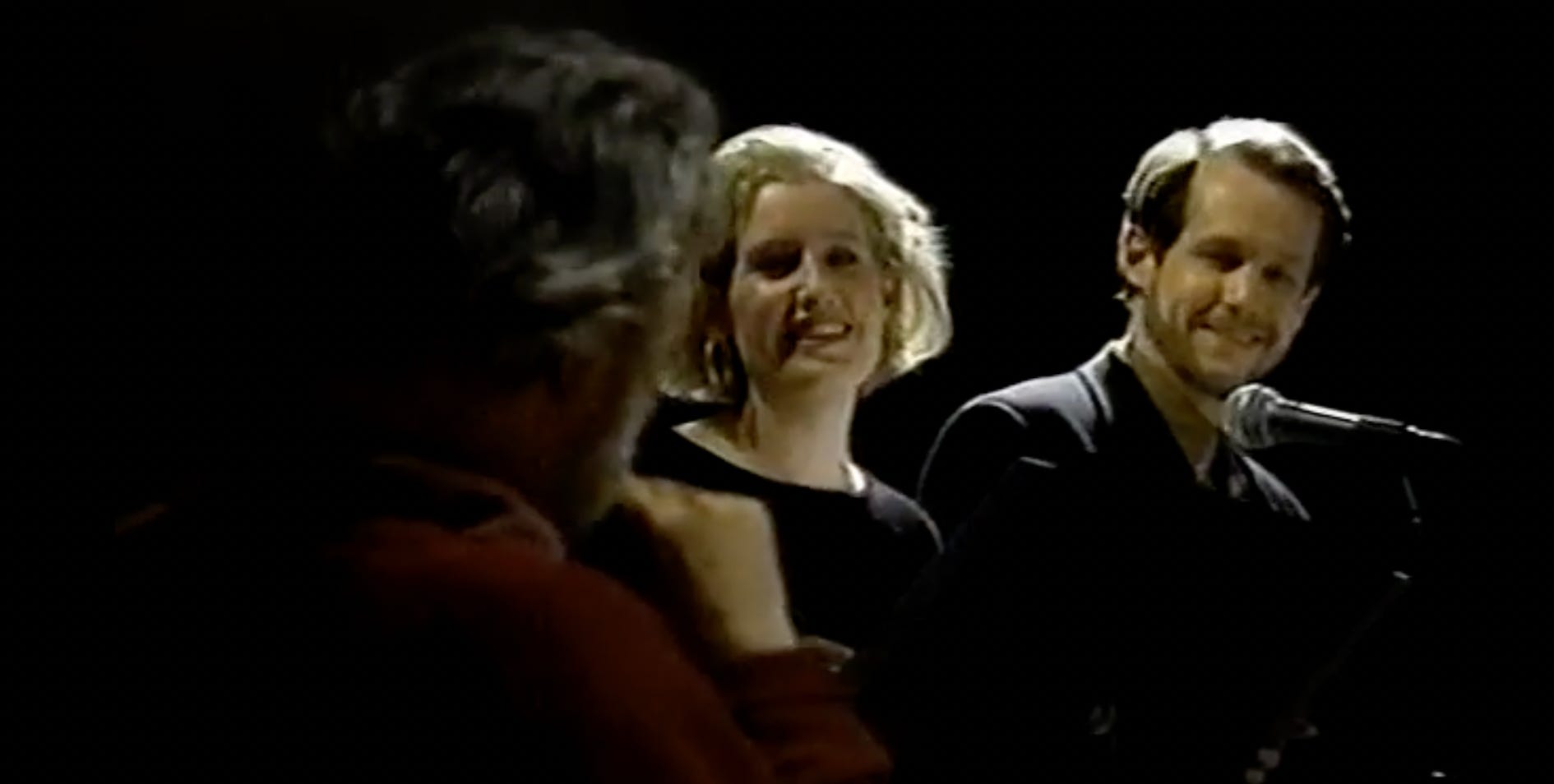
And there’s something so perfect about the camera angle at that precise moment…
Oh, yes. He had such a wonderful look on his face. That was his look. I know he was very moved by hearing that song, and with us singing it to him, so many years after we’d both been a part of Merrily.
You speak so beautifully about Sondheim in To Steve with Love. I’d be really interested in knowing a little more about how you characterize your own relationship with him, and how it developed in the years after Merrily.
Well, it’s interesting. So much of my relationship with Steve was professional. I never just went and had lunch with him—and that’s a regret I have, because he meant so much to me. I worshipped him, and so I always felt very shy around him. But I remember when Encores! did Merrily We Roll Along and Lin-Manuel played Charley, a huge number of us from the original cast went as a group. We had a little cocktail party before, and then we all went out to dinner afterwards, and Steve was there and part of it. My moments with him were fleeting. They were just moments in time. But they were huge. They were huge.
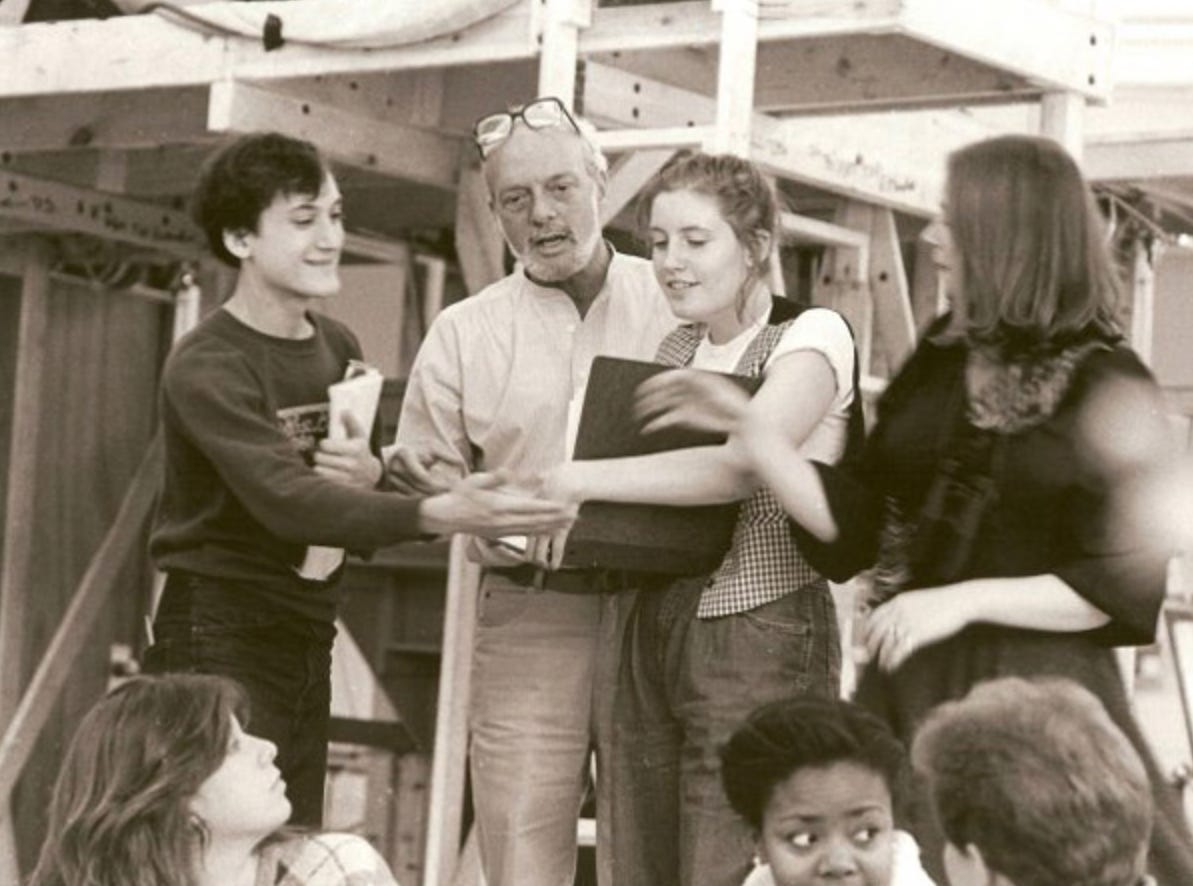
Ever since our Merrily reunion concert, we’ve all managed to stay in touch a lot. Since the LA fires, we’ve had a big email chain going, checking in on several of our castmates who live there, seeing how everyone’s doing. And the show really did run for such a short period of time. It’s extraordinary that that could have just been it. When we closed and we emptied out our dressing rooms, and then the next morning we did the cast album, I think maybe we thought we wouldn’t ever see each other again. And yet here we are.
Steve—and Hal, for that matter—gave us so many gifts. And Steve continued and continues to give me gifts without even realizing it. “The Miller’s Son” is a perfect example of that. I sang it in A Stephen Sondheim Evening in 1983, and then I played Petra maybe three years after that. And I understood the first part of the lyric, but not necessarily the rest of it. I mean, you act, of course. But to really know what that whole lyric means… It’s fascinating to sing that song now with that knowledge. There’s so much that he gave me without even knowing it.
I’m thinking of a moment in To Steve with Love where you talk about being Young Sally to Barbara Cook’s Sally. You say something like, “And of course I thought I would never sing this song. I’m far too young!”—and then you sing “In Buddy’s Eyes.” Is part of the appeal of devising these solo shows that you get to perform numbers you’ve never touched before?
Absolutely. The one song that I had never even tried was “Loving You.” That’s such a great song. His songs are so show-specific, and sometimes I like to sing them as the character, but often finding my own story is really interesting. You never stop learning and growing when you sing his music. It’s so rich.
With To Steve with Love, I was actually supposed to do a movie music program in New York. But I thought, I want to do a tribute to Sondheim. I thought, I need to do this right now. And one of my favorite sequences in that show is “I Remember” and “Take Me to the World,” from Evening Primrose. It was very important to me to explain what the show was about, so that you really understood all the department store references. Because otherwise, they’re just these beautiful songs. Singing those numbers after the pandemic, really knowing about isolation and what people were going through, completely changed how I could interpret it. Those songs have a whole new meaning for people.
And we’re talking ahead of your March concerts at London’s Crazy Coqs…
Yes! They’re not going to be all Sondheim, but there will be a healthy chunk of Sondheim. The concert is called An Evening with Liz Callaway, and it’s an opportunity to sing whatever I feel like singing at that moment. It certainly will include a lot of Sondheim. The last time I performed in London was at Crazy Coqs, and I did my Sondheim show six times. It was amazing to let the show really go into my bones. And the London audiences are so incredible and so appreciate Sondheim, so I’m really looking forward to coming back.
I have to ask about “Another Hundred Lyrics” too, which also features on To Steve with Love. It’s so brilliant. Do you find patter songs especially thrilling to perform?
I work so hard to learn my songs. And in fact, “Another Hundred Lyrics” is so in my head that what’s really hard for me to sing now is “Another Hundred People.” I had to sing that in a symphony concert this year, and I had to practice and practice and practice, because the other words were so in me. So it was like, “Oh my God!” It was so much fun to sing that with an orchestra, though.
The joke of my Sondheim parody is how hard it is to sing Sondheim. I actually don’t think it is hard to sing Sondheim. It’s hard to learn Sondheim the first time—to learn the correct notes, the rhythms. But he wrote so brilliantly that everything after that makes sense. I remember observing him talking to someone about why this was a quarter-note rest versus an eighth-note rest, and it was always to tell the story. It was always for the actor. He did so much work for you. I tell students I do workshops with, “Learn it the way he wrote it. He wrote it that way for a reason. And he really did so much of the work for you.” He would go through his patter songs and say, “Oh no! It needs to be this syllable. It’ll be easier to do it fast if it’s this syllable.”
The first time I ever sang “Getting Married Today” was at a symphony concert at Millennium Park in Chicago, right outside the Art Institute. Sondheim was there. Thousands and thousands of people were out on the lawn, and Sondheim came. And I can tell you, that was the most frightening moment in my life. He told me afterwards he loved how fast I did it, because he said the faster it is, the funnier it is. But here’s the thing: it’s also easier. It’s easier to sing—you just can’t breathe. It’s easier not to breathe and just do it.
We’re fortunate to have lots of students and younger performers subscribing to The Sondheim Hub, and on their behalf I’d love to ask you about your voice. You’ve famously maintained such a phenomenal and youthful-sounding voice over the years. It’s really remarkable when listening to older recordings of yours back-to-back with more recent ones. I’d love to know the extent to which it feels that way from your perspective too, listening back to your own voice… and how you think about vocal health more generally.
That’s a really interesting question. No one has ever asked me that before. I know that my singing voice and my speaking voice are very young. I think that’s why I did all the animated movie work I did, and I think it also has contributed to why I never feel my age. I’ve always seen myself as so much younger than I am, because when I sing and speak, that’s just how it sounds. It’s nothing I’ve ever consciously tried to do with my voice.
In many ways, singing a song where I’m a younger character is easy because it just feels natural. What’s interesting though now is what I was talking about earlier: even though I have this younger-sounding voice, I have that understanding now of so much more life experience. But I also think that’s one of the reasons why for a long time there were certain songs that I never thought I would sing, because, even though I really was the right age, in my mind I thought, “Oh no, I’m too young.”
I filled in for my sister maybe four or five years ago in a Sondheim concert in Los Angeles with a wonderful jazz pianist, Bill Charlap. She was sick and had lost her voice, so she couldn’t sing for a few months. So with 24 hours’ notice, I went and flew to LA, and one of the songs I had to do was “The Ladies Who Lunch.” I was like, “Alright, how am I going to do this?” So it’s kind of strange being me.
In terms of my vocal health, I’ve always been very careful not to strain my voice, not to belt too high. Again, I find Sondheim’s music so helpful: he actually doesn’t have crazy ranges in his songs. I find that when I do a 90-minute all-Sondheim concert, it’s not a terribly difficult show to sing. It’s just the concentration! It’s all about concentrating on the lyrics, and that’s a big challenge—but it’s a lot easier than singing some other shows that I’ve done.
It has been such a pleasure to talk to you. Just finally, looking beyond these London concerts into the future, are there things on the horizon that you’re particularly excited about? What does an ideal balance of concert performances, Broadway appearances, recording work and so on look like for you?
Well, I would love to come back to Broadway with the right part. Of course it’s a lot harder as you get older… There aren’t as many roles. I will say this: I don’t know if I’ll ever get to do it, but it is on my bucket list to play Sally [in Follies] someday. I would really love that. I just did a workshop of a new musical, and it was so great to do work on a theatre piece again, but I also enjoy my freelance life. I love big concert halls. Again, it’s very scary, but I did the Sondheim on Sondheim symphonic concert in London five years or so ago with the BBC orchestra, and it was thrilling to get to work with UK singers.
What I really want to do more of is record. I’ve recorded a lot of albums, but I kind of discovered my entrepreneurial side in the last eight years, and I’ve produced my last four albums and some singles. So I’m thinking, what do I want to record next? How am I going to afford it? How am I going to raise money to do that? As we’re speaking, it’s just a terrible time right now in our country. After the election, I was toying with the idea of recording an album of lullabies for grown-ups, which I think would be interesting. A song I’ve never sung before is “No One Is Alone”…
What is special about recording is that it’s there forever, and it’s my dream for my music to be there for future generations to know my work, and to know these Sondheim songs. When I’ve gone and done masterclasses, unless they’re musical theatre departments, there are some schools where they don’t know who Sondheim is. And I thought, “Okay, no, we have to keep his music alive.”
And that makes me think of the recent issue of your Substack, where people shared their favorite lyrics and the stories behind them. Oh God, it was so moving. What you are doing, I think, is really important. And with my own Substack, I’m trying to find all these ways to create something of my own. Talk about “Anything you do, let it come from you, then it will be new. Give us more to see…”
You know, singing those words to Steve all those years ago... It was so special. And I still have to remind myself of them when I go, “Okay, what am I going to do next? What am I going to sing at Crazy Coqs in March? How am I going to create a wonderful program that is going to be meaningful and memorable and important and fun?” It’s a very important thing to remind myself of.
For more information about Liz’s upcoming London concerts, and to buy tickets, click here.
To read and subscribe to Liz’s wonderful Substack, Between Flights, click here.