A Conversation with Len Cariou
He created the role of Sweeney Todd. He created the role of Fredrik Egerman. Today, it is an extraordinary privilege to welcome Len Cariou to The Sondheim Hub for an extended, wide-ranging interview. Our conversation begins below.
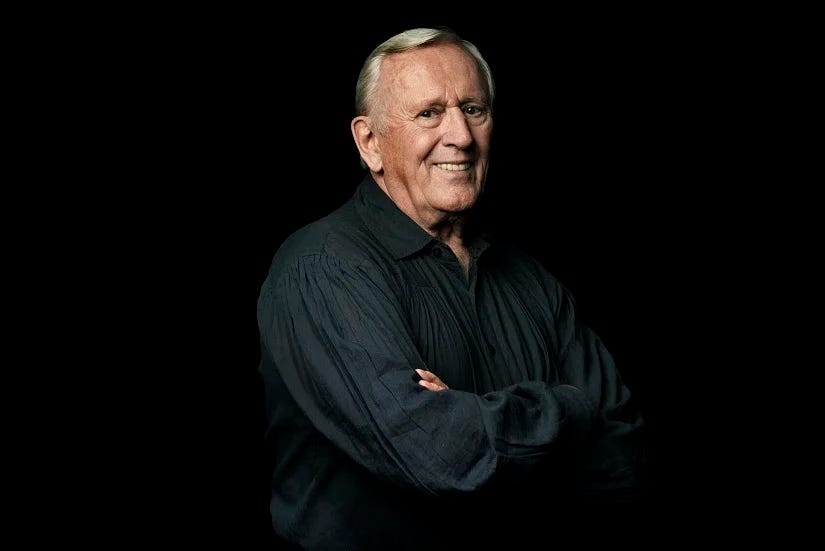
Mr. Cariou, it’s an honor to meet you. First and foremost, thank you — the Sweeney Todd original cast recording opened up the whole world of Sondheim for me, and I know that’s true for so many people.
Bless you. It was an extraordinary time in my life. It was an absolute gift from the universe, as far as I’m concerned.
I’d love to begin at Sondheim’s townhouse, the day he first played you parts of Sweeney Todd. What do you recall most vividly about that day, and about your first encounter with that extraordinary score?
Well, to give you some background to that day, I was set to do a film in Canada. Rehearsals for Sweeney were due to start in December — but because I had this film in Edmonton, Alberta, I was going to miss the first week of rehearsals.
And so I went to Hal Prince and I said, “This is the situation I’m in. I don’t want to be behind the eight ball when we start rehearsal. Will you ask Steve — or I’ll ask him, but I think it would be better coming from you — if he’ll play me some of this stuff that he’s written, and then I could maybe take it with me and learn it while I’m sitting on set, waiting to do the next scene?” It was sort of a joke.
Hal made the call — and Steve, to my surprise, said, “Okay.” I was very excited, and we set the date when I was going to come to the house.
So the day arrives and I get to Steve’s house. I had never been in the composing room. I had been in the house many times for parties and the like, but I had never been in the room where the piano was. We sat down and said hello, and he said, “Okay, come on, let’s go in.” And we went into the inner sanctum.
I sat across from him, and he was at the piano. He sat down, and he seemed distracted. I’m sitting there thinking, is he nervous? I thought, I’m the one who’s nervous. My stomach was going, my heart was going. And Steve said, “Damn it. Excuse me.” He gets up and he leaves the room.
And so I’m looking around the room for the first time: on one wall, he’s got music by all of the great composers in the world. So I’m sitting there, looking around and thinking, and then Steve comes back into the room, sits down, and pulls out a joint. He lights it. He offers it to me. Well, am I going to say no? So we have a couple of tokes and chat a bit. And he says, “Okay, all right. That’s better.”
Steve sits back at the piano and says, “You know the Catholic Mass for the Dead?” I said, “Steve, the Dies Irae?” I said, “I’m an Irish Catholic. Of course I know it.” And he says, “Well, listen to this.” He played something, and I said, “Yeah, okay, I don’t get it.” He said, “That’s Dies Irae backwards.”
And I said, “You’re pretty sick, aren’t you?” He had a good laugh at that. So that’s how we started.
He said, “At the end of this, you come in, and you’re coming up out of the grave.” So I thought, well, that’s pretty wild. These guys aren’t kidding around. And I said, “So what else can I hear?”
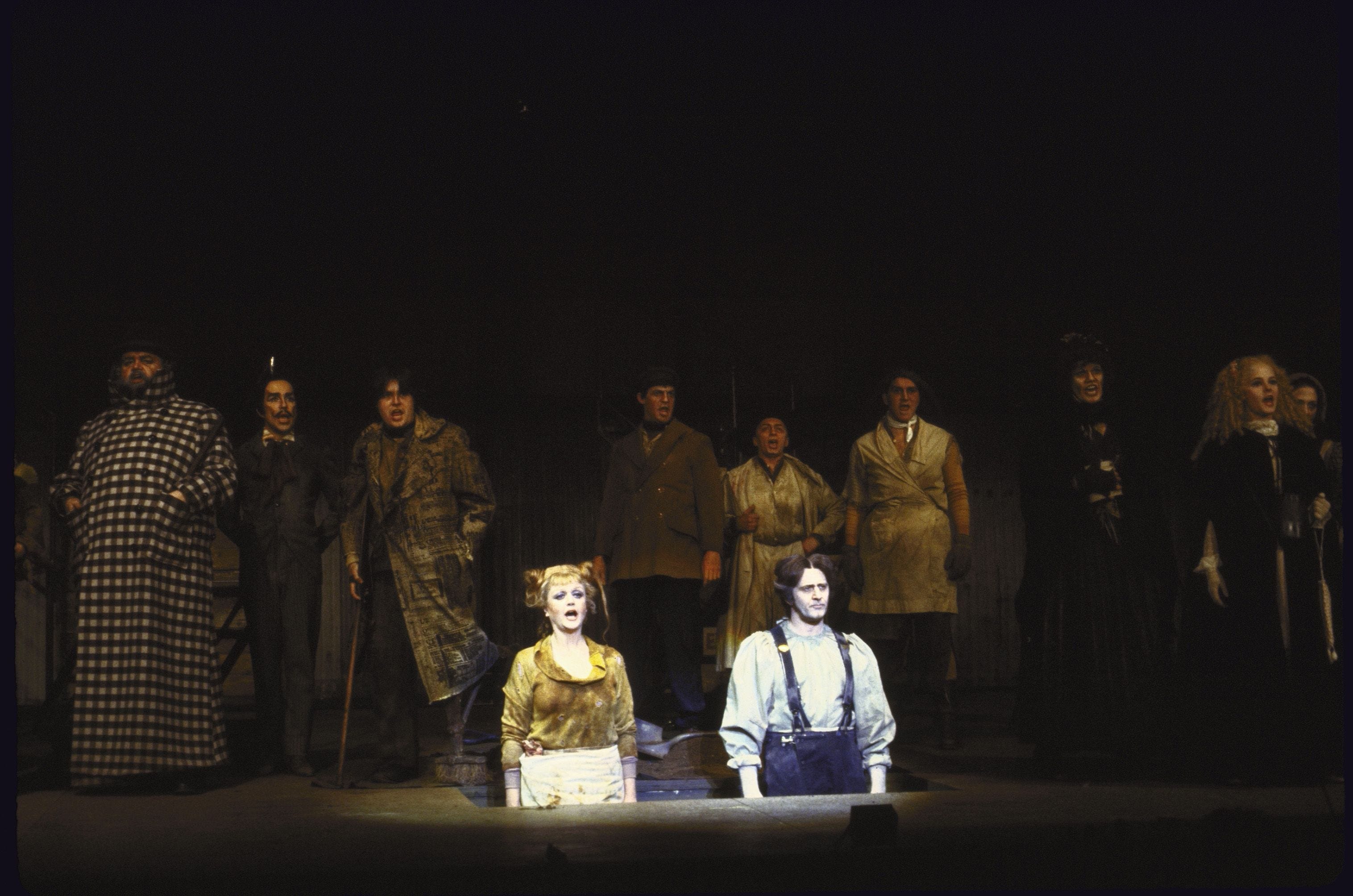
Steve said, “This is Anthony asking you about why you’re here, and why you escaped to come back.” And then he sat and played “The Barber and His Wife.” And when I heard the passage that goes like this [Mr. Cariou sings this music]:

… that music hit a chord in me that almost made me tear up. Then he played it again, and I said, “Stephen, that melody — the introduction to that — is so beautiful.” It’s the most beautiful thing in the score, in my opinion. Just that passage. And still, just sitting here telling you about it, I get goosebumps. It was one of those things that just hit me, and I went, “My God. Oh my God.”
And by this time, you were already so familiar with Sondheim’s soundworld. Were you struck by Sweeney straight away as something new — something special, even for him?
Yes. I thought, I’m in a room here with this guy, and this is historic, I think. Historic, what he’s doing musically.
So he played the scene for me, and at the end of it, he said, “Now you and Anthony depart.” And he played that exit: “There’s a hole in the world / Like a great black pit / And it’s filled with people / Who are filled with shit, / And the vermin of the world / Inhabit it…” and the music that follows. And I thought, oh my God. I couldn’t tell whether maybe the joint was taking over in the room.
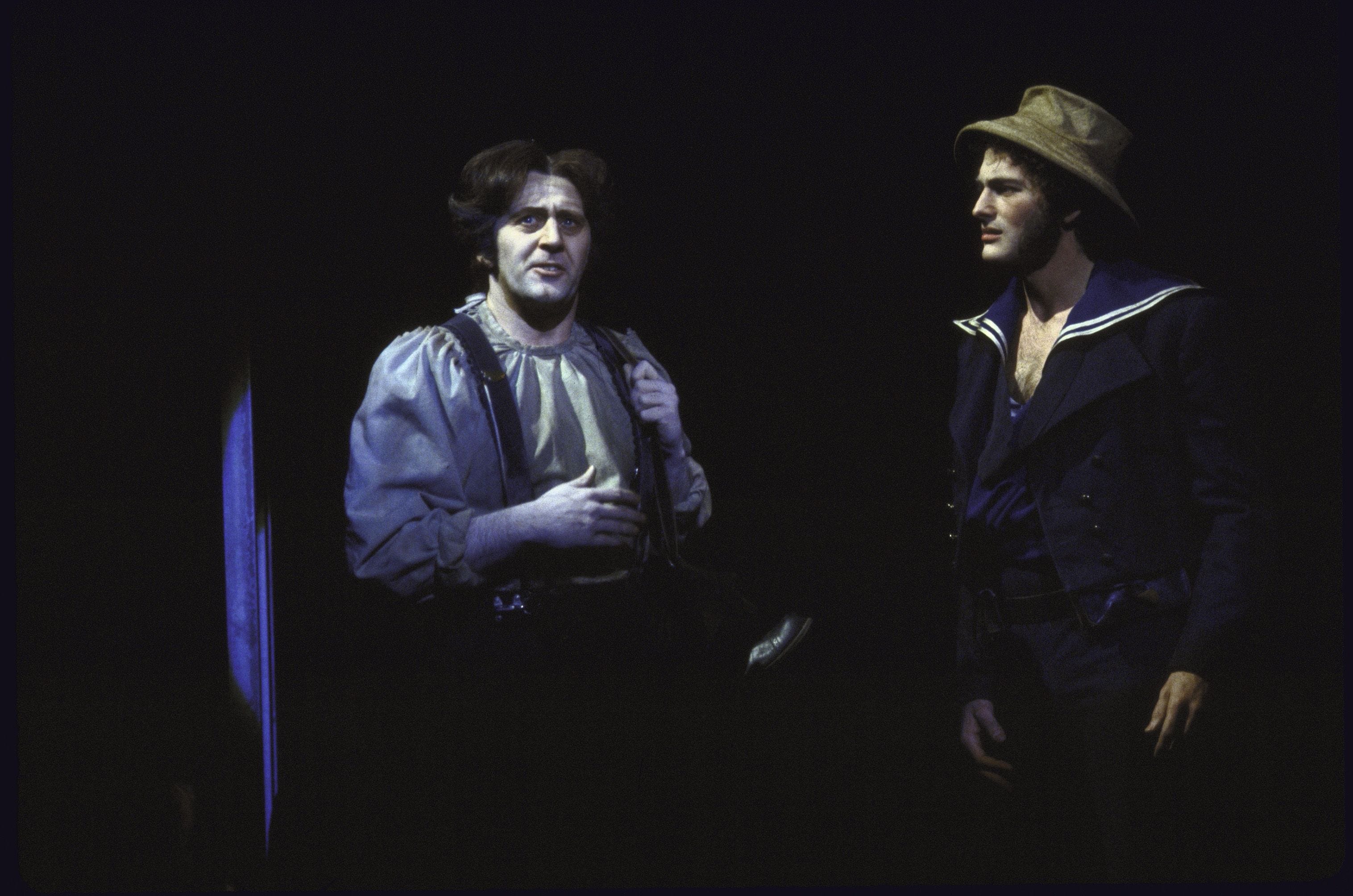
Anyway, he finally turned to me and he said, “Pick up that manuscript there.” It was like the phone book. It was huge. “What is this?” I said. He said, “It’s the first-act finale. It’s called ‘A Little Priest,’ and it’s a duet for you and Angela.” And he started to play it. Well, you can imagine hearing that for the first time.
I knew it was a work of genius somehow. Even then, I went, “My God.”
When Steve played “A Little Priest,” and it gets to the part where she goes, “If you get it... Good, you got it,” that struck me as hugely funny. I started to laugh, and he stopped, and he looked at me and said, “It gets better.” Then he continued to play it through to the end. I thought, oh my God, I’m a lucky son of a bitch that we’re doing this.
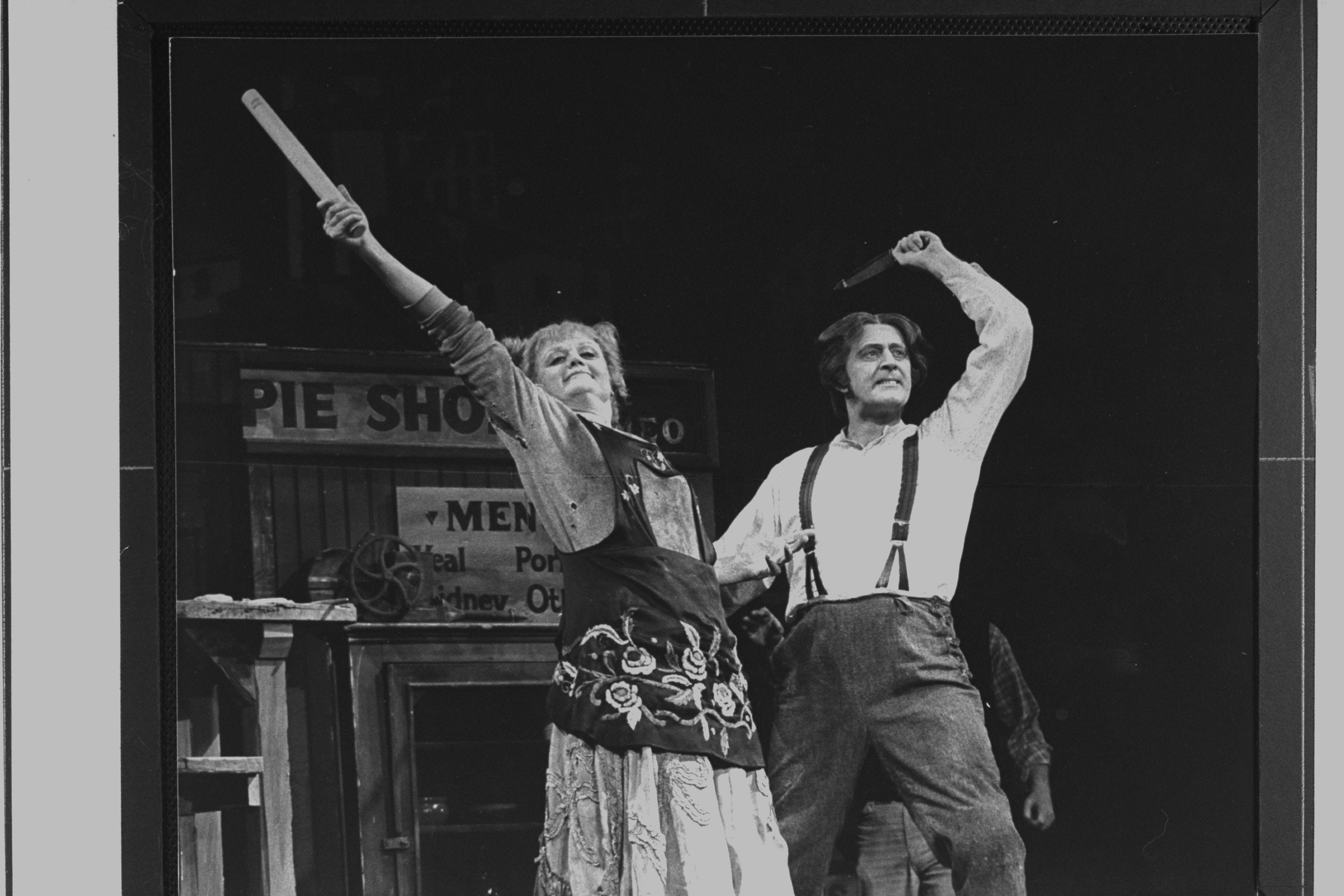
So I took some of the music with me. Funnily enough, of course, we got to Edmonton, and film being film, the money evaporated, and we had to abandon the thing in the middle of it. We never finished it. The film was never made. So I had gone out there, and in less than a week I was back in New York.
But then it turned out that someone on the Sweeney creative team said, “Why are we doing this, going into rehearsal just before the holidays? We’re nuts.” So I get the call: “We’re putting it off until the New Year.”
All of a sudden, I get a letter from my daughter. She says, “Hi, it’s me. I think it’s time we met.” She had been adopted by her mother and her new husband, and I hadn’t seen her in 15 years, except for photographs here and there — and obviously, my family kept me abreast of what was going on. She was now 18, and she said, “It’s time we met.” And because we were now not going into rehearsal, I said, “By God, I’m free to go home to Winnipeg for Christmas,” which is where she was. So that was truly serendipitous. It got us started on what is now a wonderful relationship.
I’d love to zoom in on “Epiphany” specifically. What was it like to see that extraordinary sequence on the page for the first time, and to learn it?
What’s the best way to put this? See, I had just played King Lear at the Guthrie Theater in Minneapolis. So when I saw “Epiphany,” I said, “Ah, this is Lear on the heath.” That was something that I could easily embrace when I sang it. And I think that kind of put everybody on their heels, because they didn’t know that I could be that committed to it that early.
I remember Judy Prince happened to come in on a day when we were doing “Epiphany.” She was in the rehearsal room when we did it. She stood up and applauded. I didn’t even know she was there, but she said, “My God, that was extraordinary.” We were in a rehearsal room. It was nowhere near what it was going to be. But it’s such an extraordinary piece of writing. Every night, you just can’t wait to do it. You’re just thinking, wait until you see this happen.
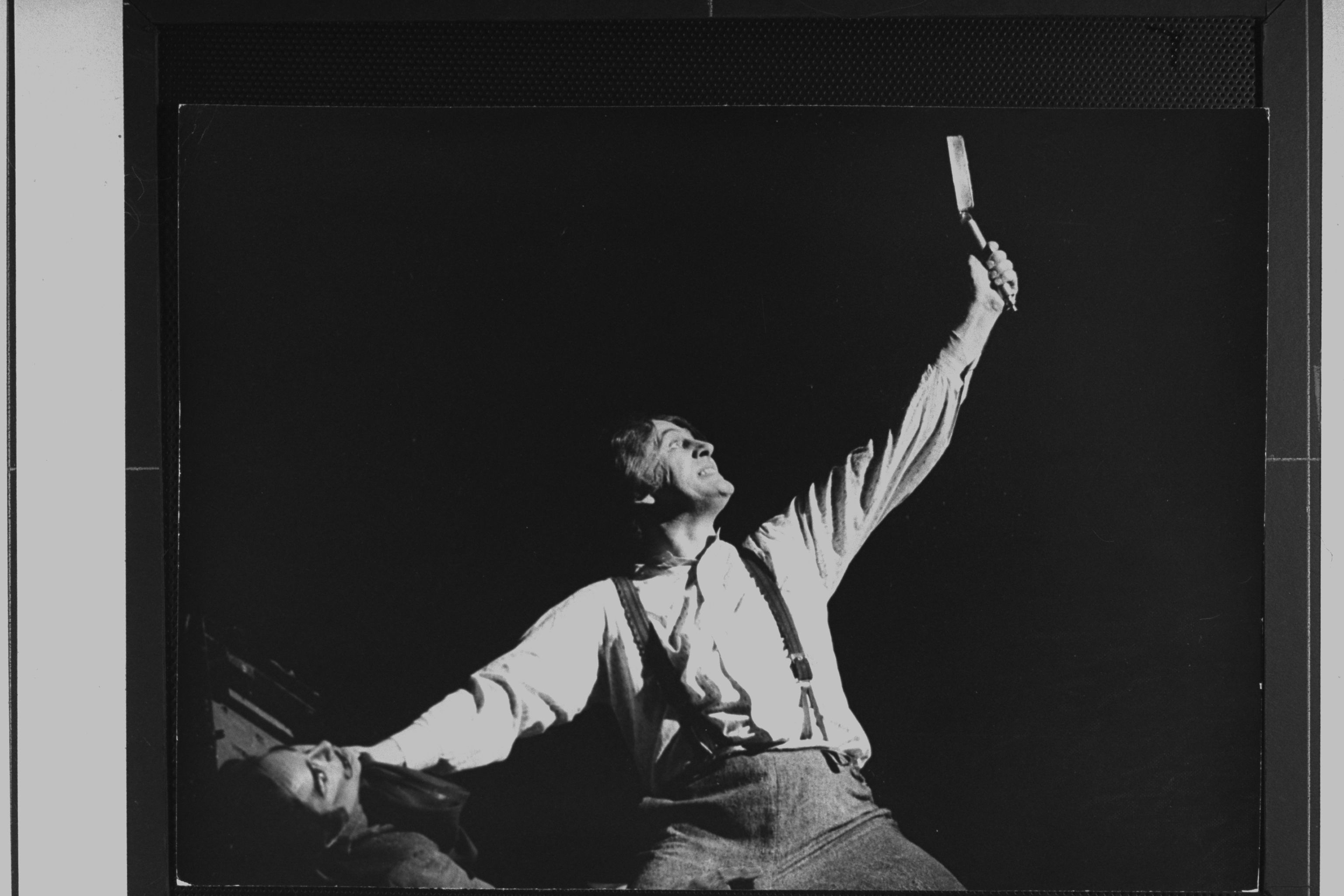
And you know the setup, of course: he’s got the Judge in the chair and he could have killed him, and he missed the chance. That’s the big turning point for him. And then afterwards, of course, Lovett says, “Well, hey, you killed him, and things aren’t so good in the pie department, so what do you think about this?”
Would you say in general that you’re a fast learner? How challenging was it to fully internalize the role, and that score?
It was very easy, somehow. Nothing seemed to surprise me except how extraordinary the music was. The “Barber and His Wife” passage, along with “My Friends,” was such a natural setup for the turning point when I finally get the Judge in the chair and I blow it. It came easily to me. Let me put it that way.
I don’t know what everybody thought, actually, except for Harold, who I think had said, “Well, you can write this for him. He can handle it.” I think Stephen and Hal were having that conversation, and I think Hal was a great champion of mine too. “Write whatever you want. He’ll take care of it.”
I had said to Steve when we went into rehearsal, or at some point before we started rehearsals, “I see how you’re writing this guy. I’ll give you two octaves.” He said, “Okay.” And I think we covered that span.
However confident you felt in the material, was there still some anxiety about how audiences would respond to the show?
The first preview was one of those magic kind of moments. We were all very trepidatious, of course, because of the nature of the content. Are they going to get it or not? It’s a brilliant piece of writing, but are they going to understand it?
At the end of the first preview, after the bows, we were all pretty excited. We were backstage, patting one another on the back. About 15 minutes later, I’m walking back to my dressing room, and Steve is standing outside the dressing-room door. He looked at me and he said, “They understood it. They fucking understood it.” We had a great hug and congratulated one another.
That was huge for me too. For him to wait and say that to me, it helped me a lot. It was like receiving a blessing. I said, “Well, okay. Now let us run it for a while so we can show the world.”
The Todd-Lovett relationship is so crucial, of course. What do you recall about developing that rapport with Angela Lansbury, both onstage and off?
One of the things we were very proud of was the fact that we resisted going over the top with that relationship and letting it get melodramatic. You could so easily do that. I guess because we’d both been, in our own way, around the block quite a bit, we seemed cut from the same cloth.
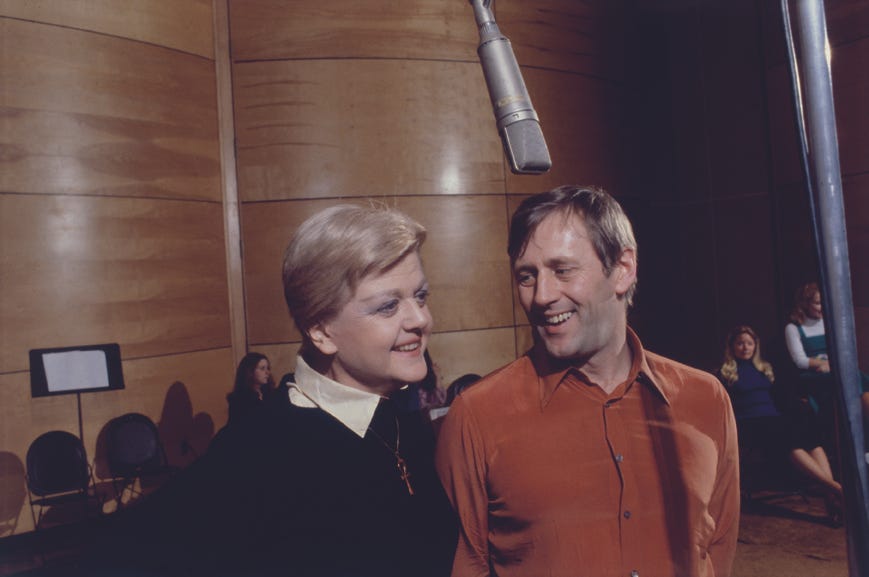
We said to one another, “We’ve got to be careful not to overdo this thing,” especially when you get to “A Little Priest” and the beginning of the second act with “God, That’s Good!” We didn’t want to go over the top, so we said, “Let’s keep ourselves a monitor: you for me and me for you.” That was something that I think we both thought was a great idea: to keep one another in line, if you will.
Because once you get doing that stuff, it can get pretty easy to do it by rote. It’s impossible to do that over a long period of time. You have to guard against becoming rote-ish.
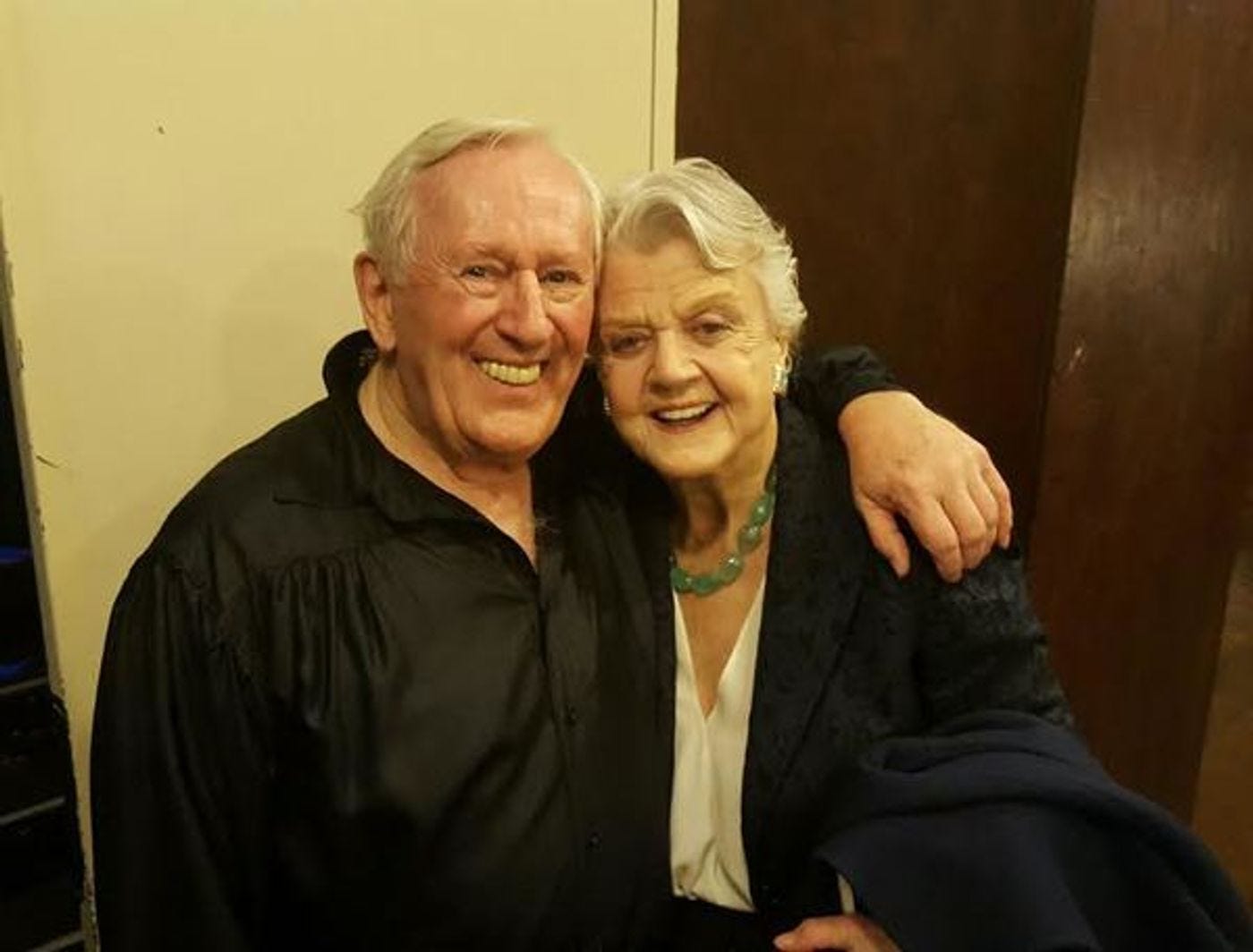
Sweeney Todd came six years after you created the role of Fredrik Egerman in A Little Night Music. With not just Sondheim but Hal Prince and Hugh Wheeler back in the room, did it feel from your perspective as though no time had passed?
Yes. Because remember, we did the film of A Little Night Music in between, too. Yes, it was kind of like family: Hugh and Hal and Stephen and me. It was great fun. I thought, what a collaboration. This is a room I’m familiar with. I remember thinking, we’re quite a team. So let’s keep at it.
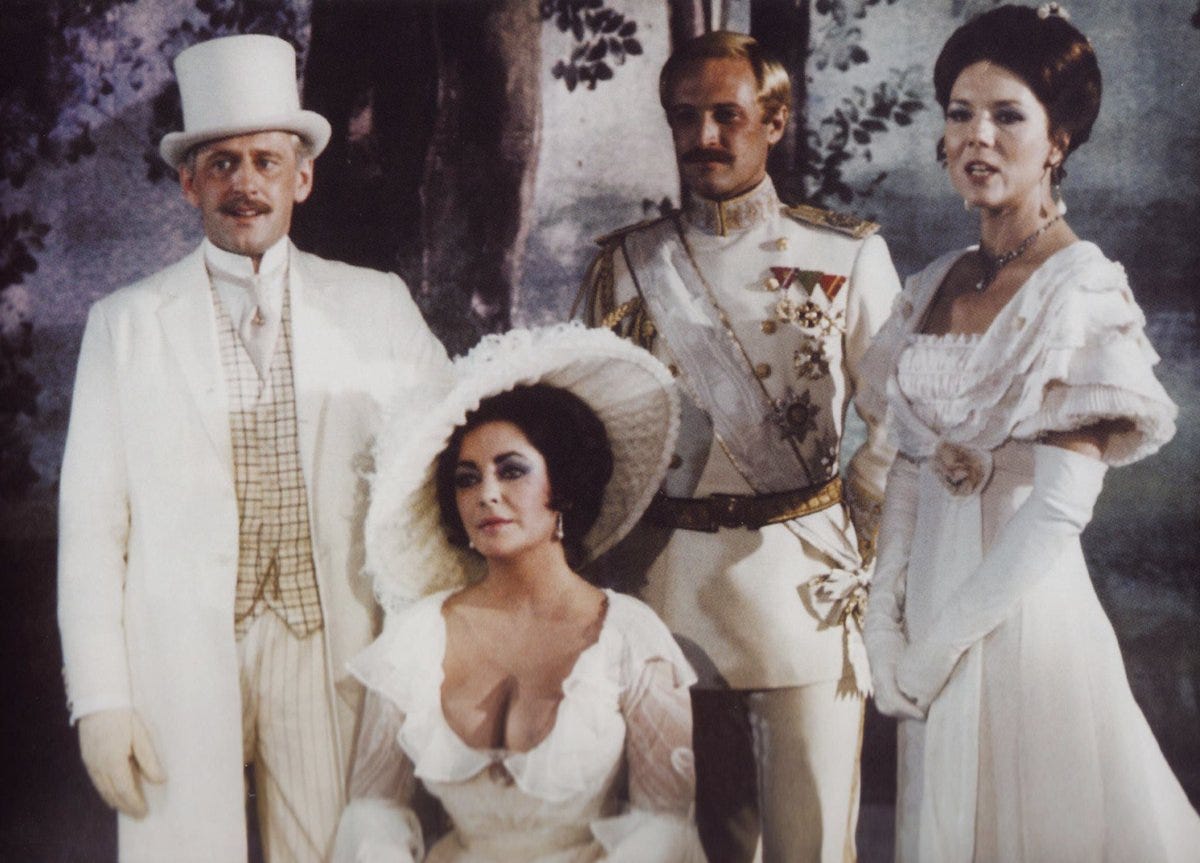
In between, when they made the film of Night Music, I of course was not the first choice. They called me, finally, in the middle of the night in New York. Hal called and said, “Can you get on a plane and come over here and save our ass?” So I did, the very next day.
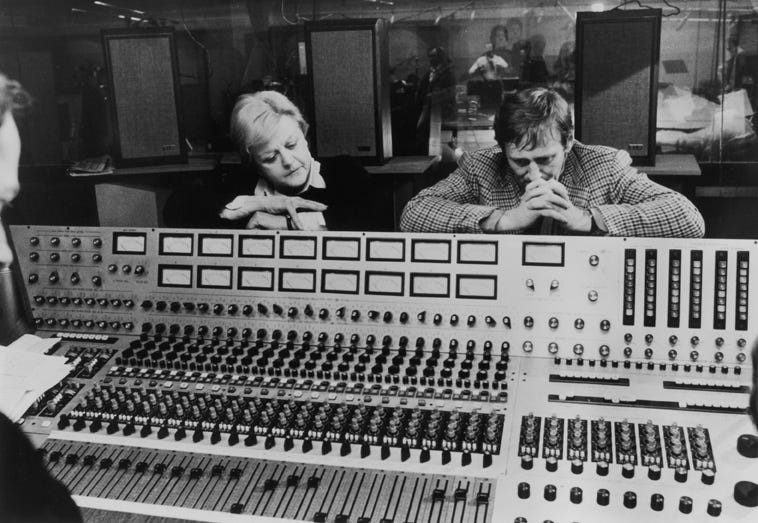
They were in the recording studio with the symphony, and Elizabeth and the whole cast were recording the entire thing, so we’d have playback for the scenes on film. Gemignani was there too, of course, conducting the orchestra. They were doing a session the next day. They picked me up at the airport. I went directly from off the plane, went to the hotel, dropped the bags off, and Hugh met me there. We had a bite to eat, got in the car, and went to the recording studio. And that’s how I met Elizabeth Taylor.
Our extended conversation with Len Cariou concludes next week. But if you’re a paid subscriber, you’ll be able to read Part Two of our conversation this Friday.
To benefit from early access — and all our other perks, including weekly subscriber-only essays, crosswords, and full access to our archive of 300+ paywalled essays and interviews — please consider supporting our work.
Membership is $7 a month, or less with an annual subscription. Our paid subscribers make The Sondheim Hub possible.
Part Two of our conversation with Len Cariou begins exactly where we leave him: in the recording studio, meeting Elizabeth Taylor for the first time. From there, Mr. Cariou reflects on the experience of watching other actors play Sweeney Todd and Fredrik Egerman, Sondheim’s Shakespearean stature, the extraordinary circumstances that brought him to A Little Night Music, and how he reflects on Stephen Sondheim five years after his passing.