
This week it’s a pleasure to welcome Jonathan Roxmouth to The Sondheim Hub. Jonathan is currently starring as Fredrik Egerman in Cape Town Opera’s production of A Little Night Music; the show’s first staging in South Africa for more than half a century. We discussed the surprising exposure of playing Fredrik, the intricacy of A Little Night Music’s construction, and Jonathan’s journey toward Sondheim’s work. Our conversation begins below:

Thank you for reading! If you find our work valuable, consider upgrading to a paid subscription to unlock a weekly premium essay, full archive access, and more. The Sondheim Hub is an entirely reader-supported publication. ✍️
Your production of A Little Night Music has just opened in Cape Town — and before we go any further, the fact that this show is happening again in South Africa is pretty special, isn’t it?
Yeah — the last production here was over 50 years ago. One of our luminaries, Taubie Kushlick, brought the production here soon after it was first on Broadway, partly because she wanted to play Madame Armfeldt. She could spot a good part a mile away. That production was a great success, and then it’s almost as if people forgot that it was a great show. I think over time, A Little Night Music seemed to be put on a kind of plinth, because it’s this beautiful piece of serious theatre, but people weren’t aware of how light and funny it is.
I think with the advent of Bridgerton and Downton Abbey and all that sort of thing, A Little Night Music is very much in the taste at the moment. It’s interesting, from that point of view, to see a story that’s essentially about timing, good or bad, being so relevant again now. From the two previews we’ve had so far, it’s been fascinating to see people of so many different ages and backgrounds come and see the show, and respond so positively — which I think is a testament to the writing.
And with the theatre being located in Camps Bay, in Cape Town, the story could be happening in any one of those luxury mansions just above us.
Did you have a particular entry point for this show personally, and specifically for finding your Fredrik Egerman?
In the past, with other composers, I tend to watch whatever material there is to watch online. But with Sondheim, I’ve found that it actually doesn’t help at all, because those interpretations are so tailored to those productions. As you know, one of his mantras is content dictates form. I think in those cases, director dictates production — and so what’s relevant to one production isn’t necessarily relevant to ours. So I specifically stayed away.
I went back and read the book, and I watched the original Bergman film. And as magnificent as Sondheim’s work is, for me, this show really is just as much Hugh Wheeler’s. The book is often the grouting between the numbers in musicals; in this show, it’s almost the case that the songs are the grouting. At least, that’s what I initially found — and then the more I worked on it, the more you realise how specific the language is. I actually started watching a lot more material on European households and those protocols, because then you really start understanding people like Petra, and why her moment is so specific in the show.
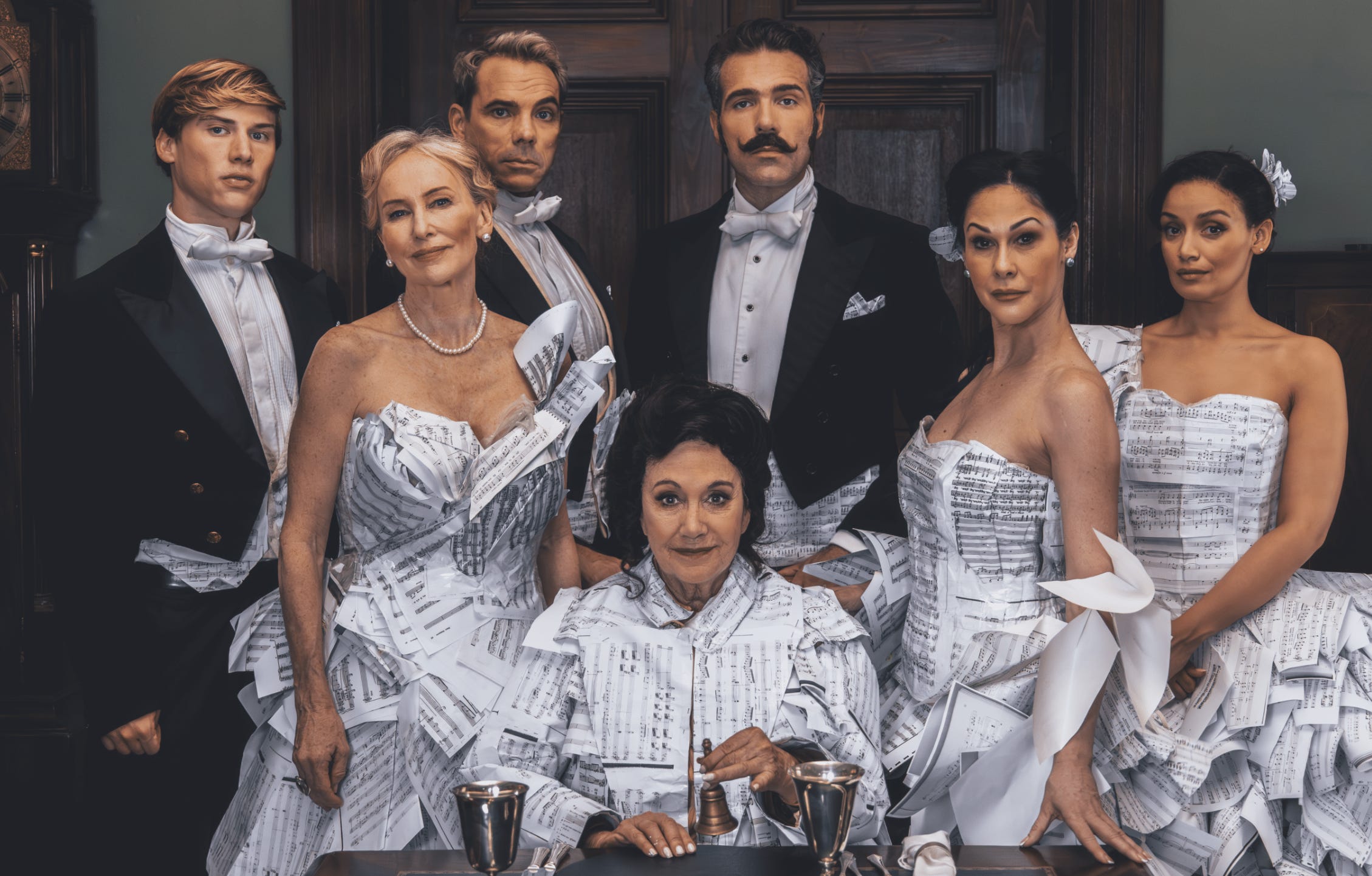
The entry point for me, really, was realizing just how normal a guy Fredrik is. There’s nothing really extraordinary about him. In the past, the shows I’ve done, I’ve generally played parts that are quite bravura — traditional leading men — and Fredrik really isn’t. He’s just a lawyer. He’s just a guy. And the whole midlife crisis thing is interesting. I turn 40 next year, and Sondheim pitches him around 42, 43, so I’m not far off. Everything that he’s going through, I think, is what I’m finding in my life — in terms of timing, at least. And it’s fascinating that, without a few period words, the things I say in the show I sometimes find myself saying in real life. So as an entry point, that’s very interesting to me.
Do you see your opening number, “Now,” as a kind of microcosm of who Fredrik is throughout the show?
Yes — if you consider that those opening moments are essentially little five-second periods in those people’s lives, and that Fredrik’s is the most dense, that’s already the clue. He’s constantly overthinking and weighing up his options, whether to try and consummate his marriage or have a nap. And there’s a whole tangent about how he views himself, his own self-esteem: his body’s all right, but not in perspective and not in the light, all of that stuff. It’s a nemesis of a song to get down, because it can’t be showbiz. It’s just consciousness. You’re talking to yourself, as we all do, and then suddenly someone says, “hey,” and you snap back, like, “oh, sorry, I wasn’t paying attention.”
And I think it’s so interesting that the only time he has clarity is when he looks at her. But as soon as he’s on his own, his world is chaos. And you listen to Henrik’s theme — very long and labored, and a bit indulgent in his own misery — and then Anne’s is so surface-level, sweet, but then there’s this strange question underneath it all. When it all comes together at the end, in the trio, it’s absolutely glorious. But I’ll tell you, from my point of view, that has been one of the hardest things to learn ever, and I’ve done Sweeney.
“Now” is still one of the hardest songs I’ve ever had to learn, because by the end of the trio, when we all have our different lines, if you play those lines separately, it’s nonsense. Seeming nonsense. And the minute you put it together, you go, oh. And then, when you get it right, it’s just glorious. I was laughing with Liné, who plays Anne, and William, who plays Henrik, that it was torture initially learning it. The minute you get it right on its feet, it’s like Stockholm syndrome — you fall in love with your captor all over again. So rewarding. But gosh, I’ve never, ever had to deal with that before.
Is it useful, in some ways, that “Now” comes so early in the show? Is it helpful to get locked into that headspace before the show begins?
Oh, yeah. I mean, it’s like a mental institution backstage — everybody’s wandering around, going over and over their lines, one person going “now…” and the other going “later…” and another going “soon…” It’s just crazy, and we’re all in our own worlds. But when we come together, every time the lights go down at the end of the trio, you can feel all three of us either extraordinarily chuffed or absolutely crushed. So it’s all or nothing.
Now that the show’s on its feet and you’re living the full arc of the character on stage, has anything surprised you? Something that didn’t seem as technically demanding on the page, perhaps, but where you’ve found there’s more to it than meets the eye?
Yeah. Musically, I’d say the melody to “You Must Meet My Wife.” When you first hear it, it sounds so pretty and easy, almost Schubert-esque. And then you actually look at the melody and the chromatics in it, and it’s so angular and so difficult. It made me wonder, initially, whether or not Fredrik meant what he was saying. He’s making it up, in a sense — but on the other hand, he does love her. So that was an interesting moment for me. But the way we’ve staged it is that neither Desirée nor Fredrik see each other’s faces. I’m standing just behind Desirée, leaning against the dresser, talking about Anne — but I’m looking at the back of Desirée, and she doesn’t see my face, so the duplicitous nature of those lyrics comes through in that moment.
Scene-wise, it would be easy to talk about the scene before “Send in the Clowns,” because that of course is the iconic song in the show. Everybody’s waiting for it. It drives me mad actually, in some of the publicity for other productions, when it’s billed as the “Send in the Clowns” musical. So it’s easy to talk about that scene, because that scene is what turned “Send in the Clowns” into Desirée’s song, as you know.
But for me, scene-wise, it’s the scene on the bench with Charlotte, when he says, “How strange that one’s life should end, sitting on a bench in a garden.” He has these moments of such clarity. When he’s talking about other people, he’s so able to understand them. He says that marriage isn’t one of the easy relationships, you know? There are some lovely moments where he’s just sitting, observing everything around him, and he has such clarity in those moments. You sort of want to say to Fredrik, “You’re such a great lawyer with everyone else, but you’re a terrible one for yourself” — and I think, again, that’s so intensely human. It’s the same principle as cobblers’ kids going without shoes. And again, that’s Hugh Wheeler and Stephen Sondheim being so on the same wavelength in what they were doing.
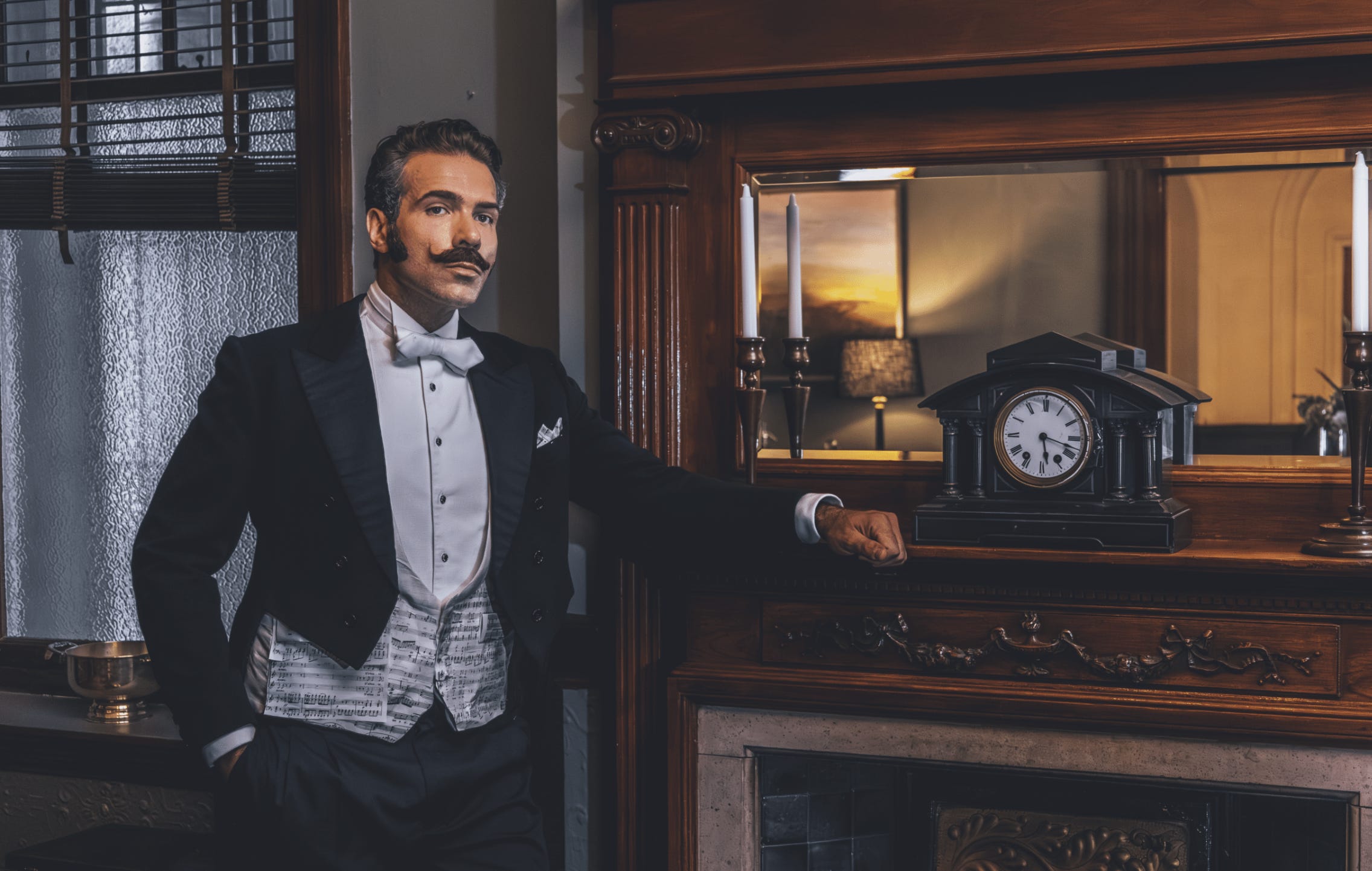
But I’ll tell you what I’ve found the most interesting: seeds of Sweeney all over, both in score and in the book. To me, it makes sense that six years later, Sweeney Todd would happen between Wheeler and Sondheim. There are moments where I think to myself, gosh, this is really satisfying, looking back at both shows now.
You mentioned your experience playing these bigger, more bravura characters — Sweeney, the Phantom, and so on. Have you found it refreshing, as an actor, to access such a different place as you’ve come to find Fredrik?
Initially, when I got the call about this show, when they said they’d like to offer me a part in A Little Night Music, I instantly assumed it would be Carl-Magnus. I thought that would make the most sense: that’s Sondheim’s Gaston, right? When they said Fredrik, I initially thought they’d made a mistake. It’s not traditional casting. But it’s also not lost on me that the original Fredrik was Len Cariou, who was the original Sweeney too, so perhaps there’s something in that.
There have certainly been elements in this rehearsal process where it was hard to fight against instinct. Fredrik is very much the willing wallflower, in a sense. But in some ways he has the most to do in the show. It’s a mountain to climb in terms of words, and stillness, and seeming nothingness.
I’m playing the invisible man, in a sense. It’s the most exposing thing to do as an actor, because you start realizing what your defaults are, what your natural impulses are — and when you’ve played parts where you’re accustomed to perhaps a little bit more flash, suddenly there’s nothing like that in the show, and you don’t really get many laughs. You certainly get a big lump-in-the-throat moment at the end of the show, but my God, you work your butt off to get to that point. How like life that is…
So as an actor, it’s a very, very interesting challenge. “Challenge” even sounds negative, but the gauntlet thrown is so interesting. I want you to shine without any light is essentially what you have to do with Fredrik. And I know so many people like him. I think we all know more people like Fredrik than we do who are like Sweeney.
I’d love to know more about your own personal Sondheim journey, especially as you’ve had such success with a variety of non-Sondheim roles throughout your career.
My journey with Sondheim was hilarious. When I auditioned for my first big musical, which was Beauty and the Beast, I was auditioning for Gaston. I was 20 or 21, and I did “Agony” as my audition song. I didn’t know much about Sondheim at all. I remember when I put the sheet music down in front of my audition pianist, who was going to be in the room with me, he just put his head in his hands. He was like, “Dear God, never give an audition pianist Sondheim.” We sat down and wrote the chords down instead of the actual dots.
I came to the Sondheim party very, very late. My friend said, “Oh, go watch Into the Woods,” so that was the first Sondheim I got into. As I went through the show, I realized that my ambition one day would be to play the Witch, not the Prince. I was very disappointed that the song didn’t belong to a character I’d want to play. Then I went down the rabbit hole — Into the Woods, Sunday, Sweeney, and then I discovered Company. That’s the way it went. Whereas with Lloyd Webber, you do generally start with Joseph and work through his stuff chronologically. It’s fascinating that they have the most opposite sort of journey when you discover their work. But I also find it so fascinating that Sondheim is Hammerstein’s boy, and Lloyd Webber is Rice’s boy, in a way. So it’s all linked, somehow. But yeah — learning “Agony” for a Gaston audition is how my Sondheim journey started.
A Little Night Music plays in Cape Town until July 12. More info and tickets here.
The Sondheim Hub is a reader-supported publication
If you find our work valuable, consider becoming a paying subscriber.
You’ll get access to our full archive of 250+ essays, interviews & features, an exclusive essay each week, more from each interview, and a weekly Sondheim crossword. Paid subscriptions make our work possible. 📚
Lovely interview - appreciate his candor about the complexity of Sondheim's songs and also his insights into character of Frederik.