
A Conversation with Jim Walton
Merrily's original Franklin Shepard
It is an honor to welcome Merrily We Roll Along’s original Franklin Shepard, Jim Walton, to The Sondheim Hub. Our conversation begins below:
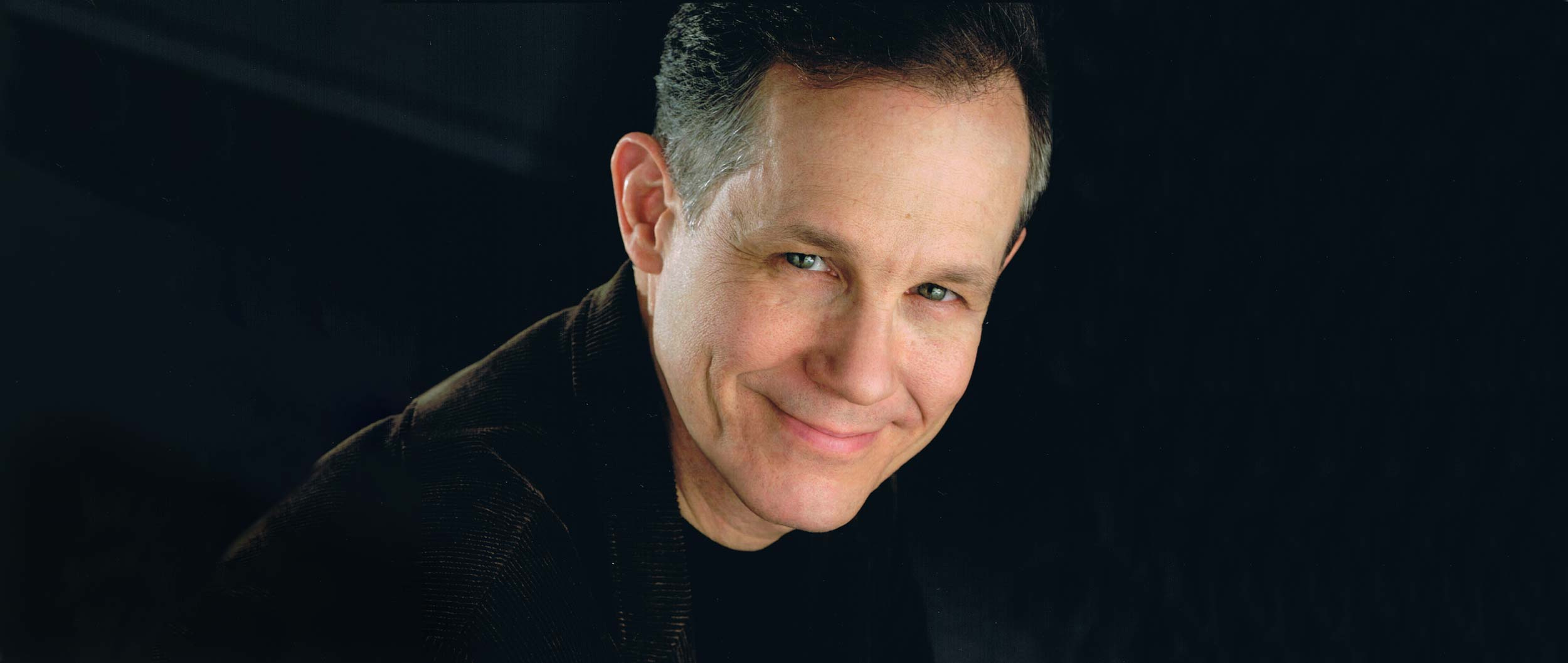
I’d love to start in late November 2021. Just a few days after Sondheim’s death, you took part in that remarkable Times Square performance of “Sunday.” As you stood among so many artists gathered to honor him, what was going through your mind?
That’s a great question. As I recall, it was a sad time, and a sad day, but I tried to find the positive. I was there for Steve, and to join with the community that he was so richly a part of, to honor him. So I was trying to concentrate on those good aspects: the healthy pride and love for him and his work.
I actually don’t remember how I heard about it. But it was great to see people, of course. That’s the one good thing about any sort of memorial service, or whatever you want to call it: it’s a reunion with a lot of dear friends. So it was a beautiful day, but sad.
How vividly do you recall your first time in the same room as Sondheim?
I believe the first time was at my callback for Merrily. I’m sure I didn’t meet him before that. That was a huge day, in early December of 1980. It was huge for him to be there, sitting at the table with Hal Prince and George Furth, Paul Gemignani, Joanna Merlin, and so on. It was just thrilling for me.
My main thought that day was, I’m not going to be cast in this. That’s ridiculous. It really was, to me. I was 25 years old. I thought, there’s just no way. But I also thought, I have bragging rights now. I can walk out and say, “Guess who I met today? Sondheim! Hal Prince! George Furth!” And then to learn in the room that we were all cast, after that long day — as I’m sure you know — was amazing. But I had already gotten what I wanted.
And I thought of it as an investment. Even back then, I did. You build a career, you build a reputation, you go in, you do your best, and so the next show that Joanna Merlin is casting, she’ll say, “Oh, Jim Walton did a good job. He didn’t get cast in Merrily, but he did a good job. Let’s call him in.” I knew that then. To build a career was really what I was trying to do that day.
You’d made your Broadway debut the year before, but how secure did you feel in your career at that point? If you hadn’t booked Merrily, do you think your path might have looked totally different?
That’s really a fascinating idea. I’ve asked myself that many times: if I hadn’t done Merrily, what would my career have become? I honestly have no idea. Shortly after Merrily, maybe six months after it closed, maybe longer, I booked the national tour of 42nd Street — Billy Lawler, which is Lee Roy Reams’ part. It’s a featured role. And I’ve often wondered, well, did I in part get that because of the visibility that Merrily brought? Maybe I would have gotten it anyway.
But then, if I hadn’t done 42nd Street… Well, who knows? It’s hard to pick apart one’s destiny. It would have changed my career if I had not done Merrily We Roll Along. But also, maybe for the better! Who knows? I might have become a movie star, or a TV star. It’s so hard to know. But Merrily sent me down this road, and it’s been a good road. I have no complaints.
You’ve been asked about Merrily’s short run so much over the years, and I’d much rather ask you about the work itself: about what it’s like to hold new Sondheim in your hands, to bring this work into the world. Do you have any especially clear memories of your first encounter with a particular song?
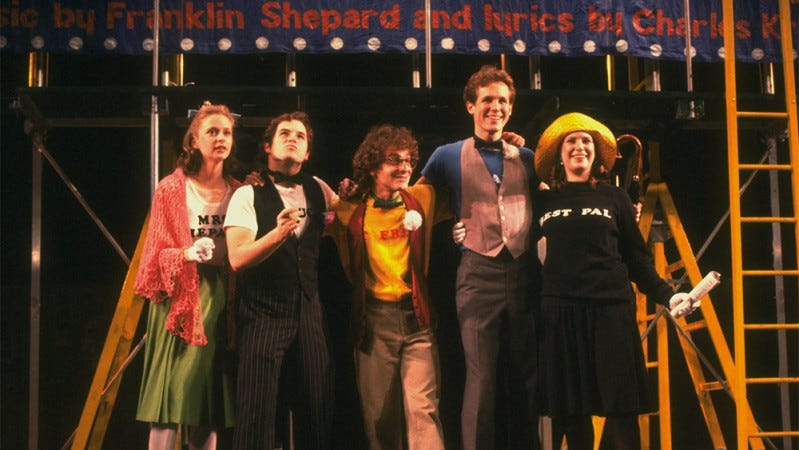
I honestly love every song in the show. They’re so resonant and good, and funny, and clever, and tuneful, and harmonically rich. As you know, I started in the ensemble and played his lawyer, Jerome. I remember looking at the line “Best thing that ever could haaaaaaaaave happened” — that was one of Jerome’s lines, and then they gave it to Lonny, who sang it as Charley. But I remember looking at that going, wow, that’s a long note. It’s just like “We loooooooooove you” in Company. I found that fascinating, that of all the words in that line, he held out the word “have.” Maybe he wanted an obbligato feel. And it’s good counterpoint — I will not argue with that!
Thank you for reading! If you find our work valuable, consider upgrading to a paid subscription for the full Sondheim Hub experience. ✍️
It was Act 2 that fit more for me as a 26-year-old man, so “Opening Doors” and “Our Time” and “It’s a Hit!” — those songs felt easier for me to find my way through as myself, rather than “Old Friends” and “Not a Day Goes By,” which I sang in the original, and which were challenging to make work as an actor. But it was all just thrilling.
Stepping into the role of Frank from the ensemble as quickly as you did must have been such a challenge. I’m thinking of a number like “Opening Doors…”
Oh, yes, it’s very tricky. You know, “I called a producer, da-da-da-da-da-da, I’m meeting an agent,” and so on. I don’t remember all those words now. And it’s not always Frank-Mary-Charley, Frank-Mary-Charley. It’s Frank, Mary, Frank, Charley, Mary, Frank, and so on. So that was a tricky song. But what Sondheim did so well is he wrote scenes. He wrote many scenes in that song. “Opening Doors” is just a masterclass in musical theatre composition.
Also, because I wasn’t even the understudy for Frank, I wasn’t learning the part just in case I had to go on — like, what if James gets sick? I wasn’t learning it at all. But then I learned it really quickly.
Are you able to break down how, just practically, you went about learning the role so quickly?
Well, I wish I could remember. I do have this flash of memory that I took a taxi home — I lived on the Upper West Side during rehearsals — and I remember being in that taxi memorizing lines. So every spare minute, for about four or five days, I was memorizing. Also, I did summer stock work all through college. Between ages 18 and 22, I worked at the same non-equity theater, Wagon Wheel Playhouse in Warsaw, Indiana, and I did maybe five shows a season over those three months. You do Bye Bye Birdie while you’re memorizing Minnie’s Boys. Then you’re doing Minnie’s Boys while you’re memorizing Brigadoon. So I was used to learning shows very quickly. We just had to. That’s how it was done.
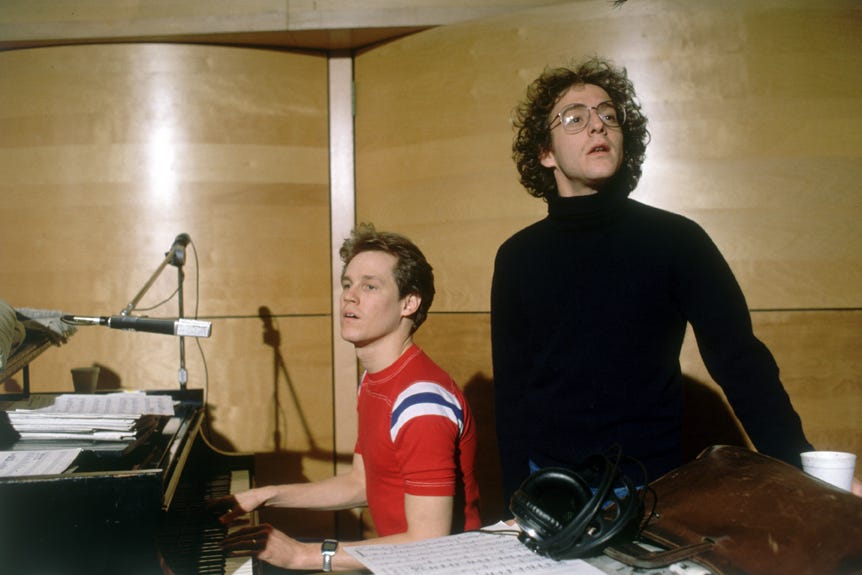
Now, of course, if you’re playing a lead in a show in two-week stock, you can be memorizing it six weeks before. In Merrily I didn’t have that luxury. But I was a young hot dog, so of course it was like, “Yeah, I can do this.” And Hal Prince asked me… I’m gonna say no? But I knew, walking out of that meeting, that I needed to get to work immediately. So I probably did run lines with Lonny and Annie during that period, and I did have a put-in rehearsal. But I was also on during that time — I was in the show as Jerome — so I couldn’t stand in the back of the house and mutter the lines along with Frank. Honestly, I was probably muttering the lines along with Frank while I was on stage. I do remember watching his movements: oh, he goes to stage left 7, stops on 7, and so on.
When we think of Merrily today, we think of the various revisions, the different opening numbers, and so on. I wondered what it was like for you to see the show for the first time without, say, “The Hills of Tomorrow.” How protective did you feel of “your” Merrily?
It was hard for me. I can’t remember the first time I saw the show again, but it was long before the recent revival. I saw productions at this college or that, and the Encores! production many years ago. And I do like “The Hills of Tomorrow” as a framing device. It’s the same intervals as “It started out like a song” in “Good Thing Going,” so it’s the same Franklin Shepard. Frank really wrote one song, which I think is a fun idea.
But I also couldn’t be objective, because of my associations with it — so I couldn’t sit there and go, oh, “That Frank” is not good, it should be “Rich and Happy.” It was hard for me to know. I saw what they did, and I thought, oh, okay, it’s the two-faced LA crowd, which makes sense — because later in the show, earlier in his life, it’s the blob, whom he meets at Gussie and Joe’s party in Act 2, and the “Good Thing Going” song is part of that. So it made sense, but it was hard for me to let go of what I remembered — just naturally. But not to the extent where I felt like, oh, no, that doesn’t work, why did they do that? They’re so smart. So smart.
And yeah, it changed. But hey, the show is working now, and they’re making a film of it — so for anyone to sit here and say, oh, this didn’t work, that didn’t work… Well, really?
Which brings us nicely to this recent revival. Did you spend much time with Jonathan Groff? Did it feel like a passing of the baton?
I did feel the passing of the baton to Jonathan, who is one of the loveliest guys I have ever met. He was so kind to me. We went as a group — a few of us from the earlier cast, a dozen of us — and saw it off-Broadway first. And then we saw it on Broadway, and both times we stayed after and met the cast, including Jonathan, whom I had met years ago because we sang together at a gala, when he was very young. Before Spring Awakening, even. Way back. He was very kind, and super talented, of course.
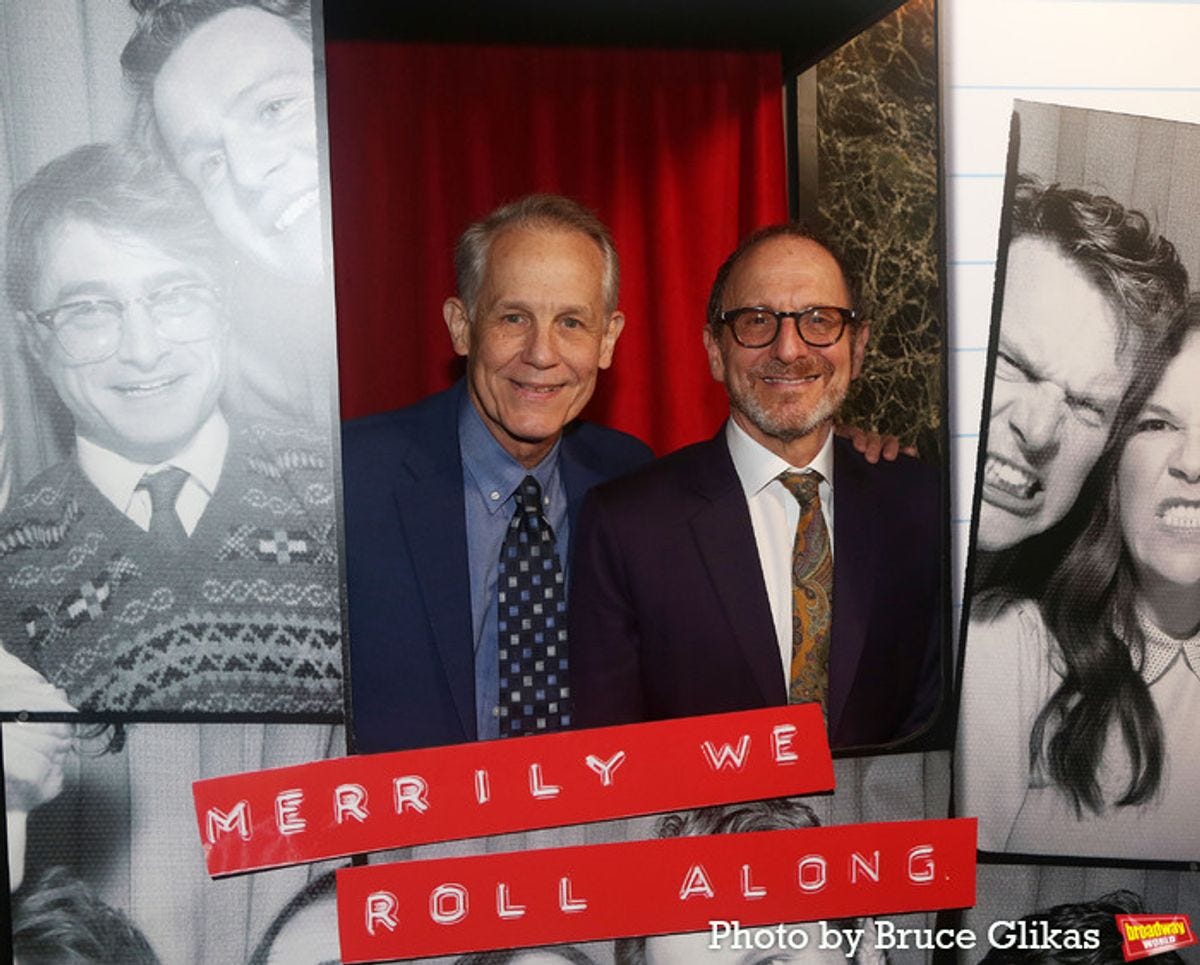
But also, what am I gonna tell him? You know, “In the third scene, what you’ve gotta do is this…” No! No, I would never do that. But he was very gracious with me, and was thrilled to have me there, and was so warm and grateful to all of us in the original cast. And he mentioned Lonny, Annie, and me in his Tony acceptance speech. I mean, come on. This is a very open-hearted, generous guy. So, we love Jonathan.
I had the chance to speak to Annie last year, and she described the success of this recent revival as healing, as cathartic, for her personally. I wondered whether you shared that feeling.
That’s a very good call. Yes, I have felt the weight of Merrily’s failure upon me through my career, in a way. Meaning, I’m going out there in, let’s say, Come From Away. I did Come From Away for a long time. And there could well be people out there who are ready to judge my performance negatively and go, “Oh, I see. I understand why Merrily closed.” You know what I mean? So I would have to process that a little bit. Not every day, but once in a while, I would have to say: hey, you did your best in Merrily. You were very fortunate to do it, and you loved it, and you worked your tail off.
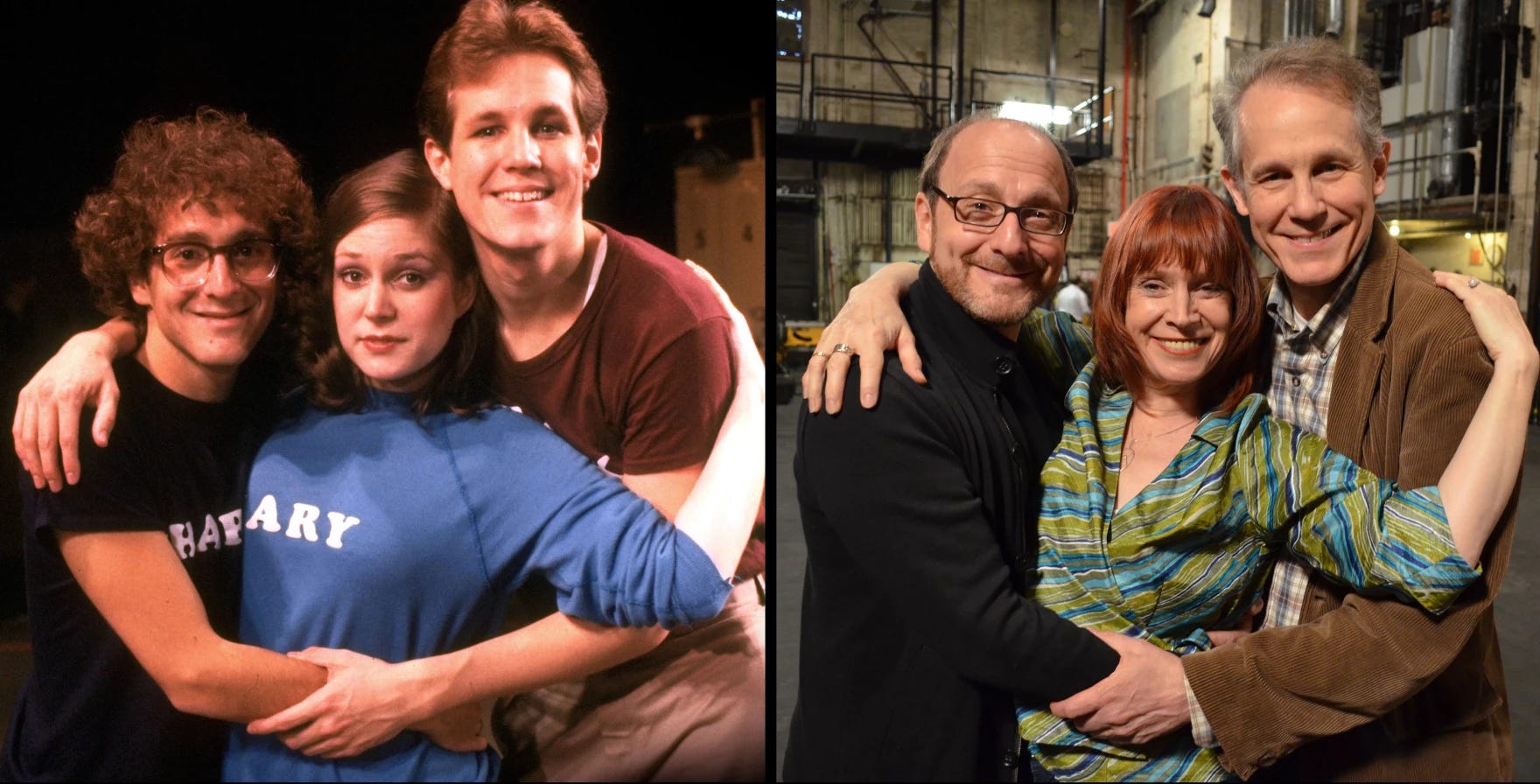
The most healing day of the Merrily experience for me was September 30th, 2002. That’s when we did a one-night reunion concert at LaGuardia High School. Sold-out crowd. Hal and Steve were there. Joanna Merlin was there, Paul Gemignani conducted the onstage orchestra, and we sang those songs. The response was the opposite of what we’d had before. We were like rock stars. And then Hal and Steve came on stage. Hal spoke, they embraced, and the audience went nuts. So that was very healing for me — and that’s almost 24 years ago.
So to see the recent revival, for me, and not in a cynical way, I thought, you see? This has always been a hit! That’s what I thought. And no, our production was not a hit. But the show is so rich and so original — so theatrical, and poignant, and funny, and specific. It’s so good. And I just kind of thought, you see? I’m glad you all get it now. That’s the way it was. It sounds a little chip-on-the-shoulder, and maybe it was, but it was really in defense of Steve, George, and Hal — that they got it right, and finally, finally, the world caught up.
That’s a beautiful way of framing it. I was also thinking about you and Liz Callaway singing to Sondheim on Inside the Actors Studio. That must be an experience you don’t forget…
No, that’s hard to forget. It was November 7th, 1994. I have a weird thing about certain dates that are big red-letter days for me. Liz and I were handpicked by Steve to do it, and both Liz and I sang many more songs than made it into the final cut, because they cut it down to an hour. I think we were there closer to two hours, and we sang a lot of songs. But singing “Move On” with her, for starters, was thrilling — that voice! But to sing it to Steve, who sat there and teared up — my gosh. What a thing, to be able to sing his own words back to him and to ask him for more. It’s profound.
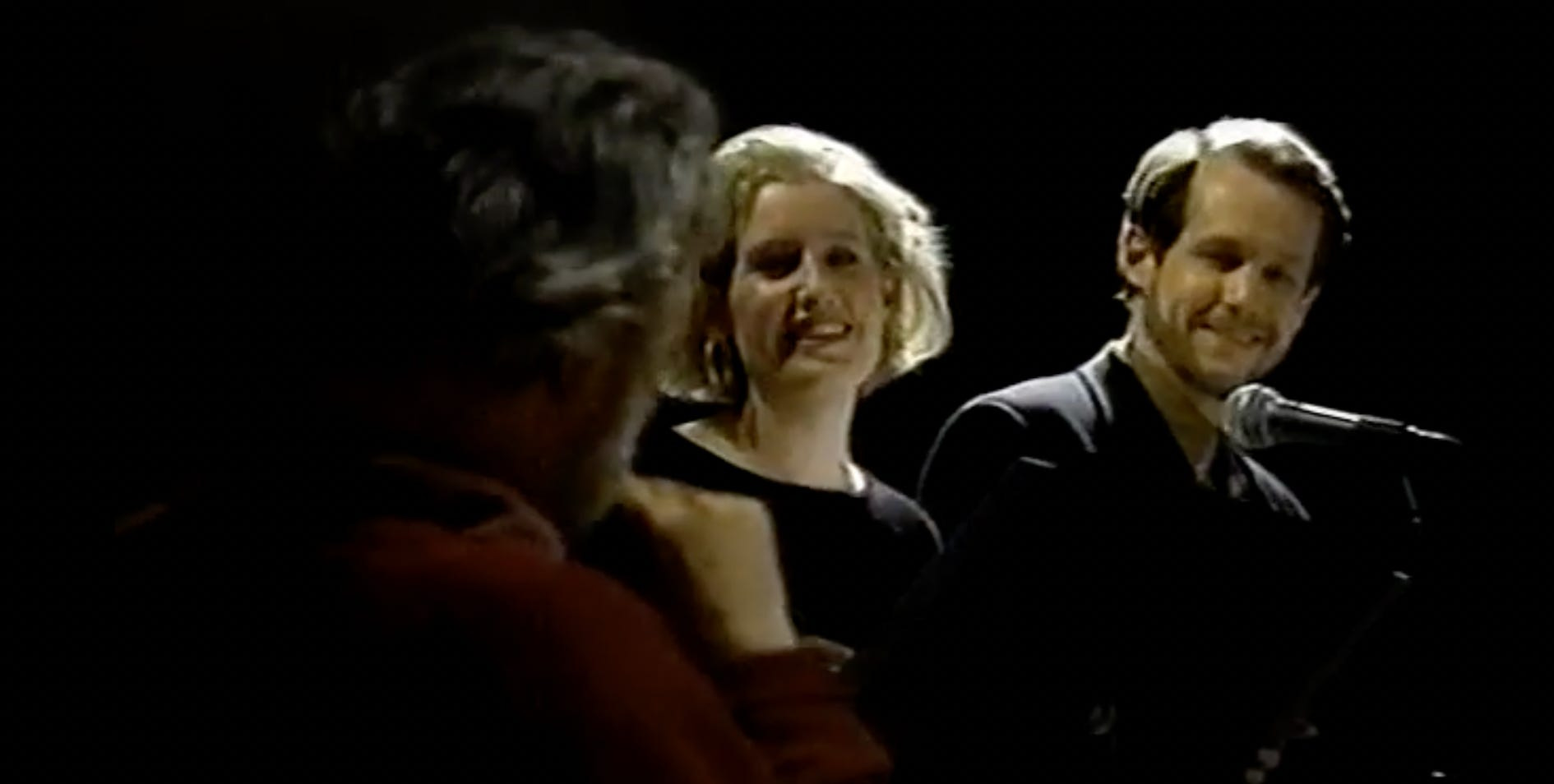
I wish I could get inside his head, just to figure out how the hell he did what he did, and what he felt that night. But he truly was a very generous, empathic man. He loved the theatre and music so much, and I think he loved Liz and me. I was nervous that day, and had to remind myself, this is not really a performance, this is just me standing at a mic. It was like a reading: just sing the best you can, and act as well as you can, in front of your music stand. I had to remind myself to do that, because the feeling was, oh, Steve is 15 feet away. No way! No, just calm down. So I had to talk to myself a little bit through it.
But that was a thrilling evening, and I’m so grateful it was videoed. It’s on YouTube. I’ve watched it and skipped through me singing, just because I want to watch Steve again talking about his work. I’ve watched all of his interviews, and I wanted another hour of that one. A thrilling, thrilling night. I’m glad you got to see it too.
You’ve been part of so many non-Sondheim shows too — you mentioned Come From Away, which is so inventive in its storytelling and has such a great score. How do you feel about the overall health of Broadway today?
Well, I’m a Sondheim fan to the bone. And I miss the adult musical. Yes, we still have Jason Robert Brown and Adam Guettel and Jeanine Tesori and Pasek and Paul — and others, forgive me for not mentioning them — who write smart songs. Flaherty and Ahrens, of course. And Ragtime did well the other night. But I worry that the audience has changed, and the ticket price has changed. And if people are going to pay $200, $300, they want to see what they want to see, which is sometimes a revival, something they know, or a big star. People doing flips. And I get it. But I miss the music and lyrics that challenge me, the listener, more, and take me to a deeper human place. That’s what I really like. That’s why I like Two Strangers, because it’s, to me, a deeper story.
It’s not that writers are not intelligent anymore. I don’t think it’s that. I think it’s partly what the audience wants for the grotesque amount of money they’re paying. I still haven’t seen Death of a Salesman, which I really want to, but I went online the other day and the cheapest ticket was, like, $340. And I went, gosh, I remember when it was $40. I’m that old. Never mind the $1,000 tickets to this or that, which I have a problem with on principle. I think it affects the artistic contribution. But yeah, I like an adult musical. That said, I’d probably have a blast at The Rocky Horror Show.
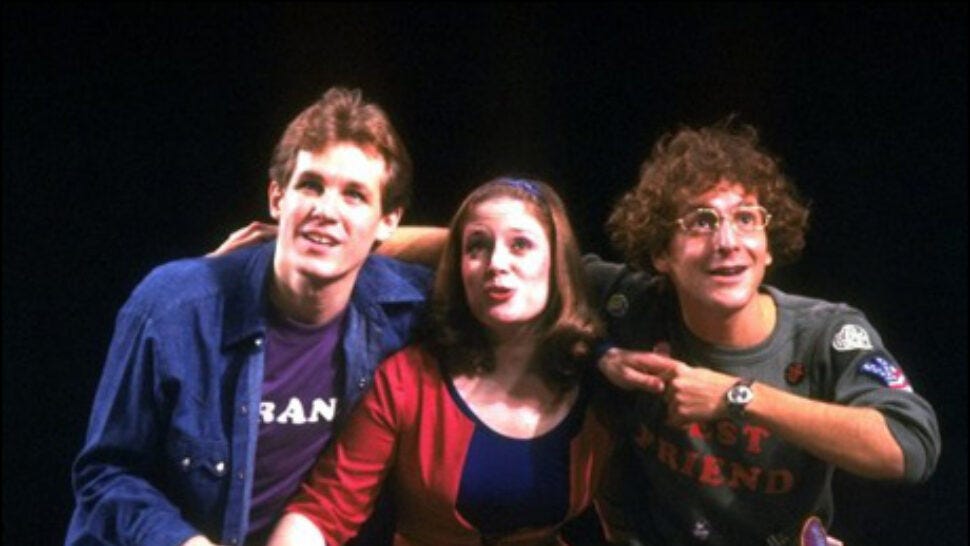
I wanted to end with Frank’s own words. Just before the end of the show, you say: “My final thought is a simple but mighty thought. It is the obligation we have been given. It is to not turn out the same. It is to grow, to accomplish, to change the world.” Do you feel that Merrily itself has, in its own way, lived up to those words?
Wow. You’ve given me chills. I remember almost all of that speech. Yeah. I think in many ways that show was autobiographical, especially for Steve. I imagine George Furth wrote those lines, but it’s as true in Steve’s lyrics for “Our Time”: “Up to us, pal, to show ‘em.” Right before the song begins, Frank says to Charley, essentially, “We’re gonna change the world.” And Steve and George did.
Stephen Sondheim over and over again changed my world, and is still changing it, because of the depth of his work. That line… “The obligation we have been given … to not turn out the same.” It’s so easy to do, to conform. I’m a songwriter as well — and often, even just today with a song I’m writing, I’m telling myself, no, there’s something better. You’re not getting to the heart of it. Who is this character? Who are they? It’s easy just to go, oh, well, this rhymes, this works, sure. It’s too easy to settle.
Sondheim was so bright. He knew how to really get underneath the skin of it. And that’s how you hopefully don’t turn out the same. But boy, he sure became something unique and mighty. I’m just so lucky to be a part of it.
The Sondheim Hub is a reader-supported publication
If you find our work valuable, consider becoming a paying subscriber.
You’ll get access to our full archive of 250+ essays, interviews & features, an exclusive essay each week, more from each interview, and a weekly Sondheim crossword. Paid subscriptions make our work possible. 📚
Brilliant interview