
A Conversation with Jenna Russell
on Sunday, Merrily, and being “madly in love” with Sondheim’s work
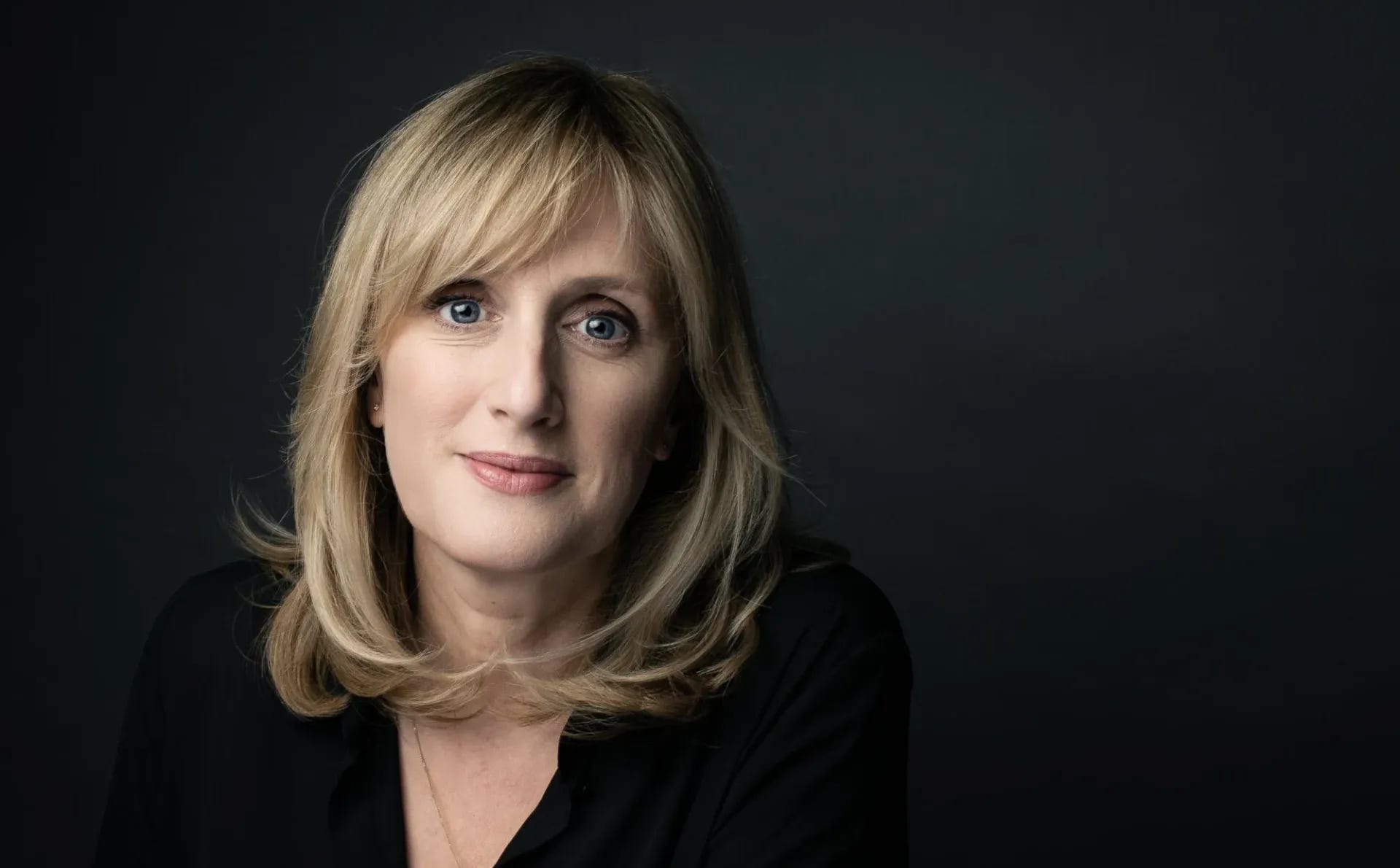
Few performers have built as rich and enduring a relationship with Sondheim’s work as Jenna Russell. It was a real pleasure to speak to Jenna about that relationship, starring in Sunday in the Park with George and Merrily We Roll Along in the West End, and much more. Our conversation begins below:
Note: This conversation took place before Ariana Grande’s decision to withdraw from the forthcoming Barbican production of Sunday in the Park with George was announced.
It’s so good to speak to you. You have such a deep and longstanding relationship with Sondheim’s work… Was your hope always that Sondheim would be so central to your creative life?
I chase it. I actively chase it. I first started listening to Sondheim when I was about 14. At my school, there was a little group of us, led by Matt Ryan, who’s now a director. He was 16, maybe, and he started a Sondheim group. I hadn’t heard of Sondheim, but my two solos — if you could call them that, because they were little snippets — were “Send In the Clowns” and “Getting Married Today.” And we did a 10-minute medley from Pacific Overtures. There were about eight of us, including the brilliant singer-actress Clare Burt and my best friend Johnny Barr.
That was my introduction to Sondheim, and I remember thinking at 14, gosh, this stuff’s really interesting. Honestly, I started listening to him because I wanted to impress Matt Ryan. I wanted him to know I was taking our little Sondheim group seriously.
You have those moments, don’t you, where you’re listening to something and it’s like a penny drops. Something happens. And I think I’ve only ever had that with Sondheim. You suddenly just get it, and... Well, you’re lost forever then.
But my proper, proper gateway into him was, like you, Sweeney Todd. My friend Russell came round with a three-cassette box, which I’ve still got, and we sat in my bedroom and turned the lights down. He said, “This is going to blow your mind.” I was like, “Okay…” The box came with a lovely booklet with pictures and the lyrics to follow. And I couldn’t believe what I was hearing. It was like a bomb going off inside me. It was extraordinary. Extraordinary.
With Sunday returning to London next year, has all the anticipation brought back memories of your production, and of playing Dot?
Sunday is just one of those shows, isn’t it? I’m excited for the production next year. I mean, I probably will never be able to get a ticket. But I’d love to see it. I think Ariana Grande will be so brilliant. She’s a top actor. I can see her Dot being amazing — and actually, her Marie, I think, will be amazing too.
In 2005, I was doing Guys and Dolls, and Graham MacDuff was in the cast with me. His wife is Anna-Jane Casey. We were just chatting in the wings, and he said, “What are you doing this weekend?” He said, “I’m going to go and see AJ in Sunday in the Park with George.” And I went, “What? Where’s that happening?” He said, “A little theatre, a chocolate factory…” I said, “Who’s playing George?” He said, “Daniel Evans.”
I knew Daniel, and I rate him so highly, on so many levels. He’s extraordinary. When he sings, something so beautiful happens. So I was like, “Oh my god. I’m going to go.” So I said to Jane Krakowski, who was playing Adelaide, “Do you want to come with me to see Sunday?” She said yes. So we went along, and it must have been only their second or third preview, because it wasn’t full. It wasn’t the smash it later turned into. We sat down. I was with Ray, my other half, and Jane’s other half.
Even thinking about it now, it was so beautiful, the way it had been reimagined. The stage was a white box. Daniel used to come on with a pad and a pencil, and he’d start to sketch on a blank canvas. What he was drawing came up behind him, so you’d see the pencil drawing as Act 1 went on, and then you’d zoom in on little bits he was working on. It was so beautiful. We didn’t have the cardboard cut-outs they’d had on Broadway, and in the Stephen Pimlott production. It was just this beautiful design they’d managed to create, all done by an artist. It was mind-blowing.
But for me, what happened in Act 2, which I think is the tricky act, was managed so beautifully. I was blown away. You never actually saw the Chromolume, for example. There was a lot of that going on. You’d see what it was like through watching the actors’ faces watching it.
The show was extraordinary. I was ugly-crying, making noises. Jane was too. Sounds were coming out of me I didn’t recognise. I’d never cried like that in the theatre. It was a six-piece band, so delicate and beautiful. I waited to say hello to Dan afterwards.
And what a twist of fate — AJ, wonderfully, got pregnant, but that meant she couldn’t do the West End transfer. The producer asked if I’d like to come in and audition. I said yes. So I was in this position where I’d seen the show, knew how beautiful it was, and knew what I might bring to it. I loved it. It was heaven. And talking to Steve and James Lapine about it, I could actually talk to them about what happened visually, because I’d seen it. Daniel hadn’t been able to see the magic happening behind him. And it was all so clever. It was never fighting with George, just adding. You could see inside his mind, almost.
And stepping into a production you’d already seen and loved, when it came to finding your own Dot, did that create a certain pressure?
Well, it’s a weird one, isn’t it? We recorded the album before I’d even done a day’s rehearsal. But because I’d been singing it in my front room forever, it was kind of in my body. The beautiful thing about Sondheim is that it’s quite hard work when you’re learning it, but once you’ve learned it, it takes care of you so beautifully. Everything is written correctly. There’s not a false note. You never think, why aren’t I doing this or that? It just feels like, if you were speaking it, that’s how it would go. He’s so brilliant at that.
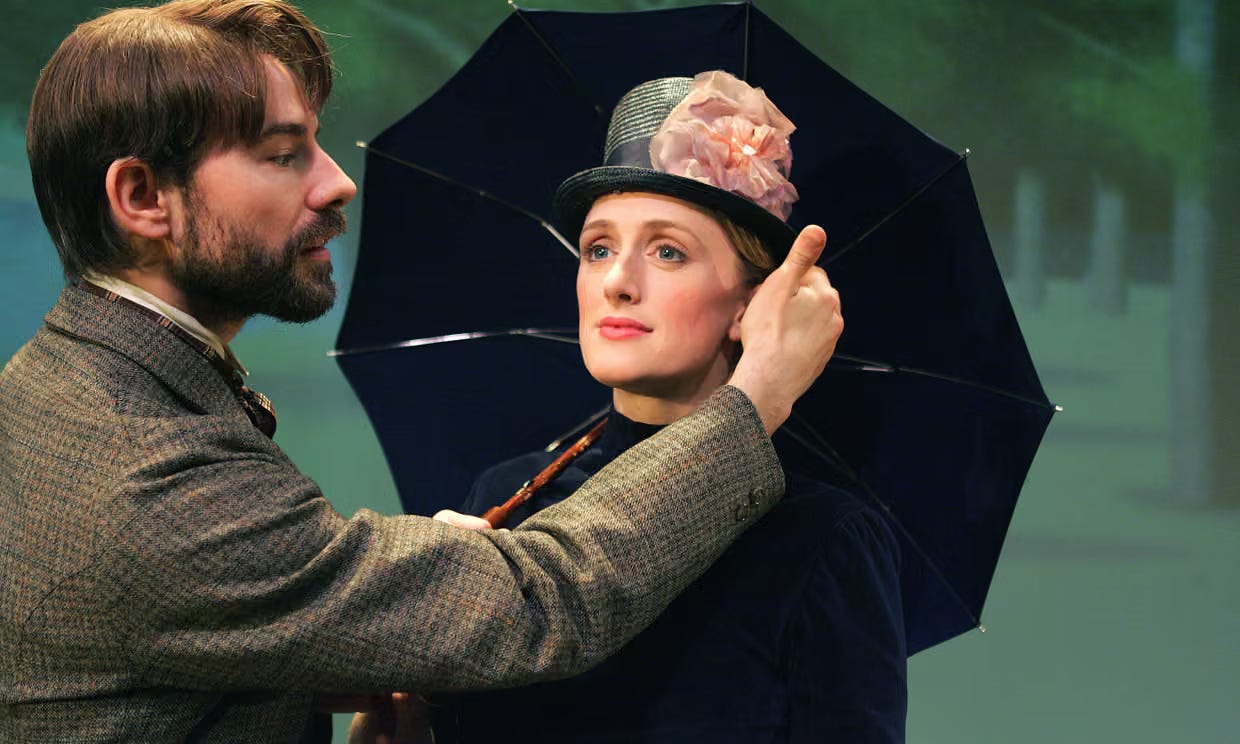
So yes, there was work involved, but also just a joy in getting to do it. It’s like what people say about footballers on a massive stage: it must be frightening to play a World Cup final. And you go, well, no, because this is what I’ve always dreamt of. To play any role in a Sondheim is always like sitting in a fantastically comfortable chair. With Sondheim, you don’t have to do much. Just don’t get in the way of the writing. That’s the thing I’ve always felt with his work, and I know Dan felt the same. We just served the writing — because when it’s so beautifully written, you let it sing, you let it speak to the audience, and it will have the desired effect. The less tricksy you are with it, the better.
Do you have a clear memory of the first time you met Sondheim himself?
Absolutely. He was my rock star. I couldn’t believe it. I was 20, and I was playing Young Sally in Follies. I was really struggling, because I’m not a dancer. It was the mirror number, and I was falling over all the time. But I remember having a chat with him during the tech. There was a doorway from the stage into the auditorium — most theatres have one, near where the bottom box is — and he was coming from the stalls onto the stage. We met in the middle. I said, “I just want to say it’s really amazing to be working with you, and oh god, I really loved Sweeney Todd. It really blows my mind.” We had a conversation about Sweeney Todd, and how it broke his heart, because he’d written it as a love letter to London, and it didn’t work as well in London, and he couldn’t quite understand why. And I’m standing there nodding, thinking, I’m just chatting with Stephen Sondheim! He was in a jolly, lovely, happy mood.
Of course, I’ve worked with him six times since, and sometimes he wasn’t as jolly. You’d think, okay, put your working head on. He was a tough cookie. His notes were always brilliant, but he didn’t mess about. If you got something wrong, he’d be straight on you: no, it’s not that, it’s this. The lyrics were everything to him.
✍️ If you’re enjoying this interview, consider supporting The Sondheim Hub and unlock our full archive & exclusive content each week:
an exclusive weekly member-only essay
an extended edition of each of our interviews
a weekly Sondheim crossword
full, paywall-free access to our archive of 300+ essays, features, and interviews
A small percentage of readers currently support us with a paid subscription. If you’re able to help sustain this work, please consider becoming a Sondheim Hub member! 📚
Since that Follies production, have you been conscious of the place Sondheim occupies in British theatre changing over time?
Oh, I was very much aware of how his work was becoming more and more… I wouldn’t say mainstream, because it’s still quite niche, but niche in the best possible way. People want to do it, and they want to put his work on in the most prestigious theatres. The best directors want to work on it, because there’s so much there. His work is everlasting. It never loses its impact.
Also, what I think is so beautiful about Steve, and what he’s left us all with, is that he was so brilliant about not being precious. He wanted his words said right, of course — but he was always open to a director’s interpretation, and I think he really enjoyed how European theatre dealt with his work, how we’d throw it around and wrestle it to the ground, and different flowers would pop up as a result. I think he really enjoyed seeing what people were going to do with it.
I think he enjoyed how British and European productions weren’t afraid to get their hands dirty with the material, and didn’t treat his work with kid gloves. Directors were really up for going, “No, get angry, really be angry. You hate being in the painting, you’re furious with that person.” It wasn’t polite. It was like: “Really, get out of my way, I’m sweating here, and he’s awful, and it smells...” We really threw ourselves into that part of the show, and I think he found that hilarious.
I wonder if your Merrily is maybe a particularly good example of that. Some of our readers might only be familiar with that production [directed by Maria Friedman] from its eventual Broadway transfer, but of course it started life with you in London. Do you recall the feeling you’re describing, of being able to be bolder with that show?
Oh, yeah. The brilliant thing was that I think it was James Lapine’s idea initially to cast older people. I think that bore great fruit for everybody. I think James was the first person to play with that idea of casting people the age they’d actually be by the end of the show, rather than at the beginning. It was a great idea.
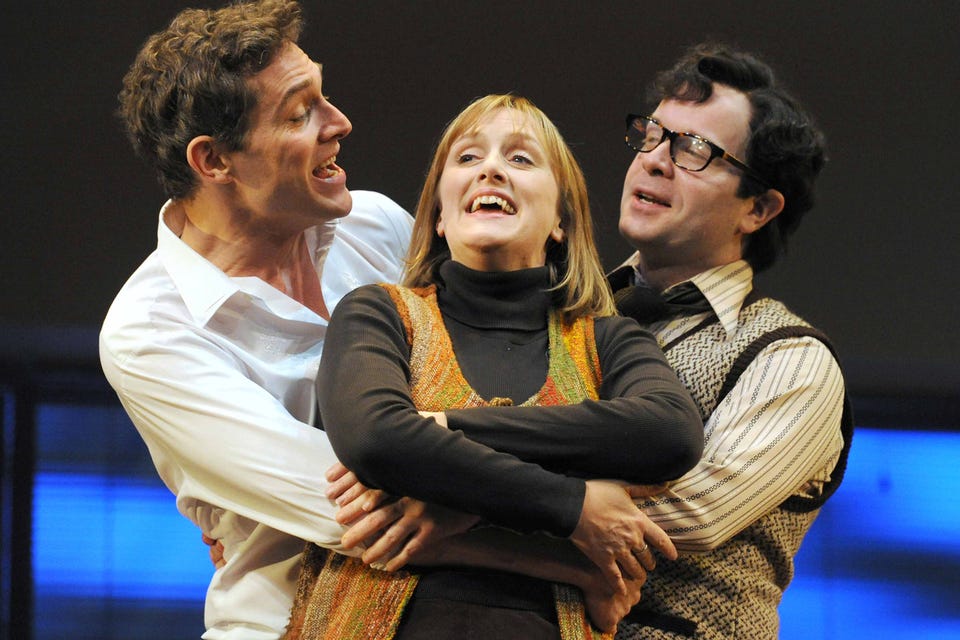
When I heard I was doing it, I was going through quite a shitty patch of work. Things weren’t going great for me. I found out, just on the grapevine, that Maria was doing Merrily at the Chocolate Factory, and casting it with older people. I thought, do you know what? All she can say is no. And that’s not a bad thing. So I texted her — I said, “Look, I don’t know, but can I be seen for it? I love the show so much, it means a lot to me, and I could see myself doing it. Will you give me a shot?” And she did. She was really meticulous about her casting for everybody. She made me work hard for it, and I did. So it was really lovely when eventually she said, “Okay, come and play Mary.” I was like, “Oh my god!” It was fabulous to do.
And she’d played Mary herself too, so I thought it might be tricky. Of course it wasn’t. She really pushed all three of us to go to ugly, extreme places, which I think bore fruit: how broken Mary was at the beginning, how messed-up she was, the drink, the nihilism, hating herself, so sad and lost. And of course, by the end, when you see her completely joyful, meeting Frank, with just a little twinkle, you could hear the audience crying. It was beautiful. We had a great time doing it. It’s a shame we didn’t make an album of it, but there’d just recently been James’s album of the one he’d done with Lin-Manuel — they’d done it the year before, so that never happened. But Maria kept plugging away about wanting to get that production to New York, and she got it there, and it did brilliantly. Quite right.
I actually got tickets for Dan Radcliffe to see the show when we were at the Pinter. He had come to see our Sunday in the Park with George when we were in New York, and he was lovely, and then we got him tickets to come and see Merrily. It’s funny to think of that: he was in my dressing room going, “Wow, it’s amazing, I’d love to play that part…” And eventually, he did.
He’s a brilliant theatre animal, Dan Radcliffe. I love that he’s thrown himself so beautifully into theatre, and is doing so well at it. He’s such a nice guy, and he has that lovely, open quality that Dan Evans has too. That kind of clarity, that human quality of being so open, is beautiful for Sondheim, because it just washes through those types of people. They’re not getting in the way of it, they’re just letting it in.
Are you able to put into words what makes Sondheim’s women especially so rewarding to play?
He writes so brilliantly for women. No one in the musical theatre genre writes better, which is another reason I love doing his stuff. His women are complicated, they’re funny — they can be screaming with laughter one minute, and giving someone the best put-down ever written the next. They’re never easy. I love that he saw that and could write so beautifully for women, because so many people can’t. A lot of the time in musical theatre, you’re either an angel or a whore, basically. It just relies on singing prettily.
But look at the lyric for “Rose’s Turn.” It’s extraordinary — to trust a singer to do that, and to write that. She’s so ugly and desperate and sad, but defiant, and then hilarious, then self-deprecating. It covers everything, and it’s groundbreaking, because no one was writing lyrics for women like that. We were always “come over here and sit on my lap, I think you’re fabulous” or “I feel so sad.” Boring. These women are smart, knowing, brutal — everything. They’re brilliant to play.
And these roles grow with you throughout your life too, don’t they?
I know exactly what you mean. I’ve done Into the Woods twice. I played Cinderella at the Donmar, and the Baker’s Wife at Regent’s Park. I auditioned for the Witch once — not the one that’s just been on at the Bridge, another production. I thought, I could have a go at that. And I joked with James Lapine that I’m saving Jack’s Mother for my retirement. I look at those parts and think, I could do something cute with that when I’m about 75. That would be lovely. That’s the dream, isn’t it — to move through the shows.
But again, that’s why everyone wants to do his work, because there’s so much fantastic stuff in there. It’s always rewarding, and you never get to the end of it. You never, with Sondheim, ever go, oh yeah, I know what I’m doing. Because you don’t. “Everybody Loves Louis” used to sometimes break me, because she’s putting on this brave front of happiness, and I’ve moved on, everything’s fine — when of course she hasn’t. “You lose things, and then you choose things... And George has George, and I need someone…” It’s just heaven to play, because the characters are never quite settled. Never.
The whole point of a musical should be that the music pushes the narrative forward, and nobody does that better than Sondheim. Each song is a further delve into a personality, into the way they’re thinking, or how they’re growing. Speechless. Speechless. It’s brilliant.
Thank you so much, Jenna. It’s been wonderful to talk.
My pleasure. Sondheim was my first love, and I’m still madly in love. He was so brilliant, and his collaborators were so brilliant, and he loved them so dearly. I get emotional just thinking about it. There was a time I sat next to Steve in a theatre. He said, “Hi, how are you?” And I just remember going home to Ray, my other half, and saying, “It just means so much to me that my absolute hero knows I exist in the world.
I’ve shown him my heart by doing his work. And he was always so positive and appreciative of what I’d done. For me, that’s my career. My life goal. That and my child pottering around the house singing Sondheim. There’s nothing and no one better.
Children and art…
Exactly.
For Sondheim Hub members, our conversation continues below…
This week, Jenna’s biggest surprises on stage in Sunday in the Park with George, the advice she received from Ewan McGregor, and the challenge of watching different productions after living a Sondheim role firsthand.
Paid subscriptions make our work possible! Click here to view our membership options. 📚