
A Conversation with Daniel Evans
On meeting Sondheim, finding his own George, and directing As You Like It
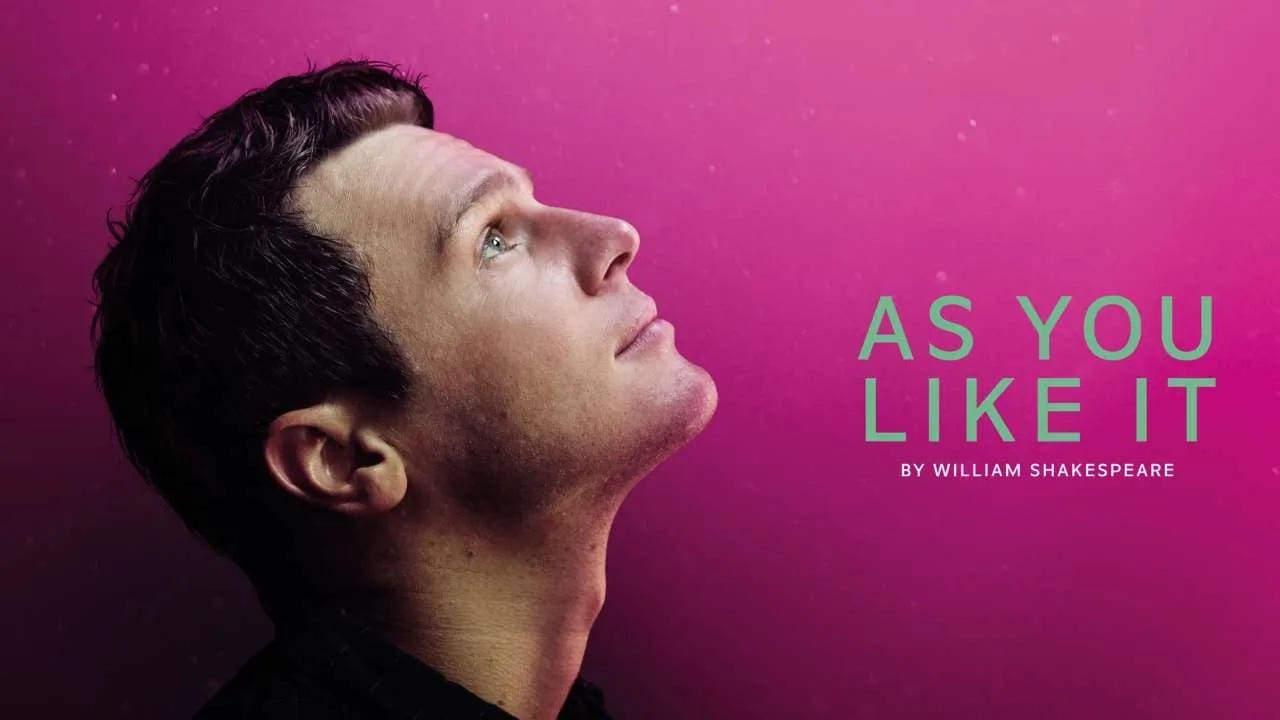
It’s a pleasure this week to welcome Daniel Evans, Co-Artistic Director of the Royal Shakespeare Company, to The Sondheim Hub. Daniel is as steeped in Sondheim as he is in Shakespeare, winning Olivier Awards for his performances in Merrily We Roll Along and Sunday in the Park with George. As he prepares to direct Jonathan Groff in As You Like It at the RSC, we spoke about meeting Sondheim, finding his own George, what Sondheim and Shakespeare understand about form and meaning, and much more. Our conversation begins below:
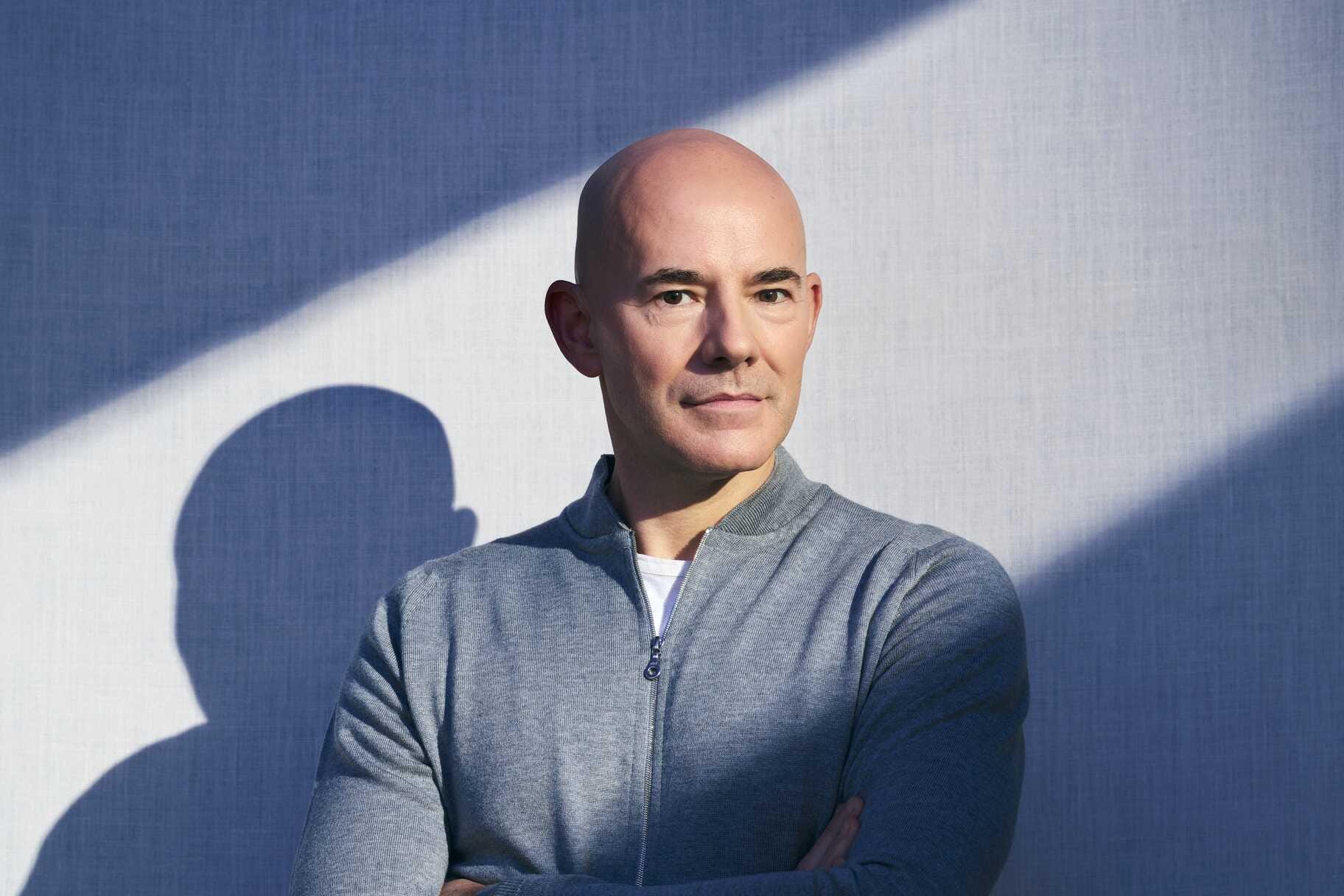
It’s so good to talk to you. Sondheim and Shakespeare have been two great touchstones throughout your life, and I’d love to explore both of those relationships today. Do you recall the first time you were in the same room as Sondheim?
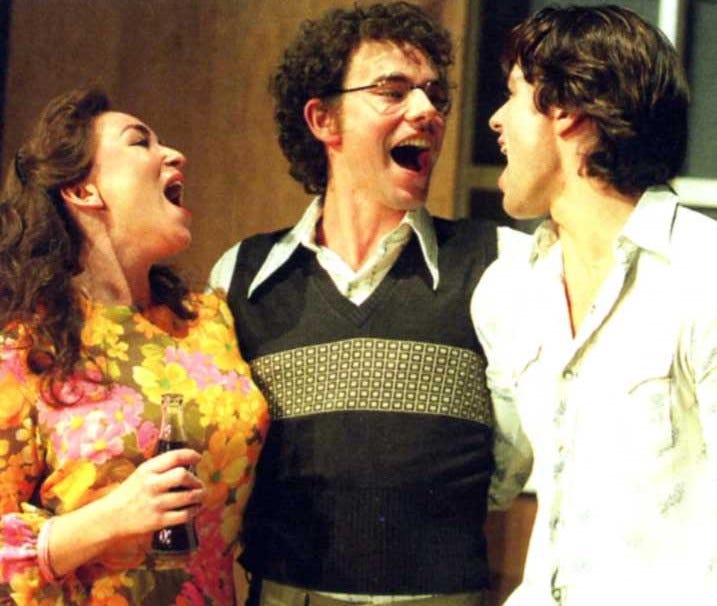
I couldn’t not have been aware of it, because we were at the Donmar, in previews for Merrily We Roll Along. He’d seen the first preview, we were doing a work session the next day, and he walked on stage. We all applauded. And he said, “It’s okay, everyone. God has arrived.” We weren’t sure whether he was being ironic or not.
We had the most amazing week with him, because he would take us off one by one to have tutorials. I had a one-to-one with him on “Franklin Shepard, Inc.,” which I’ll never forget as long as I live. It was just the specificity of it. There’s nothing like hearing it from the living writer, is there? And I’m especially drawn to that writer, because I think he writes like an actor.
Was it Sondheim specifically that drew you into a closer relationship with musicals as an actor?
I trained doing a classical theatre course at Guildhall — and while I sang as a teenager, in school and Eisteddfodau, these Welsh cultural festivals, I never thought I would sing professionally, ever. It was not in the cards at all. In fact, I would say that I harboured a view of musicals as being frivolous.
My first musical was Candide at the National Theatre. Of course, Sondheim’s in there too, because he wrote some of the lyrics, alongside seven other people. So when they asked me to audition for Candide, I couldn’t really believe it. I went out and got the Leonard Bernstein recording and said, “I can’t do this. That’s not how I sing.” And they said, “No, no, no. We want an actor.” So I had singing lessons.
And then, during the run of Candide, I heard they were doing Merrily at the Donmar. I asked my agent whether they would submit me — because I think of all the scores, it’s hard to have a favourite, but this one had touched me the most at that point. So I was absolutely thrilled when I was offered it.
Sunday in the Park with George is returning to London next year, of course — and you are our most recent West End George. How do you reflect on that role today? Is there any sense of ownership at all, even years later?
I think it’s dangerous to feel ownership, because it’s not yours. You were privileged to have George inhabit you for a while. And actually, when that production first started, it was a conversation between me and David Babani [Artistic Director, Menier Chocolate Factory]. We both happened to be in Chicago and we went to see the painting. This was before the production was even a twinkling in his eye. I said to him, “God, this is a part I’d love to play.” And then about a year later, he was asking me whether I would meet the director, and would I like to play it? It was a no-brainer: yes.
So, while there’s no ownership, these roles definitely live in you. I definitely feel such a deep connection to that score and that part. Having said all of that, I can’t wait to see Jonny [Bailey] play George. I think he’ll be amazing, and he’s an actor I love. I went to see Jonathan Groff in Merrily on Broadway, and saw Daniel Radcliffe playing the part I’d played — and that was surreal, because you’re seeing what’s in front of you and you’re also remembering your own experience. That makes for such a rich viewing.
So no, I don’t feel like George is mine. I feel like he was mine for a time, and that’s how it goes. Now he’ll be Jonny’s, and I can’t wait to go and support.
The Menier Chocolate Factory, where your Sunday began its life, is such a beautifully intimate space. For people who might be less familiar with the Menier, or with the idea of a Sunday at such close range, could you talk a little about what that intimacy offered the show, and you as a performer?
It undoubtedly intensified it. It meant that people were less than five feet away from us, and so the audience was almost in the painting at the end of Act 1. The band was to the side, we were all crammed in, and the Menier has quite a low ceiling. There was a challenge one night, I remember, because there’s a gay club next door. Especially during “Lesson #8” in Act 2, sometimes late on a Friday or Saturday, you could hear them starting to warm up. The beats would start coming through the wall…
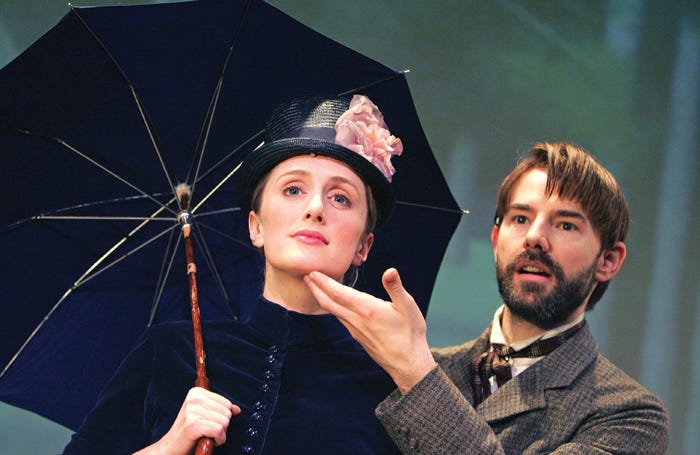
But the intensity of George, the intensity of Dot, the intensity of their relationship together, and then the intensity of George’s search in Act 2… All I can say is this word that keeps coming to me: intensity. Here’s this lost artist trying to reconnect with his own art, but also with his heritage. And interestingly, when we transferred to Wyndham’s, where we were in a proscenium arch, within a frame, the production probably sat at its most beautiful in that frame. The audience there was five times the size, and I sat happily with that. We did miss a little of the intimacy, but we managed to transfer it. By the time we went to Studio 54, playing to ten times the size of the original audience, I really missed that intimacy from the Menier.
I think you’re right to focus on the space, because the space gave the show a depth charge, I think, that was emotional. It was so up close and personal.
There’s something about the original production of Sunday that feels so whole and unchangeable, especially because it’s preserved on that PBS tape. As you were finding your own George, were you conscious of needing to get through to something new while still somehow honoring what came before?
Oh, that’s a really good question, because if you’re not careful, you can get totally intimidated. In the same way that I couldn’t sing like the person on the Candide CD, I can’t sing like Mandy. Also, I’m not as tall as Mandy. So you have to find your own way through. I really believe this: you don’t inhabit characters, they inhabit you. If I was the puppet, George was the hand, and I just had to let him do his work on me, or through me, and hope I’d be doing something new.
Before we started rehearsals, I didn’t want to watch the video. Ever since I knew I was doing the show, I’d stopped watching it. And there came a moment where I also stopped listening to the CD, because I didn’t want to be too influenced. I think as an actor, you have to put aside every past production of a show and just start again. You have to have a beginner’s mentality.
But I agree with you, that video is astounding — because of the design, because of the casting, because of everything coming together. It actually helped that we were doing something very different with the design, because Sam Buntrock, our director, had this brilliant idea of using digital animation — pixels, as a kind of modern equivalent of dots. That was a very neat thing, and in the early days for video projection, too.
I’ll tell you a funny thing. I had a sense one night at Studio 54 that Mandy was in. And he was. He came to my room afterwards, and we both cried together. I was saying to him — interestingly, in relation to your last question — what an honour it’s been to take on this role that is his. And he was saying, “No, no, no, it’s yours.” The sense of a baton being passed was very moving to me. He’s an actor I admire so much.
And how lovely to think that next year, you’ll be able to to pass that baton on…
To Jonny? Oh yeah, I hope so. I really hope so.
So many people reading this will have seen Sondheim’ 80th birthday Prom, either at the time or on YouTube more recently. You were such a big part of that celebration. I wondered especially how it felt to sing “Move On” with Jenna [Russell] again, two years after you were on Broadway together.
Well, I’ve got to watch that I don’t weep, because there are these lines in the show… “We will always belong together.” That’s very true of me and Jenna — and of Anna-Jane, who originated Dot at the Chocolate Factory, too. There’s a sense that wherever you are in life, there’s always this person that you went through this thing with, whether that was the originating production at the Chocolate Factory, or indeed then the West End and Broadway.
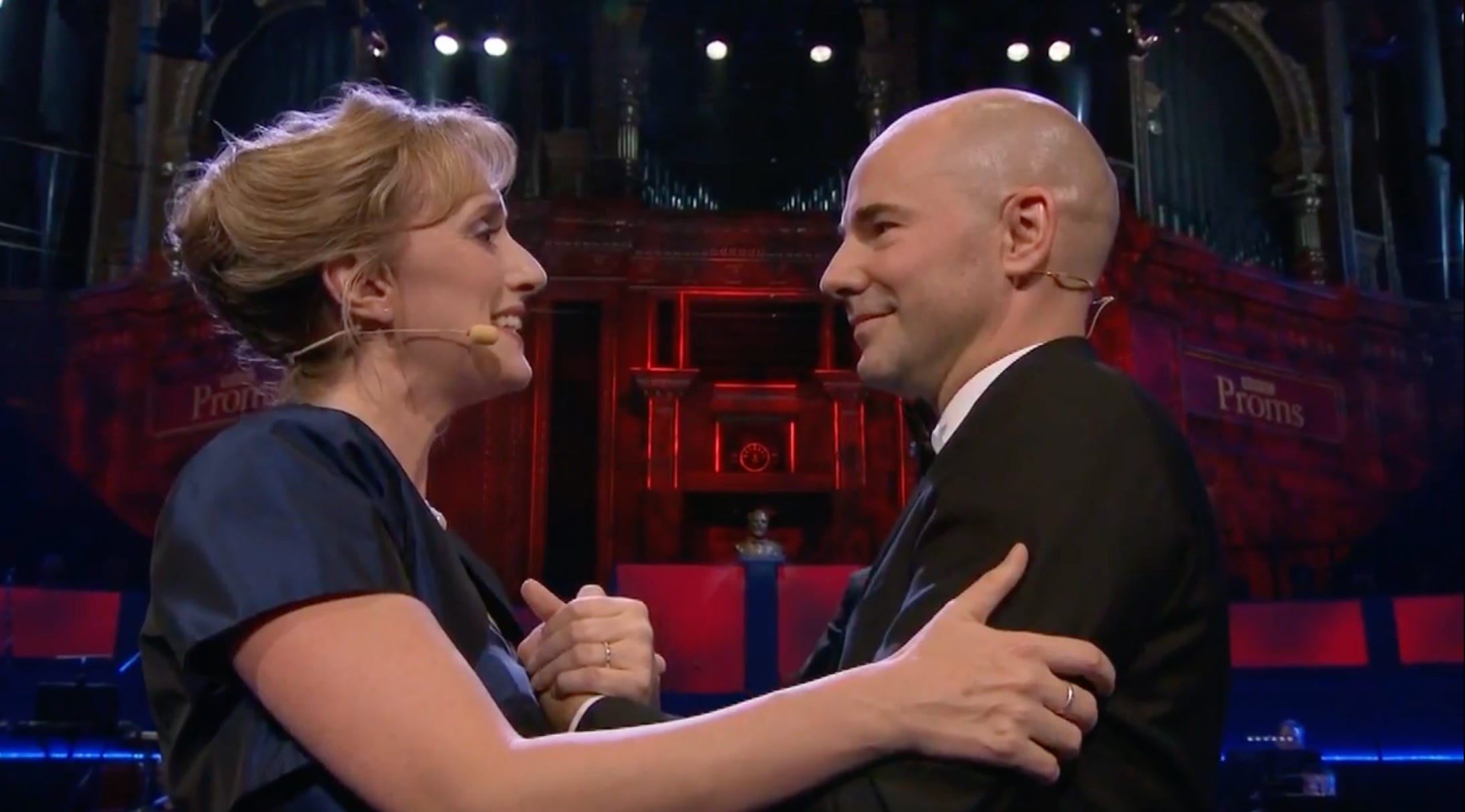
The Sondheim Prom was the most terrifying thing I’ve ever done in my life, because the Albert Hall was full: more than 5,000 people. There was a 60-piece orchestra, it was live on the BBC, and Sondheim was in the house. There couldn’t be more pressure. And some of it I was singing for the first time, like the stuff from The Frogs with Simon Russell Beale at the beginning.
So in a way, coming back to Sunday during that moment was… God, it’s so hard to describe the feeling. It was a return to something. I suppose it’s tied up with those lyrics, as George is reaching for this connection and having this breakthrough, seeing her ghost, or however you want to interpret it, that something is reconnecting. And at that moment, Jenna and I were reconnecting.
And then “Sunday” itself… I mean, it’s no coincidence that it came second in your World Cup. There’s something in the piece that goes beyond reason. It’s not rational. It’s emotional. When those chords come in, in the introduction, something happens. It’s subliminal, and yet not.
✍️ If you’re enjoying this interview, consider supporting The Sondheim Hub and unlock our full archive & exclusive content each week:
an exclusive weekly member-only essay
an extended edition of each of our interviews
a weekly Sondheim crossword
full, paywall-free access to our archive of 300+ essays, features, and interviews
A small percentage of readers currently support us with a paid subscription. If you’re able to help sustain this work, please consider becoming a Sondheim Hub member! 📚
I think there was something else as well, for me and Jenna, because we got to sing it at the Tonys, so we’d already sung it at Radio City Music Hall. That was also highly pressurised, live, a full house, and all those stars watching. And here were us two Brits, over there on Broadway. So there was also something about us saying, “Gosh, here we are again, and we are still connected to these parts, and we are connected to each other.” And that will probably never go away.
That’s beautiful. Turning more toward Shakespeare, I couldn’t resist asking you about the claim so often made about Sondheim — that he is “the Shakespeare of musical theatre.” You’re Co-Artistic Director of the Royal Shakespeare Company and you’re so deeply steeped in Sondheim. What do you make of that comparison?
I understand it, because in their respective genres — Elizabethan theatre and 20th-century musical theatre — there’s no doubt these two people were at the forefront of their fields. So that’s one easy comparison, and I think a very valid one.
The thing that I think is great about both Sondheim and Shakespeare is that they understand that form and meaning have to come together. As I’m prepping for As You Like It, which Jonathan Groff is playing Rosalind in, it’s been really interesting: Jonathan’s never done Shakespeare, but I don’t need to talk to him about rhythm and rhyme and metre and all those things, because he gets it — because he’s done so much Sondheim.
What I’m getting at is this: there were these two men who understood that when you can match form and meaning, then the piece, the language, the music — and I mean the music in Shakespeare as well as the spoken language, because there is music in his language — can work on a totally different level. It connects with us deeply. There’s a chiming that happens deep within us, because they touch on something that goes to the root of the condition of being alive.
You mentioned As You Like It, which opens at the RSC in September. I think there’s something really nice, by the way, about a Charley directing a Frank.
Ha!
Where are you in the creative process right now?
I’ve been wanting to do this production for a while, because it’s a play about a woman who dresses up as a man who pretends to be a woman — and of course it was originally done with all men, because women weren’t allowed on the English stage in the very late 16th century. This is a play from 1599. I’d been thinking about who Rosalind is, and I hadn’t quite found her until I saw Just in Time. I’d seen Jonathan in Merrily the year before, but there was something he did in Just in Time… It’s a show about Bobby Darin, and it was a complete and utter triumph for Jonathan. He rarely left the stage, he had this connection with the audience, he could turn on a dime so quickly. It seemed to me like his intellect and his technique are so together.
I’d actually met him after the show, but I didn’t mention anything because I was too shy. So I wrote to him about three days later and said, “This is a mad idea...” And he literally wrote back with the subject line reading, “Holy fucking shit.” So we Zoomed three days later, and he said yes. And since then, every Friday, we go through the play, we do Shakespeare, and we’ve done that for the last six months without fail. He’s always there. He’s a theatre actor through and through, even though he’s doing two films at the moment, back to back — the one with Lin-Manuel, and the one with Dan Radcliffe. But he gets it, and he’s curious, and he’s passionate, and he has deep insight into the emotional lives of characters and plays.
The theme I’m loving exploring in the play is that there are all different kinds of love. People identify in all kinds of different ways in the play, but there’s a sort of subliminal message that says: we change. We’re not the same people throughout life. Things come in. We sometimes surprise ourselves with who we fall in love with. And whether you’re gay or straight or bi, or however you identify, you go for it. That’s all well and good. And if that’s important to you, say so. But there’s this other, greater thing, which is love, and we can’t predict where love goes. And that, I hope, is the joy this production will bring this autumn.
And that feels as Sondheimian as it does Shakespearean, doesn’t it?
Well, I’m thinking about “Our Time” at the end of Merrily, and how there’s a kind of return to innocence. Or I’m thinking about Follies, and how it’s an analysis of regret — of how one didn’t live one’s life the way one could have done, had one keyed into who we really were. And Into the Woods is all about wants and desires, and those primal things we sometimes chase and then regret. And about eroticism, too, and the fear of the other. And of course those themes run all the way through As You Like It too.
For Sondheim Hub members, our conversation continues below:
the show that changed how Daniel thought about musical theatre
a disastrous Sunday dress rehearsal
the Sondheim mountains Daniel still hopes to climb
Paid subscriptions make our work possible! Click here to view our membership options. 📚