
A Conversation with Coby Getzug
on Broadway's Merrily We Roll Along
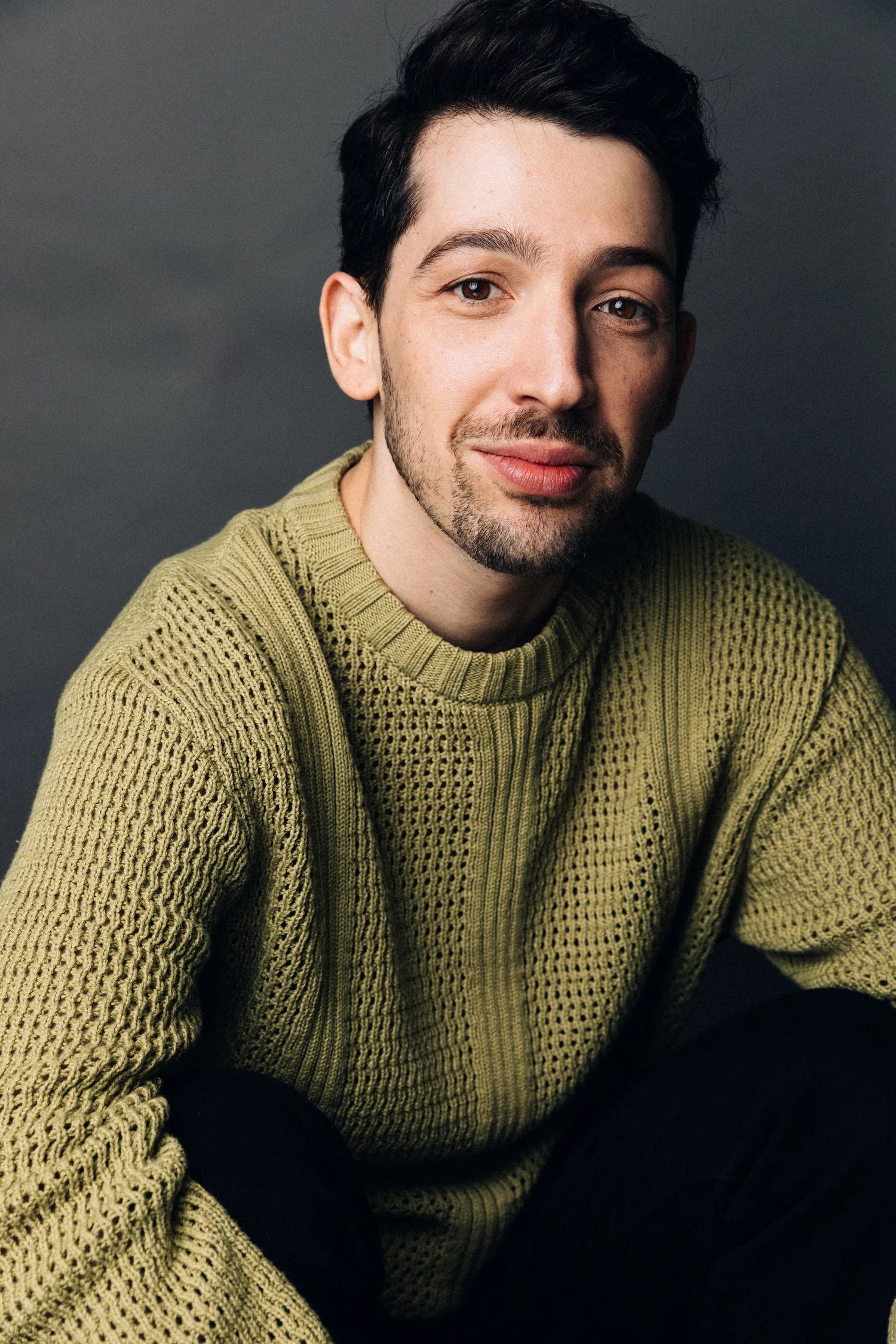
It’s a joy to welcome Coby Getzug to The Sondheim Hub this week. In 2024, Coby joined the ensemble of Merrily We Roll Along on Broadway and understudied Daniel Radcliffe’s Charley Kringas. We discussed the pressure of stepping into such a high-profile revival, the thrill of playing Charley on Broadway, and how Merrily ages with us. Our conversation begins below:
Thank you for reading! Upgrade to a premium subscription for full access to The Sondheim Hub: an exclusive essay, extended interview, crossword & more each week — plus, our complete, paywall-free library of 250+ essays, features & interviews.
It’s so good to meet you. Before we dive into Merrily We Roll Along itself, I’d love to know about the project you’re in the midst of right now.
I’m working on a new play called The Zionists: A Family Storm. It’s by a playwright named S. Asher Gelman, and it’s about a family who’s torn apart after October 7th. We did it at an awesome theater in Miami Beach that fosters new work, called Miami New Drama, and we’re about to do another run of it at Barrington Stage in the Berkshires. It’s intense material, and an intense time, obviously. But as a Jewish-American actor, it feels like an appropriate project to be a part of.
This is my first time originating a part, and my first time being a part of a new play like this. It is so cool to feel like you’re part of something that’s living and breathing. It’s also a good reminder that theatre, at the end of the day, is meant to challenge us. When you’re doing a piece that evokes a strong audience reaction, it can be intense. We had a lot of heckling happening. We had a lot of people who were clearly very activated by the material and the things we were talking about.
Not to go too much into the specifics of the play, but it presents many viewpoints in a respectful way, and I would say everybody gets a chance to have their perspective heard — but some people just could not handle hearing the perspective that wasn’t theirs. And I think it’s a really good reminder that it’s so important for us to be able to sit in discomfort, for the benefit of being able to understand each other better.
If you see something on a screen, you have the option not to engage with it. If you’re scrolling through reels, you’re getting things that keep you calm and comfortable, and then if you get something that you don’t want to see, you just scroll past, you know?
But in a live performance, sometimes you’re going to see something that’s, like, the best production of Legally Blonde, and you’re like, “Holy shit, that was amazing.” And you’re so happy to have escaped your everyday. There’s a place for that. Actually, my partner is the producer of Schmigadoon! on Broadway. It’s just opened, and one of the things that has been really amazing about it is that it offers that escapism. It gives people the opportunity to escape their problems for a couple of hours, and that is a beautiful thing.
But if you go to see a play like Giant, which is dealing with difficult issues, you can’t just swipe it away — you’re there. You paid the money, you’re in the seat. So you can either start yelling at the actors about things you don’t agree with, or you can sit there and listen to the words and have your reaction, and then you’re forced to process it, whether you want to or not. I think that’s something that can only happen live. But there’s definitely room for both.
Merrily We Roll Along, though less politically charged, is certainly a show that forces us to confront ourselves in various ways. Before the Broadway production came your way, what kind of relationship did you have with the show?
My road to this production was kind of wild. I auditioned when it was going to New York Theatre Workshop, made the final callbacks, got really, really excited — and then didn’t get it. I was devastated. I actually went to opening night as a guest of someone else, so I saw the show on opening night on Broadway, and was so moved by it — but I thought, that’s amazing, and I’ll never be in it. I mean, who would ever leave?
And then, just by some fluke, almost two years to the day from auditioning the first time for the New York Theatre Workshop production, I got an email: hey, are you available to come in for Merrily? Brian Sears, who I love, wasn’t going to do the extension.
I went in for the audition. It went okay, but it was pretty brief, and I was kind of in my head. I was waiting for the elevator, and the casting director runs out and says, “Hey — you got it.” I was like, “What?” I left the studio and walked outside into Times Square, thinking, it’s our time… I really felt like I was in the right place in my life to appreciate it.
And at that audition, you knew that part of your job would be to cover Charley, right?
Exactly, yeah. Typically, when you build a cast, you have to build in coverage. The members of the ensemble, or smaller principal roles, might cover other principal roles — and you have to think about who’s going to be able to cover what. So part of the original audition for the New York Theatre Workshop was mostly Charley material: “Franklin Shepard, Inc.”, “Good Thing Going,” a couple of scenes. When Brian left, because he was in the ensemble and understudied Daniel, they had to hire a replacement specifically for that job.
My rehearsal process, because I came in as a replacement, was unique. They gave me three months to rehearse, which is kind of unheard of. Usually when you replace someone you rehearse for two, three weeks. But they really wanted me to be performance-ready with Charley.
I actually learned Charley first, then had a rehearsal with the rest of the cast as Charley, and then I started learning my ensemble track. Part of the reason for that was because Daniel and Jonathan had planned absences. They never called out — they never missed a show, which is unbelievable. But there were those planned absences. So when I was coming in, I needed to be ready to go on, because I was going to be going on.
Is there something uniquely intimidating, or thrilling maybe, about stepping into that role when you’ve already seen the show in all its glory as an audience member? And for an actor who is so well-known, too?
Well, first of all, Daniel is the most famous person I’ve ever been around, by far — in the sense that he could go anywhere in the world and people would know who he was. That’s a different level of fame. There was so much pressure. But I was pretty confident I was never going to go on without notice, because Daniel understood his responsibility. Daniel is the best — hardworking, humble, professional. He’s an actor who loves to act, he understood the responsibility of what that was, and so he showed up every day. So I was never really worried about unplanned dates, to be honest with you.
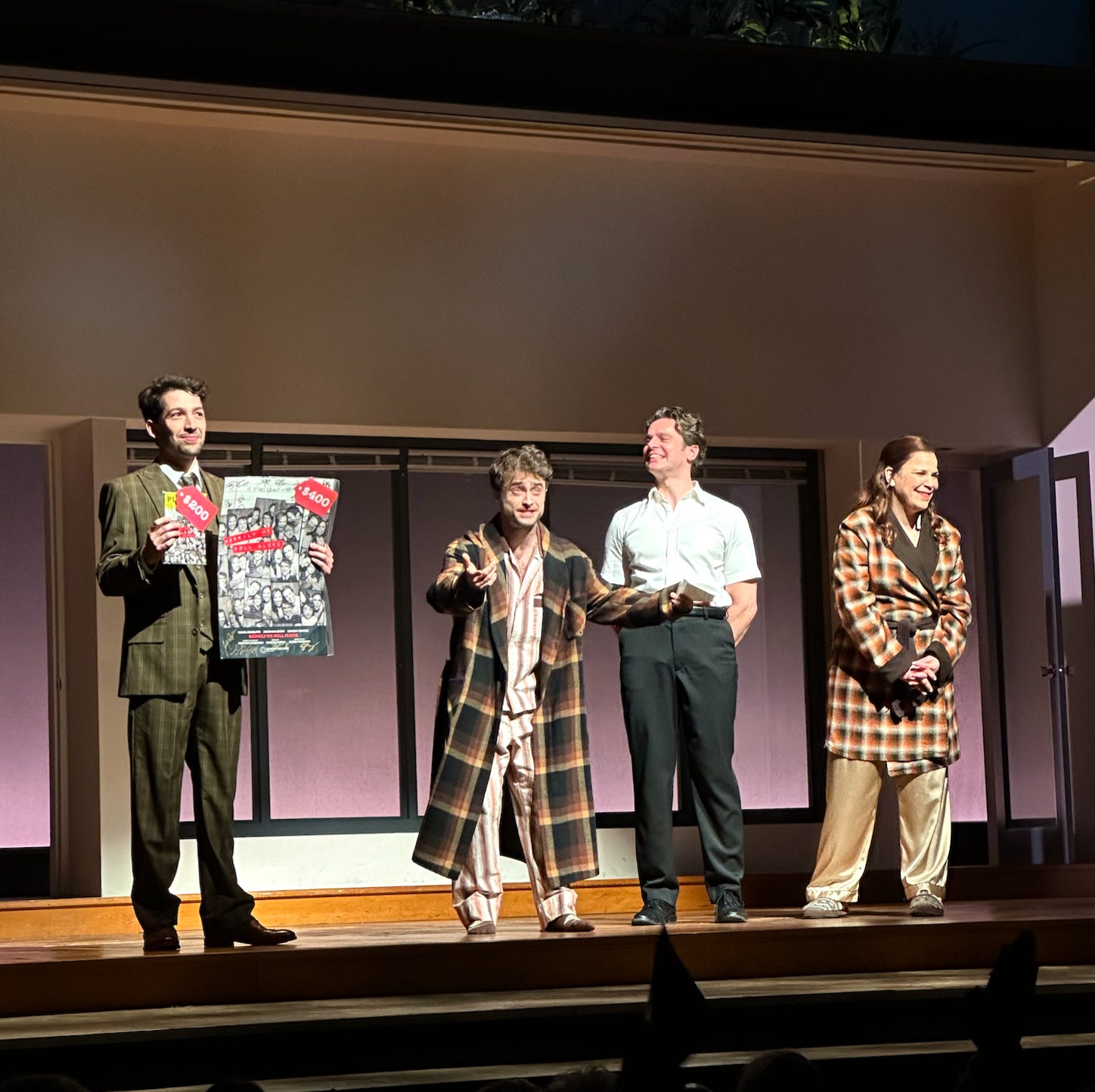
But I will say that having planned dates to go on almost stressed me out more — because I was so excited about it. It’s this thing of, holy shit, I’m going on on Broadway, starring in this hit production. There’s the excitement of that, and also the pressure of that. Then it’s like, oh my god, I’m understudying Harry Potter?
The first time I went on, 150 people I knew had flown out from California. And I was lying there the night before thinking, why did I pick this career? Why did I create such a stressful situation for myself — where I have to go sing “Franklin Shepard, Inc.” in front of 150 of my closest friends and family, and a Broadway audience who’s there to see the hit of the season?
It was a lot. But it was so great. Lindsay was so helpful for me, so grounding. And Jonathan… I could talk all day about Jonathan. An absolute role model, the greatest of all time. Getting to share that with them was a dream.
Thinking about Charley’s particular journey through the show, “Franklin Shepard, Inc.” comes quite early, relatively speaking. Does that help at all?
Two things. Personally, as someone who was nervous about going on, I appreciated it. I was like, let me just come in hot, get this out of the way, and then the only other thing I really have to worry about is “Opening Doors,” but that’s a while from now. So I actually appreciated that it came right away.
And I also think that, as an understudy, having that happen right at the beginning was a way of saying to the audience: “See? You guys are good. We’re all good. Trust me.” An audience can feel nervous about an understudy. So I think once you’ve done that, it allows people to settle in, and I certainly had a lot more fun throughout the rest of the show because of it.
Was there anything about Charley in particular that, beyond “Franklin Shepard, Inc.,” surprised you or challenged you more than you’d expected?
“Opening Doors” is probably the hardest thing I’ve ever done in my career. That’s harder than “Franklin Shepard, Inc.,” because you’re just pulling these phrases out of thin air, and it’s so fast. I would sit there in front of the typewriter before the song started and take a huge breath, you know? Because you’re about to get on a freight train.
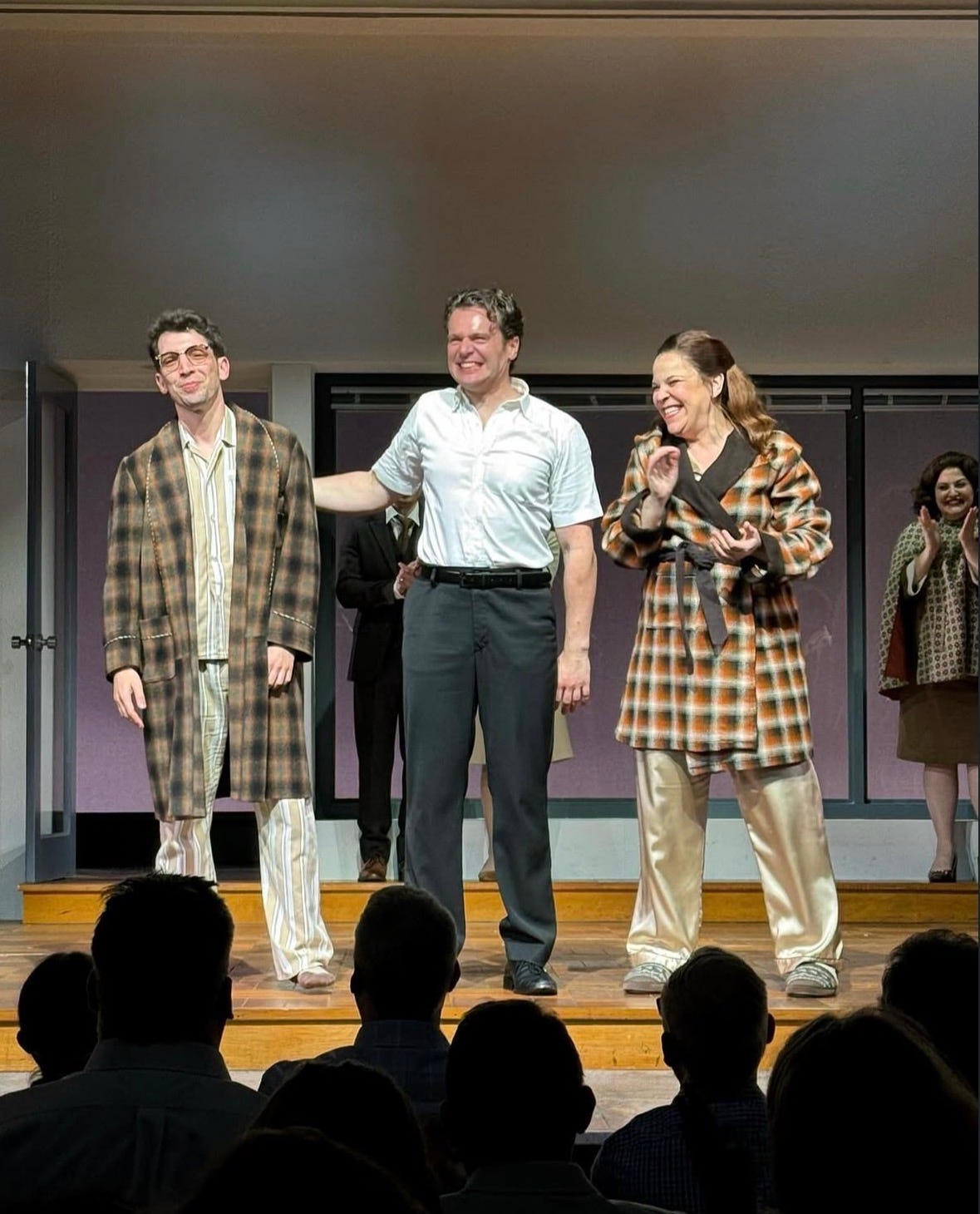
But I think the thing that surprised me the most about Charley was that, because we’re so used to hearing “Franklin Shepard, Inc.,” we can think of him as this angry, jaded character. But he is so full of love. He loves Frank, and from the very beginning is such a cheerleader for him. Which is why it’s so heartbreaking that their relationship ends the way it does.
And even in “Franklin Shepard, Inc.,” yes, I’m really mad — I’m pissed off, I’ve had enough. But it’s so much more than that. Charley’s reckoning with all of these complicated feelings about the person that he pretty much loves the most in the world, who he would lay down his life for — Frank says that, actually, about Charley, but I think it’s true for both of them — and who has betrayed him in that sort of way. It’s so challenging.
In my normal ensemble track, I was all the way stage left for “Franklin Shepard, Inc.,” leaning against the proscenium, watching Dan sing it in the spotlight. We were all watching him. And then I had this weird moment when I was on as Charley, where I was like, oh my god, I’m in the spotlight. I was having an out-of-body experience where I was thinking, normally I’m sitting there watching this thing — but right now, I’m the thing. That was weird. That perspective shift was strange.
As an actor, you want to be part of bigger and smaller projects, a whole variety of things — and of course you can’t exactly determine what your career looks like. But I’m curious: now some time has passed since Merrily, do you find yourself craving that specific feeling of being inside a big, buzzy hit, with the Tonys and the proshot and all the things that come along with a production like that?
Yeah, definitely. It’s such an unstable, unpredictable thing, any life in the arts — and so to suddenly be in a moment where all of the things you always wanted to experience are happening at once — I’m in a show that’s a hit, we’re performing on the Tonys, they’re making a movie — it’s an amazing feeling, yeah, for sure.
The other thing that comes with that is a little bit of stability. You’re like: okay, my show’s not going to close next week, so I can financially plan. I know I’m going to have a job. So it’s the feeling of, oh my god, I’m in a hit, this is a dream come true — but also, oh my god, I’m going to have a paycheck.
Merrily was such a beautiful, beautiful gift to me — and to everyone involved, on stage and off. It was just a wonderful group of people who were so happy to be there. And the fact that I’m in a Sondheim proshot? Elementary school me, who used to sit in front of the computer and wait half an hour for the Lion King Tony Awards performance to load, just to be able to watch “Circle of Life” — that kid thinking, one day I’ll be a part of that. And now to have people watching me in Merrily on planes? That’s crazy.
I’m just so excited to be part of Sondheim’s legacy in any way, however small, and to have had that experience. I wish I’d been able to meet him while he was alive, but I felt like I did in some small way — by doing that show and saying those words. Because it feels like such a personal show to him. About the struggle of what a life in the arts is, about what growing up is, and maintaining friendships, and deciding what road you’re going to take. You just bend with it, and go with it, and keep perspective, and keep the people you love close. I love Merrily so much.
✍️ Please support our work by upgrading to a premium subscription:
The Sondheim Hub exists solely thanks to the generous support of our readers. Please consider supporting our work for a few dollars each month. A premium subscription gives you full access to The Sondheim Hub: an exclusive essay, crossword, extended interview & more each week, plus our complete, paywall-free library of 250+ essays, features & interviews. 📚