
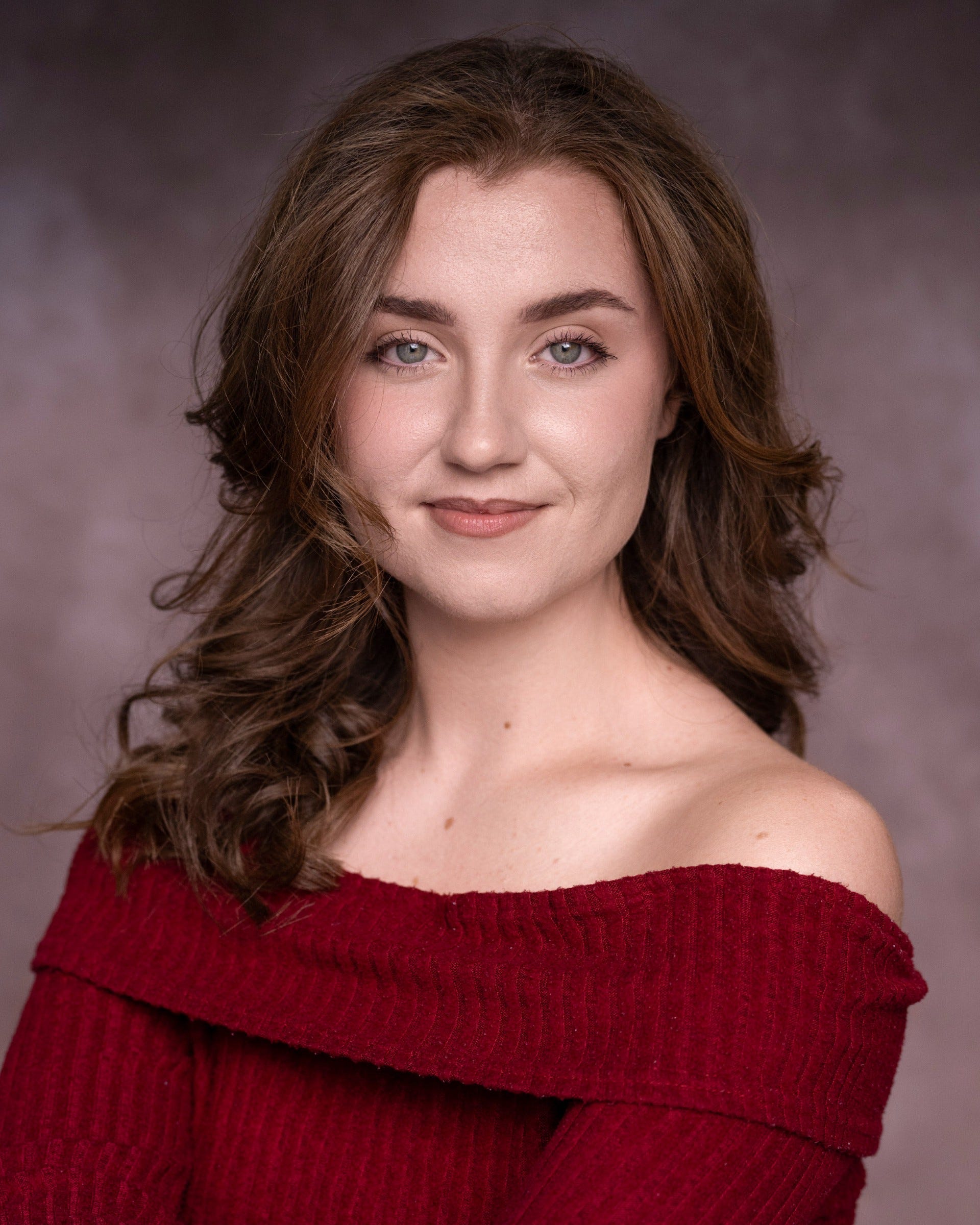
Charlotte English was recently crowned Stephen Sondheim Society Student Performer of the Year on stage at London’s Sondheim Theatre. It’s a pleasure to welcome Charlotte to The Sondheim Hub this week, to discuss the competition, her passion for Passion, and her deep and longstanding love of Sondheim’s work more generally. Our conversation begins below:
Thank you for reading! If you find our work valuable, consider upgrading to a paid subscription for the full Sondheim Hub experience. ✍️
First, congratulations on being crowned Stephen Sondheim Society Student Performer of the Year! Let’s start with the competition itself, which runs annually: how would you describe the competition to someone who isn’t yet familiar with it?
It’s a competition, but it’s honestly more about showcasing new talent. There are 12 finalists; we all sing a chosen Sondheim song and a piece of new writing. We sing those two songs, and we’re judged by a panel of industry professionals.
I actually hadn’t heard about SSSSPOTY until I got to drama school. When I was in my first year, I heard about the third years getting chosen for the Sondheim competition. I thought, I would love to do that. Sondheim’s always been my favourite composer to sing.
BIRD, the college that I go to, has a kind of in-house process as well. There are quite a few rounds before you’re put forward for the self-tape that they professionally film to go off to the Sondheim Society. We send in our self-tapes, then work further with the acting teacher on our songs, and then perform it in a Sondheim evening at BIRD, which is so much fun. Five people are chosen to be put forward to the Sondheim Society. We film a professional self-tape — mine is on the BIRD Instagram now [at this link], which is so cool — and then that gets sent off to the Society, where you then go for live rounds leading up to the final.
I originally sent in a tape for a different song — it was “Stay With Me” from Into the Woods. But then my acting teacher said he felt I’d get a lot out of “I Read” from Passion. Passion is one of my favourite Sondheim musicals, but I didn’t think I would be able to sing that song. I got the sheet music and thought, yes, this is as difficult as I thought it would be. So we spent about a month working on it before I even taped it, which was so helpful. And it paid off, so I’m very happy about that.
For people who know Passion but aren’t performers themselves, could you speak a little more about what makes “I Read” specifically challenging? It’s easy to understand the challenge of something like “Getting Married Today” — but the demands of “I Read” are quite different, right?
Passion is one of those shows where I can never just pull out a single song to listen to. With Passion, you kind of have to do the full thing to really get why it’s so impactful. When I first listened to the original cast recording, I was just blown away by Fosca. I knew it was a difficult part, but until I really got the sheet music, I didn’t fully understand how difficult it actually was.
There are so many different time signatures in that one piece. It starts with 7/4, then 5/4, then 7/4, then 5/4 — two unorthodox time signatures. With Sondheim, it’s really important to honour what he put on the page, so I wanted to get as close to what he’d written as physically possible. It was hours and hours of writing out what was on the page — counting “1-e-and-a, 2-e-and-a” — and working out how I was going to switch meters in my mind throughout the song.
It’s not only that, but it’s also quite vocally challenging. The only way I can describe it is jumpy — it moves from one register to another quite quickly, and that’s testament to Sondheim’s writing, because she’s in and out of her head constantly. Playing a physically and mentally ill character, it’s quite easy to fall into the trap of making it too overt. I wanted to keep it as truthful as possible whilst also doing it justice, and I think Sondheim gives you that all on the page. That’s what he does as a writer — he gives the actor so much.
Keeping “I Read” as natural as possible was difficult within the parameters of the music, because it is so here, there, and everywhere. It’s not like a big, belty number where the challenge is external and everyone can see it. What I wanted to do was make it as conversational as possible, so it didn’t sound like it was in 17,000 different time signatures. I wanted it to sound like a conversation, which is how it came across to me when I listened to the cast recording.
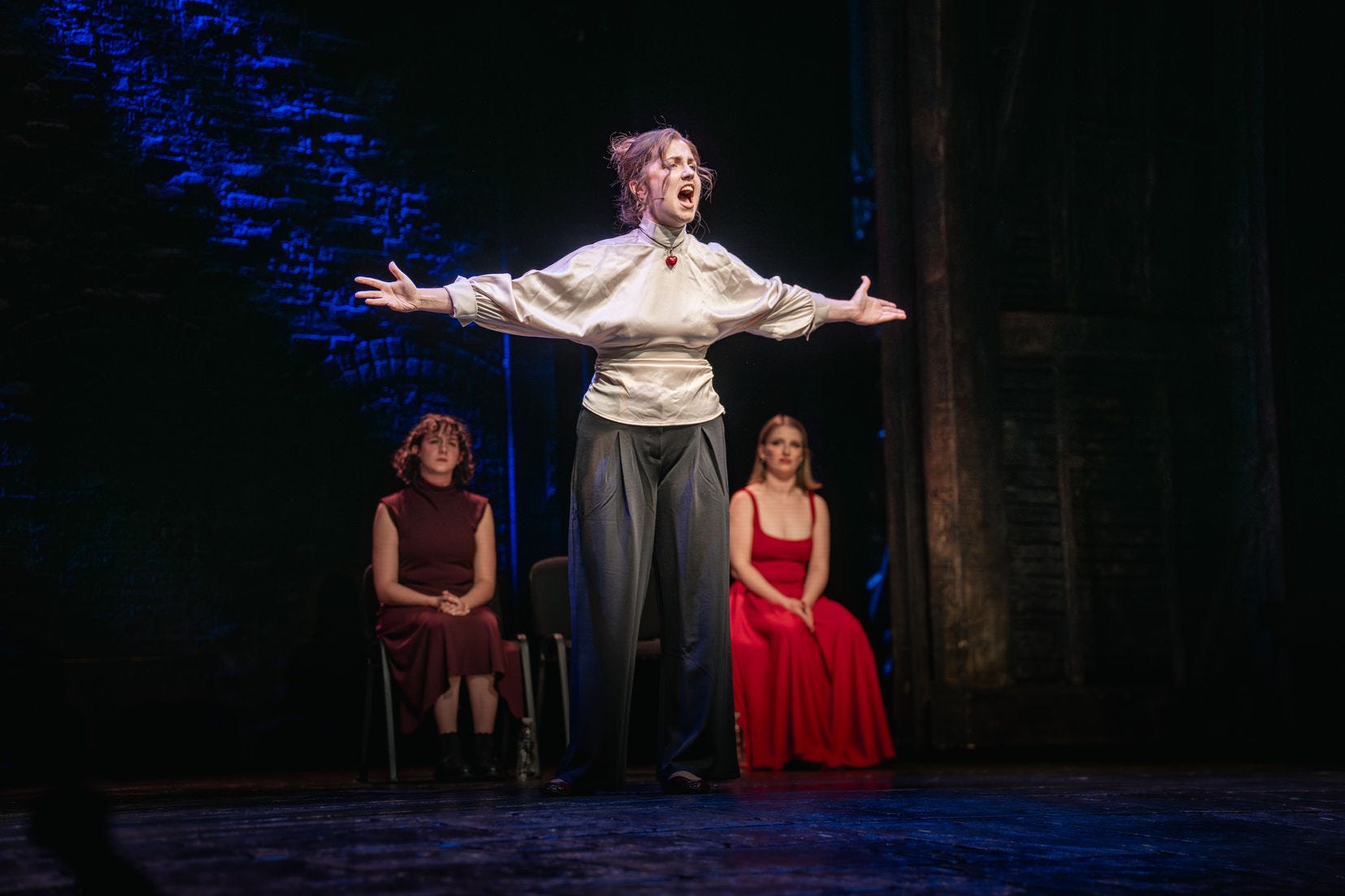
I didn’t realise how difficult that was going to be, so I am very, very thankful for the sessions I had with Ed Goggin, my acting teacher, and also Simon Gray, my wonderful MD, throughout the process. There were so many sessions of note-bashing — because the intervals are also very complex — and then clapping through the entire thing and changing the meter and getting that into my body. It was very challenging, but so rewarding.
You clearly have such a deep admiration for Sondheim’s work. Among your peers at BIRD and in your wider circle, do you feel that love is widely shared?
I think for a lot of people, when they hear Stephen Sondheim, they think it’s some higher-brow, unattainable version of musical theatre. There can certainly be that energy around it with some of the people who talk about it. But he’s actually completely easy to listen to. I think some people get intimidated by his works without realising that once you listen to one song, you’ll want to listen to all of them.
A lot of my really close friends absolutely love Sondheim. But I think nowadays, the direction of musical theatre worries me a little, for my personal taste. There are a lot of jukebox musicals — and of course they have their place, but that’s not what I’m interested in. And the direction vocally is: sing higher, belt more, and riff.
With Sondheim, it’s very lyric-focused, and I’ve always been a lyric-focused listener. All of my favourite artists are lyric-focused — like Hozier. I absolutely adore Hozier; in my mind, he’s one of the most amazing writers in modern pop culture. He is so poetic, but he manages to be poetic while still making the melodies really intricate and listenable, which Sondheim does for musical theatre. So Sondheim and Hozier are kind of my great loves.
I wish more people listened to Sondheim. I do think it’s because of the perceived highbrow-ness of it, when really, his lyrics aren’t pretentious or fancy in any way. They’re often so syllabic and to the point, and that’s what makes Sondheim so brilliant — there’s no fluff.
Exactly. Even just within Passion, take the lyrics to “I Read,” or “Loving You” — it’s not like he’s throwing the thesaurus at you.
No, no. The first verse is: “I do not read to think. I do not read to learn. I do not read to search for truth. I know the truth. The truth is hardly what I need.” Sentence by sentence by sentence — it is not intimidating at all. I wish that pretence of pompousness would just be punctured.
Let’s talk about SSSSPOTY itself. One of the cool things about the competition final is that you have Nigel Lilley [MD for Follies and Here We Are at the National Theatre] sitting at the piano. Did working with him bring out something more in your performance?
When I found out it was Nigel Lilley, I got so nervous. I was so worried about disappointing him — it really weighed on me! But I went in, and he has this calm presence that almost makes you forget how brilliant he is.
I sang it through with Nigel playing, and I was nervous because, as I’ve said, the time signatures are so difficult — I really wanted to get it right. We worked through it, Hannah [Chissick, director] gave me some direction, and then Nigel was really insightful. He gave me, I think, two notes. The first was about the introduction and the first two lines. He said it’s written in semiquavers, but he felt I should take my time with it a bit more, because what she’s singing is a response to a conversation.
I was so fixated on the counting, so he suggested: what if you gave some breath to it, and let it flow like an answer? So instead of rushing into “I do not read to think,” he was like, what if you just — “I - do - not - read - to - think” — and really let it breathe? That allowed me to spit every word out so that people knew immediately what was going on, because the opening arpeggios already establish a conversation. He was saying: this will give you the chance to explain to the audience what is going on, without that introductory conversation as context.
I sang it through a second time and it just helped so much. Then he gave me some timing notes, and one gentle note on pitch, in such a gracious way. I felt completely held by him, because he’s so brilliant. He played so beautifully, which really gave me the platform to sing truthfully. A good accompanist is so important to a performance. When someone plays something really, really well, you feel completely safe.
And clearly, the real joy of a competition like this is experiences like that. But you did win, and there is a prize and the recognition that comes along with that. Have you had time to reflect on what winning this really means to you?
I have never felt like that in my entire life, on that stage. First of all, just singing in that theatre was completely singular, because that is the theatre I saw my first ever musical in. I watched Les Misérables there — back when it wasn’t the Sondheim Theatre, when it was the Queen’s Theatre. When we were in the tech, I looked out and I could see the seat where I’d sat. I was sat over there, and now I’m about to sing on this stage.
And I feel like I really, truly did sing it the best I could. I’m so happy that I could walk away thinking: I did my best up there. There was nothing I wish I’d changed. Of course, there’s always room for improvement, but in that moment, on that stage, that was the best I could have done it. It was completely nerve-wracking — you never know what’s going to happen with your breathing and your technique — but I sat down afterwards and I thought: that was the best I could have done it.
I have a wavering sense of self-belief, and I think every performer does. As much as you try not to compare yourself to other people and their successes, you always do — it’s completely human. So I finished and I thought: right, that’s the best I could have done, and if nothing comes from it, then nothing comes from it. I’d already won just by being there, on that stage. I couldn’t have asked for anything more.
I went backstage and felt good, just hanging out while the other performers were on. I was thinking: there is so much talent on this stage, so I’m not getting my hopes up. Because — as I’d just sung in “I Read” — “If you have no expectations, Captain, you can never have a disappointment…”
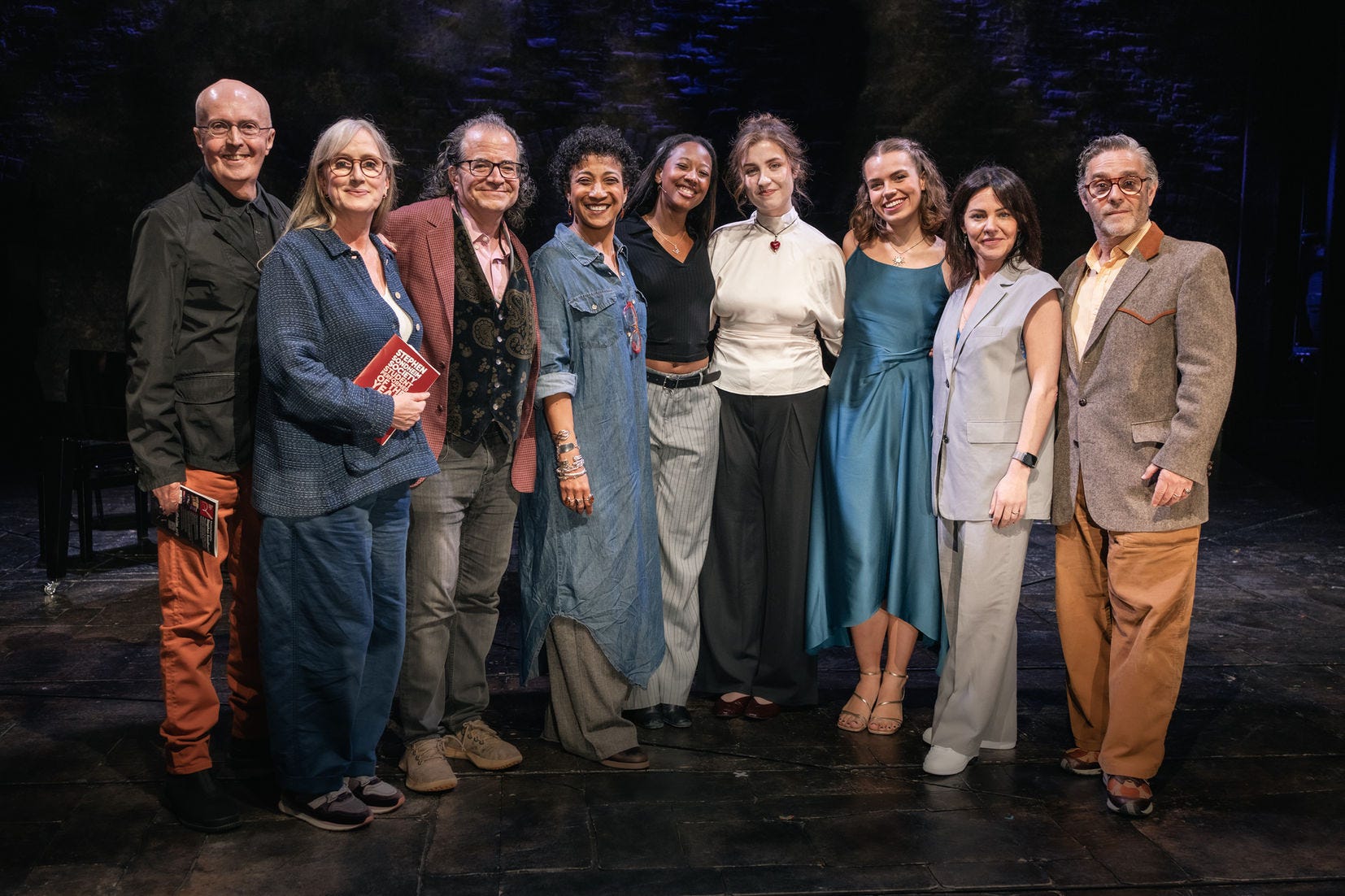
I went back onto the stage for the announcement. I was with my friend Taziva-Faye [Katsande], who came second. Me and Taziva are so close, and I’m so glad I got to do it with her. I was stood next to her, thinking: right, whatever happens, happens. And then they announced third place, and then second — Taziva-Faye. I immediately burst into tears because I was so proud of her. And then I thought: would they give BIRD both first and second? I didn’t know if that was something that was considered at all.
And then they called my name, and I felt so much adrenaline immediately course through my body. I started shaking — I’ve never shaken like that in my life. It wasn’t until I was eating dinner with my family afterwards that I really began to contemplate how amazing it was.
I’d just finished my third-year musical, Jesus Christ Superstar, in which I played Jesus, and that role was so demanding and took quite a lot out of me. Getting crucified every night for two weeks was kind of difficult. And because of my wavering sense of self-belief, I was asking myself: is this the road I want to go down? Is this seriously what I want to do? Because that role was so difficult, and it was so far outside my comfort zone. I’m very much jazz-focused — if I were to go down any route, it would probably be Golden Age musicals, or Sondheim, or straight acting. Jesus Christ Superstar is a rock opera, and it was so out of my comfort zone. I had to train a lot for it, and it took so much out of me that I was genuinely asking: do I take a year out after drama school? Do I go and do something else?
And then, winning this competition, I thought: I think there might be a place for my kind of acting and singing. It gave me that fire in my belly again, which I think I’d kind of lost. Because, as I’ve said, the direction in musical theatre right now seems like who can sing the highest, who can belt, who can riff — and I’m not that kind of girl. It was starting to bog me down: is there a place for my kind of acting in this industry? I was slowly believing that less and less.
And I think this just… reassured me. Validated the hard work I’d put in over three years. That was very nice to feel.
The Sondheim Hub is a reader-supported publication
If you find our work valuable, consider becoming a paying subscriber.
You’ll receive an exclusive essay each week, access to our full archive of 300+ essays, interviews & features, more from each interview, and a weekly Sondheim crossword. Paid subscriptions make our work possible. 📚