
A Conversation with Britney Coleman
on Company, Into the Woods, and chameleon-like choices
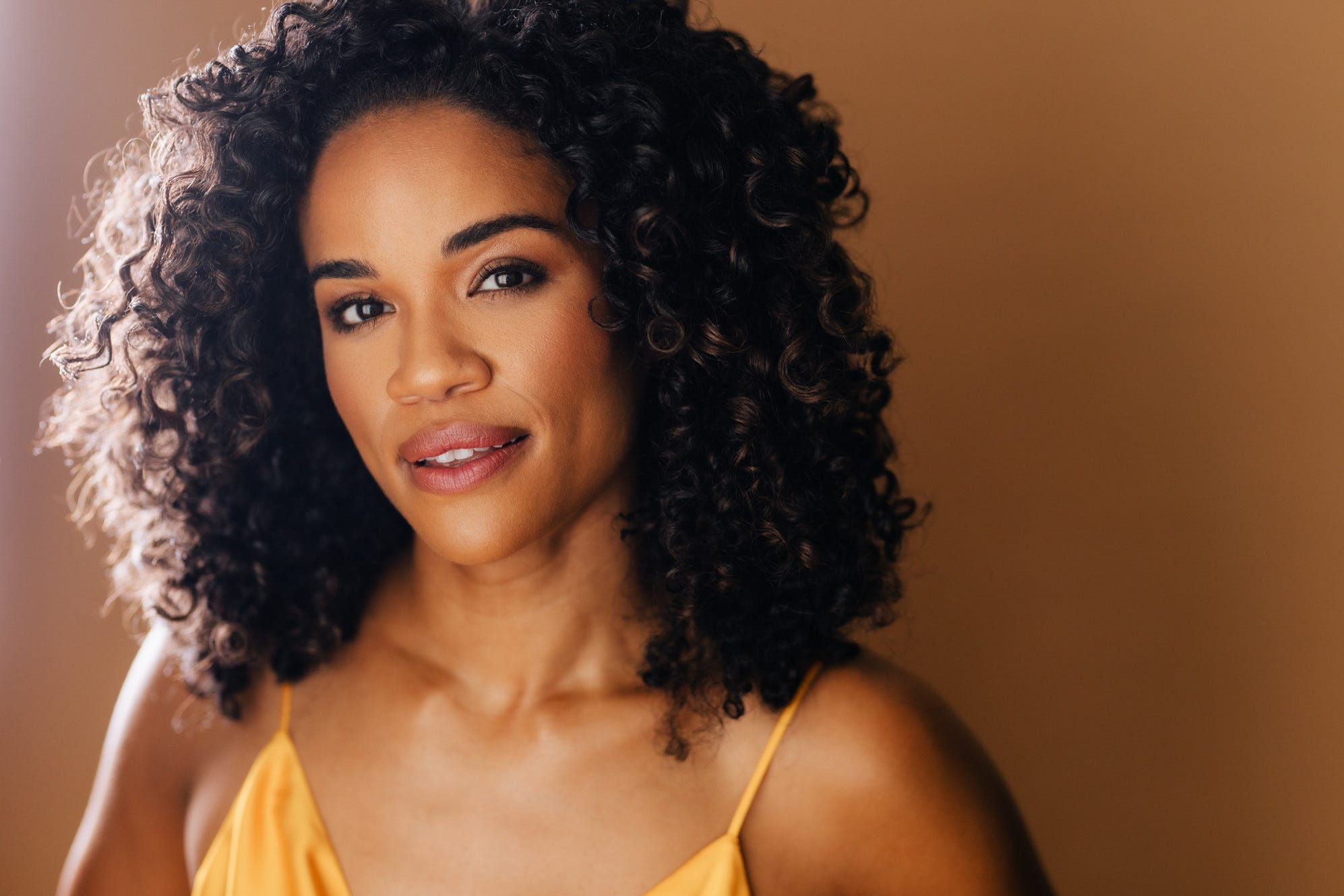
It’s a real pleasure to welcome Britney Coleman to The Sondheim Hub. Britney starred as Bobbie in the national tour of Company, after covering multiple roles during the show’s Broadway run. In our conversation, she discusses what it was like to step into Bobbie’s shoes and take Company across the country, her lifelong bond with Into the Woods, and much more besides. Our conversation begins below:
Thank you for reading! Upgrade to paid to support our work & receive our Sondheim Supplements: weekly crosswords, exclusive essays, extended interviews, & more.
It’s so good to meet you. Do you remember when you first heard about the gender-bent production of Company that you’d later star in?
I happened to be on holiday in London when the West End production was happening. I was actually thinking of seeing Hadestown, but they were playing in rep weekly, and they were off the week that I was there. But Company was on, I was there with a friend, and I was like, “You know what? Patti’s in it! Let’s go see it.” We got day-of tickets.
I really enjoyed it. I thought it was so interesting. And I did think, oh, where would I fit into all this? But Bobbie in particular didn’t cross my mind. I thought maybe Susan, or any of the wives. With roles like Jenny and David switching, I did think that would be a lot of fun to play. And I did think, with the show being such a love letter to New York City, that I could see this production coming to Broadway.
Which of course is precisely what happens, and you have the opportunity to audition for the show. Were you seen for a number of different roles? What was that process like for you?
They did their initial rounds of auditions when I was on Broadway doing Tootsie, and so me and one of my other castmates in Tootsie went in. I got called in when they were looking for a replacement for Susan. I think they had actually already cast pretty much everyone else by that point. They had me sing a little bit of the priest too, as well as some of “Have I Got a Guy for You,” and then some of the Susan material scene-wise.
Pretty soon after that, I got a call saying, “Hey, we filled the Susan track, but do you want to come in and be one of our New Yorkers and cover Bobbie?” And I was like, “Oh, yes! Sure!” So that was a pleasant surprise. I don’t want to call it dangling the carrot, but how can you say no? Especially to Bobbie? And that’s how that started. I covered Bobbie and Sarah and Jenny, and then I was one of the onstage ensemble-y folks, because they needed some more bodies for some of the larger New York scenes.
So you’re holding a lot of material in your head at once. Were there any particularly crazy moments of going on for multiple different people in a short space of time?
I would say that the experience of Company for all of us in New York is really tied around the pandemic, and around Steve’s passing, too. I think very few of us can really talk about what that experience was like just as a show, because so much of it was under really rare, hopefully once-in-a-lifetime circumstances.
We were in previews in March of 2020. We had maybe a week of previews under our belt, and then we were put on a call and told, “We’re not coming into work today. Check back in two weeks, and we’ll see you over Zoom,” because we were still in rehearsals, too, technically.
We were one of the lucky shows to come back in 2021, though, and most of it was under testing. Our testing was so rigorous, too, so that even if you had a false positive, you still had to be out for three days regardless of whether you actually had it or not. There was one week in particular where I think about half of the principal cast was out with COVID. As covers, it was like we were all playing roulette.
I think there were two or three weeks in particular where something like eight understudies were on. It was insane, especially when Katrina [Lenk] was out and we were passing the roles back and forth. It was absolutely crazy. I’ve covered before, and often if you have dates as an understudy, that’s because someone got one day pre-approved, or there’s a vacation a year into the run. Otherwise, it’s really a one-off, whereas this was multiple shows at a time.
So yes, I think if you ask any of the cast for the Broadway Company, people will bring up what it was like pre-pandemic and post-pandemic. I’m just so glad we got to open the show officially. I’m so glad that Steve got to see it, and that he was there for one of our last previews.
Fast-forward to the national tour, and you are starring as Bobbie. What was it like to fully step into those shoes?
Yeah, I’m one of the rare folks that gets to take on a role after having been in the rehearsal room on Broadway, where we had the whole creative team there, and watching those intentions, especially from our director, get sent to our principal actors firsthand. I also got to see Katrina right from our first preview through the pandemic up to when we closed two years later. So I got to see her full journey, and to pick up almost where she left off, too.
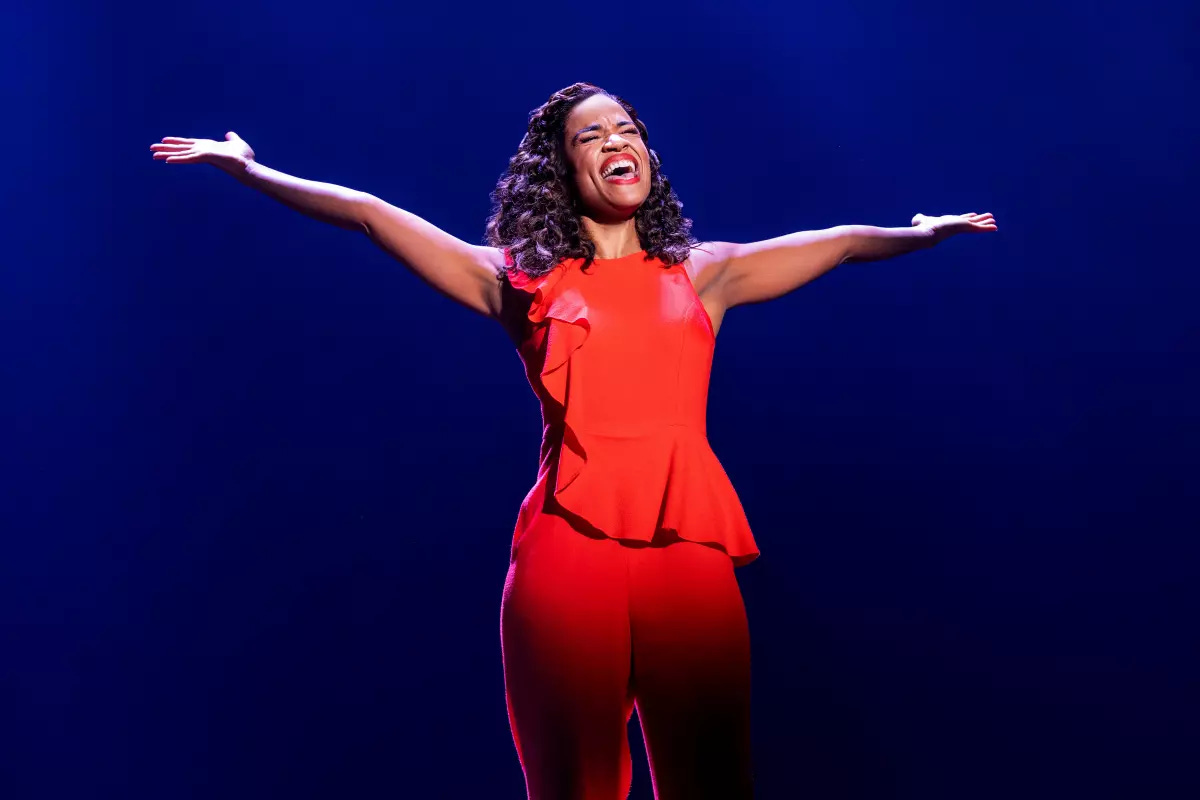
It was really interesting to fill those shoes on my own with that knowledge in particular. I wasn’t necessarily a blank slate, and I definitely didn’t approach it like, “Wow, let’s strip everything down and let’s start fresh.” I was like, “No, there was a lot of work and a lot of discussions that happened in that room that I really want to honor.” There were just four of us from Broadway that did the tour, which meant that there were so many fresh perspectives and so much fresh energy in the room. So to take that previous knowledge and adapt it to what everyone else is bringing to the table was really cool.
Company, as you mentioned, is such a New York show. When you took it around the country, were you conscious of the air in each room feeling different? I can imagine some jokes and some dramatic beats landing very differently in different cities.
Yeah, you hit the nail on the head. Because I’d been with the show so long, and also because I was on stage the whole time, I could tell how a show was going to be received within probably the first few minutes of it.
I realized, “Wow, this show really is much more edgy than I even thought,” having gotten used to a New York audience. I thought it was really interesting to take this show on the full-scale tour that it had, versus what Into the Woods did with a handful of larger cities on a shorter tour. We hit all the big cities, and then we did a lot of one-weekers in much smaller cities, and a lot of cities in conservative areas, which was ambitious.
It was definitely a gamble, and some people perhaps didn’t like the message. Most of the time, they were not necessarily vocal about it, but there were people who got up and left during our “Getting Married Today” scene. We’d see some people not coming back for Act 2 in those cities. I’m really glad that they did the tour, but I knew it would be ambitious. It definitely was. It was a really interesting journey to tour that show.
I love the idea, though, of taking these shows beyond where they’re comfortable. You mentioned Into the Woods, and I know that show has been a real constant throughout your entire creative life. I’d love to hear about your journey with that show.
I love that show. I always will. Let’s see… I played the Baker’s Wife in high school, and that was the only big musical I did in high school. I was doing plays, and I had done lots of musicals when I was younger, but Into the Woods really came at the right time, when I was trying to decide what I wanted to major in in college. The Baker’s Wife is such a… well, an interesting role for a high schooler to play. But she’s a character in general that doesn’t have a super clear path. That’s when I was like, “Oh, okay, Sondheim’s interesting. This is a really interesting writer.”
I love that he allows his characters to really take their time to end up at a decision. You can take the entire song to explore all of the different options that this character can pick, and I think the Baker’s Wife is the perfect example from that show. Because in some ways, we know what Cinderella is going to do, Little Red is off on her own path, and so is Jack, and you allow that to be that. But the Baker’s Wife, because she’s not in the canon of fairy tales, he really allows her to blossom in so many interesting, unexpected ways.
After I did that show, I was like, “Yeah, I want to explore that more. This is cool. I want to keep doing something like this.” And I got to do it again in college. I played one of the stepsisters, and that was a hoot. Also, to be canonically blonde… that was great. And then I got my Equity card doing Into the Woods as well, playing Rapunzel and Cinderella’s mom. It was so cool that my professional journey started with a show that I knew so well.
And then I got to do Into the Woods one more time—with the original Broadway costumes, actually—in a production in Texas. I played Cinderella, wearing her iconic ball gown. Those costumes were all really shredded and falling apart, so the costumers, as they were trimming that ball gown, they kept the trimmings and made a little purse out of them for me. So I still have a little piece of that show, which is very, very special.
Thinking more broadly, your roles and the shows you’ve been part of have been so wonderfully varied. Is that variety a conscious part of your decision-making? After Company came to an end, did you specifically want to do something completely different next?
Yeah, it is all over the place! I was classically trained, so that’s really where I lean. But in terms of shows that have a classical sound, or even contemporary legit musical theatre that’s not Les Mis, it is hard to find right now. There are so many shows in development. I’m waiting on another legit-forward new musical, but not a lot of people are really producing those shows. But that’s my bread and butter, so I think after Company, I was like, “Hmm, alright, let’s switch it up again.”
That’s been my aim: every other gig is completely different. David Yazbek for Tootsie could not be more different than Sondheim, who could not be more different than Andrew Lloyd Webber for Sunset Boulevard. I try to be a chameleon of sorts.
Speaking of Sunset, you were part of the Lonny Price-directed production. Your inner Sondheim fan must have been delighted by that.
Lonny’s documentary, The Best Worst Thing That Ever Could Have Happened, actually premiered during our rehearsals for Sunset, so he had us come in for a screening. I learned so much. And Jim Walton was in Sunset with us, too. So to see the two of them together, so long ago, was so special. It’s such a beautifully produced documentary, and I’m so glad that it’s out there.
Lonny and Jimmy are still very, very close. I actually just did a benefit concert with them in the winter. Actually, that was one of the first things I did post-Company, was to circle back with them. Lonny just has such a joy and a reverence for the work and for that project. Merrily is definitely not the first big show that closed early, but in terms of where Sondheim was at at that point in his career and how public that was, it was so fleeting, and so I think Lonny approaches all of his projects with reverence and joy. That’s really infectious, and that doesn’t happen all the time. Lonny’s really special.
Finally, is there anything over the next year or so that you’re particularly excited about, that you’re able to talk about?
The next thing hasn’t been announced yet, but it is definitely different. I would definitely say that literally every gig flip-flops. I’m going super golden age with the next one, and I’m so excited to be back in that world a little bit.
Life-wise, I’m engaged! So after talking about the idea of marriage and settling down for so long on stage, starting to actually think about it in real life is really fun. I’m probably not going to talk about it too much online, but we did announce our engagement, and it was fun to see a lot of people quoting Company. I thought that was really cool. We’ll probably include a quote or two in the ceremony…
Would you like the full Sondheim Hub experience? Our paid subscribers receive a weekly Sondheim Supplement, featuring our latest crossword, an exclusive additional essay, an extended interview, and other bonus content you won’t find anywhere else.
The Sondheim Hub exists thanks to the generosity of readers like you. Your support means the world to us. If you find our work valuable, we’d be thrilled if you’d consider upgrading your subscription. Click here to explore our various subscription options.
And if you enjoyed this piece, please click the heart button below (or at the top of the page if you’re on Substack). It genuinely helps more people discover us. The algorithm of life is a powerful beat…