
A Boy Like That / I Have A Love
Conflict & common ground in West Side Story
In Act 3, Scene 2 of Romeo and Juliet, Juliet learns from her nurse that Romeo has killed her cousin Tybalt.
Juliet’s immediate response—“O serpent heart, hid with a flow’ring face!”—gives way to a passionate defense of her love: “Shall I speak ill of him that is my husband?” Shakespeare presents this clash between family loyalty and romantic love as an internal struggle, with the Nurse as mere messenger.
In West Side Story, Leonard Bernstein and Stephen Sondheim transform this moment into something far more volatile: a direct confrontation between two women, each with profound personal stakes in the tragedy. So begins “A Boy Like That / I Have A Love.”
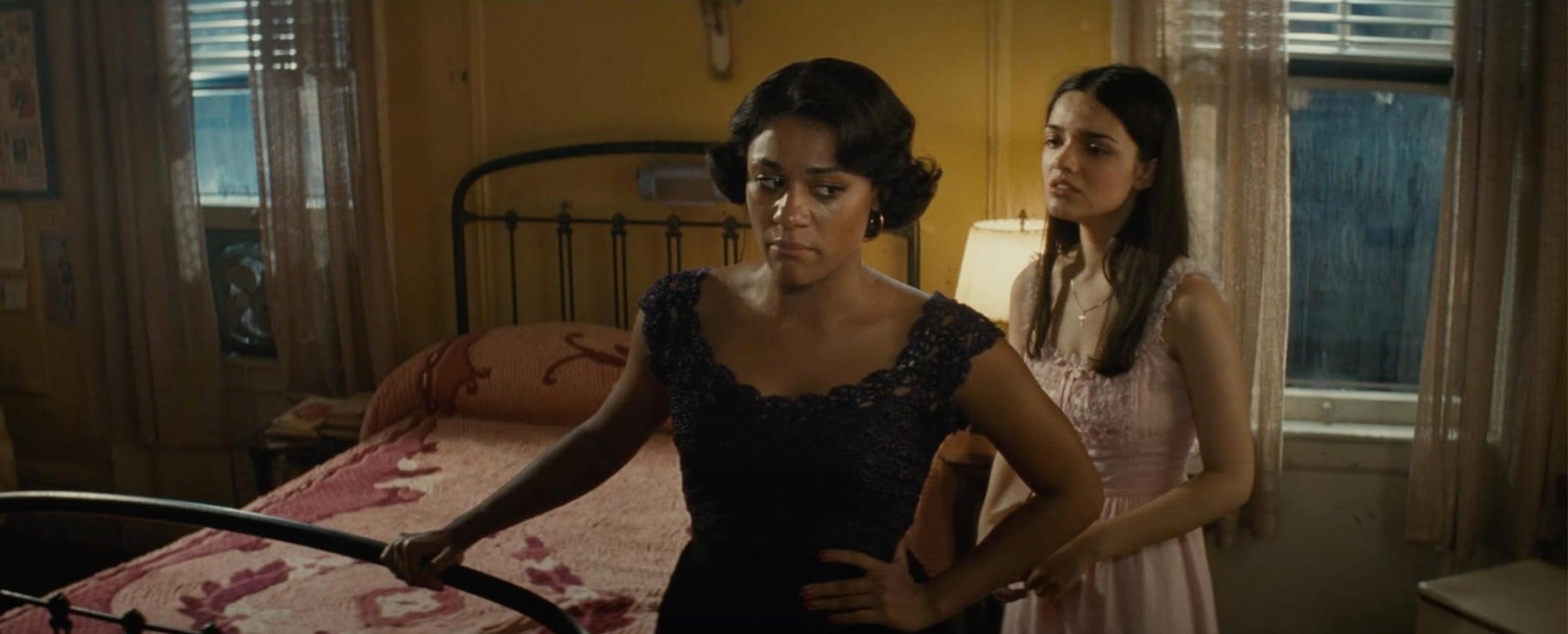
In the hours since the rumble, everything has changed: Bernardo is dead, killed by Tony, and the community is reeling. Now Anita, Bernardo’s lover, confronts his sister Maria—who, despite everything, still loves Tony.
Both women stand on emotionally treacherous ground. Anita’s grief for Bernardo is still raw, her fury at Maria’s continued love for his killer both personal and visceral. For Anita, this is not merely about enforcing cultural boundaries—“stick to your own kind”—but about loyalty to the dead. Her rage stems from seeing Maria’s love survive the very violence that took Bernardo from her. Maria, meanwhile, faces not just the abstract disapproval of her community, but the direct pain of someone she loves and respects. This scene thus becomes about more than the conflict between duty and desire; it explores how love itself—romantic love, familial love, love for one’s community—can pull us in irreconcilable directions.
Unlike most of West Side Story’s numbers, for which Bernstein’s music came first, “A Boy Like That” began with Sondheim’s words. Writing late in the collaborative process, with growing creative confidence, Sondheim crafted Anita’s accusatory verses first—and remarkably, Bernstein set them to music exactly as they were handed to him.
This reversal of their usual creative process yields extraordinary results: Bernstein’s music seems to emerge organically from the natural speech rhythms of Anita’s fury. From her very first words, the vocal line follows the natural cadences of accusation, with a fierce, biting rhythmic character and angular melodic lines that seem to stab downward. Anita’s vocal line circles obsessively around repeated notes, as if she is too angry to move beyond these few central pitches:

“Stick to your own kind,” Anita tells Maria, early in this number. She delivers these words not as abstract social doctrine but as the hard-won wisdom of someone who has lost everything to cross-cultural violence. The line serves as both accusation and plea, a desperate attempt to protect Maria from what Anita sees—presciently—as inevitable tragedy.
Setting these words to music, Bernstein uses syncopation to powerful dramatic effect. Of these lines’ three most important syllables (highlighted below), only “own” falls on the beat. “One”/“stick” and “kind” are similarly accented but occur off the beat, lending Anita’s words intensity and, crucially, urgency: